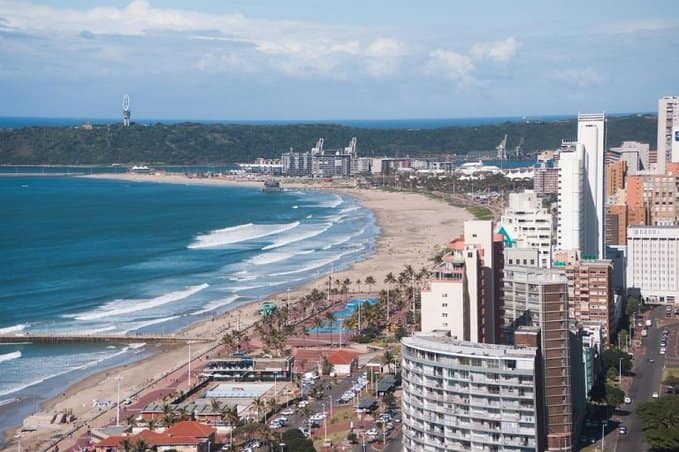
By sunrise on Good Friday, the sand on uShaka Beach was already dotted with picnic blankets, bright umbrellas, and the first wave of eager toddlers charging toward the Indian Ocean. By noon, the promenade was a moving river of flip-flops, sunhats, and selfie sticks. And by the time the Easter bells rang on Monday morning, the numbers were in: eThekwini Municipality had done the unthinkable.
It hosted over 1.2 million visitors over the long weekend without a single major incident.
No beach closures. No fatal drownings. No crowd disasters. No service delivery meltdowns.
Just families laughing, vendors selling grilled corn and cold drinks, and a coastal city quietly reminding South Africa why it remains the nation’s favourite holiday playground.
“We prepared for the worst and prayed for the best,” said eThekwini Mayor Mxolisi Kaunda during a triumphant media briefing on Tuesday morning. “What we got was something in between—but closer to the best. Over 1.2 million people came to our shores, and they left with sunburns, full bellies, and happy memories. That is success.”
The Numbers Behind the Smiles
According to the municipality’s final Easter report, released Tuesday, the 1.2 million visitors included approximately 980,000 domestic tourists (mostly from Gauteng, Free State, and Mpumalanga) and over 220,000 international travellers from countries including the United Kingdom, Germany, India, and neighbouring African nations.
Hotel occupancy rates averaged 89% across the city from Thursday to Monday, with some beachfront properties reporting complete sellouts. The Durban ICC hosted three concurrent events over the weekend, while uShaka Marine World recorded its second-highest attendance since before the pandemic.
“I haven’t seen the promenade this full since 2019,” said Bheki Ngcobo, who has rented beach umbrellas and deck chairs on North Beach for 22 years. “On Saturday, I ran out of chairs by 9am. People were sharing. That’s a good problem.”
Safety First: How Durban Avoided Disaster
The headline achievement—”no major incidents”—was not an accident. It was the result of an ambitious multi-agency safety plan that launched six weeks before Easter.
Metro Police, SAPS, and private security firms deployed over 4,000 personnel across the city’s hotspots: beachfront, Point Waterfront, Moses Mabhida Stadium precinct, Umhlanga Rocks, and the bustling Warwick Junction. Lifeguards were stationed at all 23 designated swimming beaches, with jet skis and drones patrolling beyond the shark nets.
“We had a central command centre running 24 hours a day,” said eThekwini Emergency Services Unit head, Chief Jabulani Mkhize. “Every incident—a lost child, a suspected drowning, a bar fight—was logged and responded to within minutes. The difference this year was coordination. No silos. No waiting for permission.”
The results speak for themselves:
- Zero drownings on monitored beaches.
- Only 12 reported armed robberies across the entire metro (compared to 34 during Easter 2024).
- 47 lost children reunited with families within two hours.
- Over 1,200 traffic fines issued, but no fatal accidents on major routes into the city.
The Economic Boom
Beyond the peace of mind came the pesos. Early estimates from the Durban Chamber of Commerce and Industry suggest the 1.2 million visitors injected between R850 million and R1.1 billion into the local economy.
Spaza shops near the beach sold out of cold drinks by Saturday afternoon. Restaurants along Florida Road reported wait times of over an hour. Even the iconic Victoria Street Market, still recovering from fire damage, saw lines of tourists buying beadwork and spices.
“We sold 400 bunny chows on Sunday alone,” said Priya Naidoo, owner of a small eatery in Greyville. “That’s double our normal Easter. My staff were crying from exhaustion and joy.”
Informal traders also benefited. The municipality temporarily relaxed by-law enforcement, allowing over 800 licensed vendors to operate along designated beachfront zones.
“I made more in four days than I made in all of February,” said Nomsa Dlamini, who sells handmade wire cars and beaded necklaces. “If the city can keep this energy, we can keep feeding our children.”
Not Without Hitches
To be clear, Durban was not perfect.
Traffic backing up on the N2 southbound on Monday afternoon stretched for 14 kilometres at its peak. Some beachfront public toilets ran out of water on Sunday, forcing frustrated families to queue at nearby petrol stations. And there were scattered complaints about load-shedding disrupting evening plans—though Eskom managed to keep outages to Stage 2 throughout the weekend.
Mayor Kaunda acknowledged the issues but refused to let them overshadow the victory. “Were there long queues? Yes. Were there toilet problems in some areas? Yes. But compare that to Easters past—strikes, beach pollution, crowd violence. We have come a long way.”
What Visitors Said
On the promenade Monday afternoon, as families packed coolers and brushed sand off car seats, the mood was surprisingly upbeat.
“We almost didn’t come because of the crime stories,” admitted Thabo Molefe, a father of three from Soweto. “But honestly? We walked from North Beach to uShaka at 9pm on Saturday. Police were everywhere. People were dancing. My kids said it was the best holiday ever.”
British tourist Emma Richardson, visiting South Africa for the first time, said she had been warned to expect chaos. “Instead we found warm water, friendly locals, and a city that actually felt organised. I’ve told my friends back home: go to Durban.”
The Road Ahead
Now comes the harder part: sustaining the momentum.
The eThekwini Municipality has already announced plans to replicate the Easter safety model for the upcoming Youth Day long weekend in June and the busy December holidays. There is also talk of a permanent “beachfront safety corridor” with CCTV, lighting upgrades, and dedicated tourist police.
“Easter showed us what’s possible,” Mayor Kaunda said. “Now we have to prove it wasn’t a fluke.”
For the 1.2 million who packed their bags and headed to the coast, it didn’t feel like a fluke. It felt like Durban remembering who it is: warm, welcoming, and finally—after years of bad headlines—functional again.
As the sun set over the pier on Easter Monday, a group of teenagers still splashed in the waves, unwilling to leave. A vendor packed up his last bag of roasted peanuts. And a lifeguard in a bright orange vest sat back in his chair, watching the empty beach, and smiled.
No major incidents.
Just a city, a coastline, and a million stories of a holiday well spent.
About The Author