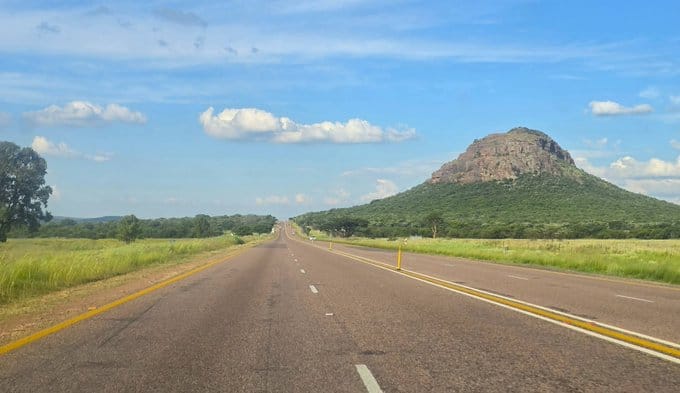
A driver was arrested on Monday morning after Modimolle traffic officers clocked a vehicle travelling at a staggering 186 kilometers per hour on the N1 highway near the small town of Settlers, prompting a strong warning from the Limpopo Department of Transport and Community Safety about the extreme dangers of excessive speed and reckless driving.
The arrest, which took place just before 9 a.m. on Monday, 20 April 2026, has reignited concerns about the high rate of speeding-related crashes on one of South Africa’s busiest and most dangerous national roads. The N1 through Limpopo, which connects Gauteng to Zimbabwe and other parts of Southern Africa, has long been a hotspot for fatal accidents, many of them attributed to excessive speed, driver fatigue, and unsafe overtaking.
The Stop: A Routine Patrol Turns Into an Arrest
According to a statement released by the Limpopo Department of Transport and Community Safety, traffic officers from the Modimolle Traffic Control Centre were conducting a routine high-speed patrol along a notorious stretch of the N1, approximately 15 kilometers south of Settlers. This section of the highway is known for its relatively straight road surface, which often tempts drivers to push their vehicles beyond safe limits.
Using a calibrated laser speed measurement device, officers recorded a silver Audi A4 sedan traveling at 186km/h in a clearly marked 120km/h zone. The vehicle was allegedly weaving between lanes, overtaking other cars at high speed, and showing no regard for other road users.
“The reading was clear and unambiguous: 186 kilometers per hour,” said Thabo Makhubela, a senior traffic officer who was part of the patrol. “At that speed, the driver is not in control. A small error, a gust of wind, a pothole, or another driver changing lanes would have resulted in a catastrophic crash. There would have been no survivors.”
Officers pursued the vehicle for approximately three kilometers before the driver pulled over, apparently realizing he had been caught. Upon questioning, the driver—identified as a 34-year-old man from Polokwane—allegedly told officers that he was “late for a meeting in Musina” and that he “did not realize” he was speeding.
“He knew exactly what he was doing,” Makhubela said. “The excuses are always the same. ‘I’m late.’ ‘I didn’t see the sign.’ ‘Everyone else was also driving fast.’ None of these excuses will bring back a dead child on the side of the road.”
The Arrest and Charges
The driver was immediately placed under arrest and transported to the Modimolle Police Station, where he was formally charged with reckless and negligent driving, as well as exceeding the prescribed speed limit by more than 66 kilometers per hour. Under South African law, exceeding the speed limit by more than 30km/h in a 120km/h zone is considered a serious offense that can result in immediate arrest, impoundment of the vehicle, and a mandatory court appearance.
The driver’s vehicle was impounded on the spot, and his driver’s license was confiscated. He appeared briefly in the Modimolle Magistrate’s Court on Tuesday morning, where he was released on bail of R5,000. His case has been postponed to 18 May 2026 for further investigation.
The National Prosecuting Authority (NPA) has indicated that it will pursue the case vigorously. “Speeding at 186km/h is not a minor infraction. It is a conscious decision to endanger every person on that road,” said NPA spokesperson Mashudu Malabi. “We will ask the court to send a strong message that this behavior will not be tolerated.”
If convicted, the driver faces a fine of up to R60,000, a possible jail sentence of up to two years, and an automatic disqualification from holding a driver’s license for a period to be determined by the court.
A Deadly Stretch of Road
The N1 highway between Pretoria and the Beitbridge border post is one of South Africa’s most heavily trafficked and deadliest roads. According to the Road Traffic Management Corporation (RTMC), the Limpopo section of the N1 recorded 47 fatal crashes in 2025 alone, resulting in 62 deaths. Excessive speed was listed as a contributing factor in more than 70 percent of those crashes.
The area near Settlers, in particular, has earned a grim reputation. The road is largely straight and flat, leading many drivers to believe it is safe to drive at extremely high speeds. However, the highway also features hidden dips, occasional livestock crossings, and heavy truck traffic, all of which become deadly at high velocities.
“I have worked this stretch for 15 years, and I have seen things I cannot unsee,” said traffic officer Makhubela. “A family of five, wiped out because someone wanted to save 10 minutes. A young couple on their honeymoon, dead before they reached the hospital. A grandfather carrying his grandchild to a clinic. All because of speed. And yet, every week, we catch someone doing 160, 170, 180. They never learn.”
Limpopo Transport Department’s Strong Warning
The Limpopo Department of Transport and Community Safety issued a strongly worded statement following the arrest, warning that traffic officers will “show no mercy” to drivers who endanger lives through excessive speed.
“Driving at 186km/h is not a mistake. It is a choice. And it is a choice that kills,” said MEC for Transport and Community Safety, Violet Mathye. “We have said it before, and we will say it again: speed kills. There is no excuse—no meeting, no emergency, no ‘I didn’t know’—that justifies turning a public highway into a death trap.”
Mathye added that the department has intensified its high-speed patrols and will deploy additional unmarked vehicles and drone technology to catch offenders. “If you think you can outrun the law on the N1, think again. Our officers are trained, equipped, and determined. We will find you. We will arrest you. And we will make sure you face the full consequences.”
The department also called on motorists to report reckless drivers by calling the provincial traffic hotline at 0800 123 456.
The Human Cost of Speed
Behind the statistics and legal proceedings are real human stories. According to the Road Traffic Management Corporation, over 12,000 people die on South African roads every year. Speeding is a factor in approximately 40 percent of those deaths.
To put the driver’s speed of 186km/h into perspective:
- At 186km/h, a vehicle travels 51.6 meters per second—more than half the length of a soccer field in a single second.
- The average stopping distance at 186km/h, including reaction time, is over 200 meters—equivalent to two full soccer fields.
- A crash at 186km/h is almost always unsurvivable. The human body is not designed to withstand the forces involved.
“People think they are good drivers. They think they can handle the speed,” said road safety advocate Sanele Dlamini of Arrive Alive. “But physics does not care about your ego. At 186km/h, you are not driving. You are falling with style. And when you fall, you take others with you.”
Community Reaction: Relief and Frustration
News of the arrest has drawn mixed reactions from the Settlers community and regular users of the N1. Some expressed relief that law enforcement is taking action, while others expressed frustration that such extreme speeding remains so common.
“I drive this road every day to work in Polokwane,” said local resident Maria Mokoena, 42. “Every morning I pray that I will arrive alive. The trucks, the taxis, the speeding cars—it is a nightmare. I am glad they caught this man. I hope he loses his license forever.”
Others, however, questioned why such high speeds are even possible. “The road is straight. The limit is 120. But the road itself encourages speed,” said long-distance truck driver Piet van der Merwe. “If they want people to slow down, they need to change the road design—more curves, more speed bumps, more cameras. Punishment alone is not enough.”
The Driver: A Cautionary Tale
The arrested driver, whose name has not been released pending his court appearance, is reportedly a businessman who frequently travels between Polokwane and Musina. According to sources close to the investigation, he has no prior criminal record and expressed “genuine remorse” after being booked.
But remorse, as traffic officers point out, does not resurrect the dead.
“I have arrested many people who cried and apologized,” said Makhubela. “And some of them, I arrested again six months later for the same thing. Apologies are cheap. Changed behavior is what matters. I hope this man changes. But I also hope the court makes an example of him, so that others think twice.”
A Broader Epidemic
The arrest near Settlers is not an isolated incident. In the past month alone, Limpopo traffic officers have arrested 23 drivers for exceeding 150km/h on the N1, including one driver clocked at 201km/h near Mokopane. Nationally, the RTMC reports that over 450,000 speeding fines were issued in 2025, though only a fraction of those resulted in arrests.
Experts say the problem is multifaceted: a culture of impunity, inadequate enforcement, lenient penalties, and a lack of public awareness all contribute to the epidemic of speeding.
“South Africa treats speeding as a minor offense, like littering. But it is not. It is a form of violence,” said clinical psychologist Dr. Nthabiseng Mokoena, who studies high-risk behavior. “When you choose to drive at 186km/h, you are choosing to accept that you might kill someone. That is not an accident. That is a decision.”
What Needs to Change?
Road safety advocates have called for a range of measures to combat extreme speeding, including:
- Automatic license suspension for any driver caught exceeding the speed limit by more than 50km/h.
- Vehicle impoundment for first-time offenders, not just repeat offenders.
- Mandatory court appearances with no option for admission of guilt fines for extreme speeding.
- Increased use of average-speed cameras (point-to-point cameras) on long stretches of highway.
- Public awareness campaigns that highlight the real human consequences of speeding.
“Fines don’t work on wealthy people. They see R5,000 as the price of speeding, not a punishment,” said Dlamini. “We need jail time. We need license suspensions. We need to make speeding socially unacceptable, the way drunk driving has become. It will take years. But we have to start now.”
A Final Warning
As the sun set over the N1 near Settlers on Monday evening, traffic officers continued their patrols. A white Audi A4 sat in an impoundment lot, its owner now navigating the slow, bureaucratic machinery of justice. A family in Polokwane received a phone call that their loved one had been arrested but not harmed—a small mercy compared to what could have been.
On the side of the highway, a small white cross marked the spot where a speeding driver killed a mother and her two children in 2023. The flowers had withered, but the cross remained.
The Limpopo Department of Transport’s warning is clear: slow down, or face the consequences. But for the families who have already lost loved ones to speed, no warning can undo what has been lost. And for the driver arrested on Monday morning, the real trial is yet to come.
About The Author