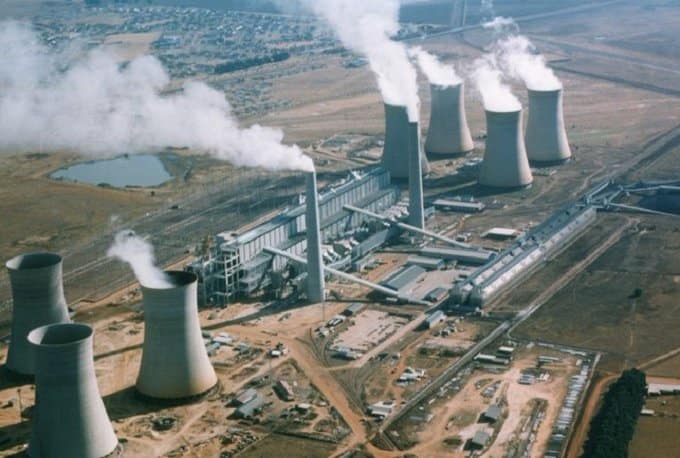
For the better part of two decades, the narrative surrounding Eskom has been one of crisis: staggering debt, rolling blackouts, and a seemingly endless cycle of government bailouts. But in a landmark briefing to Parliament, the Department of Electricity and Energy has delivered a message that would have once seemed unthinkable: Eskom is financially solvent, profitable, and on a stable footing.
The confirmation, presented to the Portfolio Committee on Electricity and Energy by senior officials, marks a significant psychological and financial milestone for the state-owned utility that is the lifeblood of the South African economy. It signals that the sweeping turnaround strategy, initiated under immense pressure, is beginning to yield tangible results.
‘Headed for a Positive Position’: The Numbers Tell a Story
Dr Kubeshnie Bhugwandin, the department’s Deputy Director-General for Energy Enterprises, painted a picture of a utility that has halted its decade-long decline. She confirmed that Eskom’s liquidity has “improved with healthy cash balances” and that the utility is on track to end the financial year in a profitable position.
The scale of the turnaround is best illustrated by the raw figures. In the 2025 financial year, Eskom reported a stunning R16 billion profit after tax. This represents a monumental swing from the R55 billion loss recorded just the year prior—a R71 billion improvement that marks the company’s first return to profitability since 2017.
The momentum has carried into the current financial year. By the third quarter of the 2025/26 period, Eskom had already recorded a year-to-date net profit of approximately R27.58 billion, on the back of revenue of about R273.7 billion.
What Drove the Recovery?
This dramatic financial resurrection was not an accident. It is the result of a confluence of operational improvements, financial restructuring, and tough policy decisions.
- Operational Stability: The most visible change for South Africans has been the dramatic reduction in load shedding. Eskom’s Generation Recovery Plan has led to a sustained improvement in the Energy Availability Factor (EAF), which increased to nearly 65% . With unplanned outages dropping by thousands of megawatts compared to the previous year, the reliance on costly diesel-powered Open-Cycle Gas Turbines has plummeted. This alone resulted in diesel savings of R16.3 billion year-on-year. By early 2026, South Africa had experienced over 250 consecutive days without load shedding, a stability that supports continued economic activity .
- Tariff Adjustments: A standard tariff increase of 12.74% provided essential revenue to cover costs and invest in maintenance.
- Government Debt Relief: The government’s R254 billion debt relief package, announced in the 2023 budget, has been a critical lifeline. To date, R140 billion has been disbursed to Eskom (R76 billion in 2023/24 and R64 billion in 2024/25), with a further R80 billion scheduled for transfer by the end of March 2026. Critically, Eskom has met all the strategic conditions attached to this relief, including the conversion of subordinate loans into equity, which has strengthened its balance sheet.
“The era of monopoly is gone. Eskom will not be getting any bailout going forward,” Electricity and Energy Minister Kgosientsho Ramokgopa had stated previously, underscoring the new reality that this financial health must be sustained independently.
Eskom CEO Dan Marokane has emphasised that the utility is now focused on reinvesting its profits. “Over the next five years, with continued rigorous focus, we will invest more than R320 billion in sustaining and expanding our infrastructure for the long-term benefit of the nation,” he said.
The Gathering Storm: Municipal Debt at R110 Billion and Rising
However, beneath the surface of this positive financial news lies a threat so severe it could unravel all the progress made. As Eskom’s balance sheet has healed, a cancer has been growing within the municipal distribution system: unpaid debt.
As of March 2025, municipal arrear debt stood at R94.6 billion, a 27% increase from the previous year. By August 2025, that figure had ballooned to R103.5 billion. In early March 2026, Eskom confirmed that the total had surpassed a staggering R110 billion.
“No organisation would survive if it is not paid for its services. By 2030, the arrears will be over 300 billion rand,” Eskom’s Chief Financial Officer Calib Cassim warned during the financial results presentation. The primary culprits are municipalities that collect electricity payments from residents but fail to remit those funds to Eskom.
This is not just a bookkeeping problem. It poses a “serious risk to the viability of Eskom’s standalone Distribution company” and threatens the entire legal process of unbundling Eskom into separate generation, transmission, and distribution entities.
Tough Choices: Eskom’s Plan to Stop the Leak
Faced with this existential threat, Eskom is moving beyond polite requests. In a significant escalation, the utility announced in early March 2026 that it is initiating a public consultation process under the Promotion of Administrative Justice Act (PAJA) to potentially interrupt electricity supply to defaulting municipalities.
Around 14 municipalities have been identified for this process. They have been selected because they have not settled their accounts for at least 18 months, have failed to meet the conditions of the National Treasury’s debt relief programme, or pose a significant financial risk.
“We have to address rising arrear debt to protect the operational stability we have restored and the financial discipline we have rebuilt,” said Agnes Mlambo, Group Executive for Distribution (acting) . “The municipalities collect revenue from customers for electricity services, and failure to remit these funds undermines Eskom’s financial viability, while impacting the delivery of electricity to the relevant communities.”
If these municipalities fail to take corrective action, Eskom is prepared to implement credit control measures, which may include interrupting supply at predetermined times—effectively, a form of load reduction targeted at non-paying towns .
The Auditor’s Caveat: Material Uncertainty Remains
Despite the operational success and the declared solvency, Eskom is not entirely out of the regulatory woods. The utility received a qualified external audit opinion for the 2025 financial year .
The Auditor-General flagged issues related to “incomplete or inaccurately maintained records” concerning irregular expenditure and losses due to criminal conduct. Crucially, the audit report noted that there is still “material uncertainty regarding Eskom’s going concern status,” driven by its dependence on government support and the “growing municipal arrears debt and energy losses” .
A New Dawn,但 Not Without Clouds
For the first time in nearly a decade, the Department of Electricity and Energy can stand before Parliament and speak of Eskom in terms of solvency and profit rather than crisis and bailouts. The lights are on, the diesel bill is down, and the balance sheet is finally in the black.
Yet, as the officials’ presentation to the portfolio committee made clear, the battle is far from over . The R110 billion shadow of municipal debt hangs over everything. Eskom’s long-term survival now depends not just on keeping the power stations running, but on forcing the municipalities it supplies to pay their bills—a political and administrative challenge that may prove even more difficult than fixing the grid.
About The Author