On the 100th day of the Madlanga Commission of Inquiry, the cameras did not show a face. They showed a blank screen, a modulated voice, and the faint hum of an encrypted line. The witness, identified only as “Witness G,” was a serving Crime Intelligence officer. And his testimony, delivered remotely from an undisclosed location, may have been the most explosive yet.
The commission, established by President Cyril Ramaphosa in July 2025 following mounting allegations that criminal syndicates had infiltrated South Africa’s criminal justice apparatus, has spent nearly a year peeling back layers of institutional decay. But Day 100 was different. It was the day the shadows spoke back.
Witness G appeared under strict anonymity rules approved by the commission in March 2026—rules that allow certain insiders to testify without revealing their identities, their units, or even the city from which they are broadcasting. The measure, unprecedented for a commission of this nature, was deemed necessary after two potential witnesses withdrew following death threats. A third was hospitalized after his car was firebombed outside his Durban home.
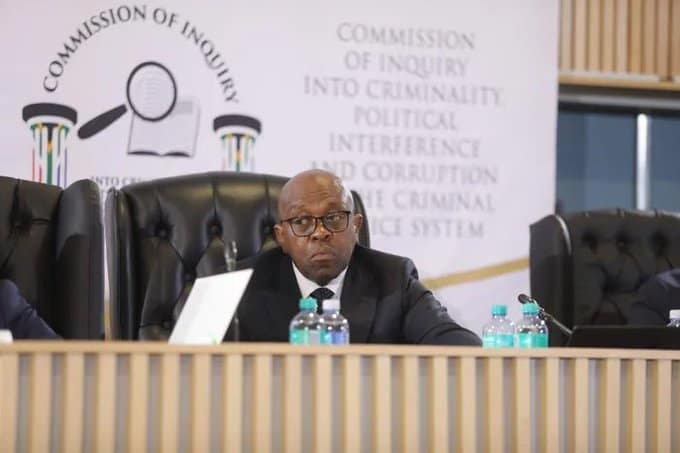
“We cannot protect what we cannot hide,” said Justice Albert Madlanga, chair of the inquiry, as he opened the session. “The rot we are investigating does not stop at threats. It stops at murder. Witness G is alive today because you do not know who he is. Let us keep it that way.”
The Testimony: Hushed and Harrowing
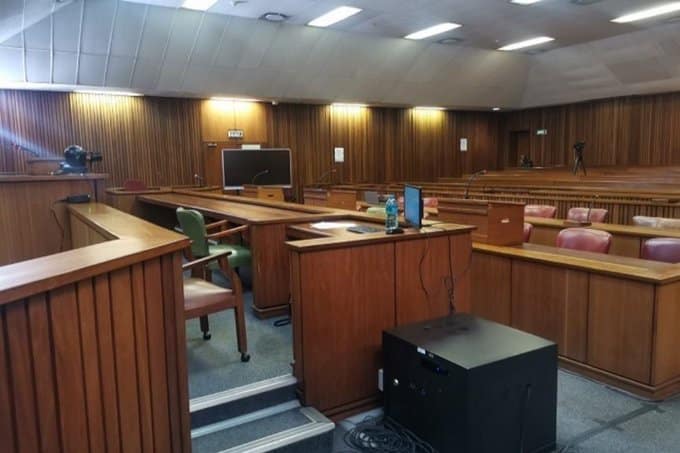
For four hours, Witness G spoke in a low, steady monotone. His voice, stripped of identifying cadences by a voice modulator, filled the commission chamber in Pretoria’s old Reserve Bank building. Journalists, legal representatives, and a handful of family members of victims listened in stunned silence.
Witness G described a parallel structure within Crime Intelligence—a “unit within a unit” that operated without parliamentary oversight, without standard procurement procedures, and without any written records. According to his testimony, this covert group had been active since at least 2021, funneling operational funds to private contractors who provided no services in return. In some cases, the contractors did not exist.
“I personally processed payment requisitions for a company registered to a deceased person,” Witness G said. “The bank account remained active. The money flowed. When I raised concerns, I was told to ‘focus on my job and not on the bigger picture.'”
He named no names—anonymity has limits—but he provided dates, transaction references, and internal memo numbers that commission investigators will now attempt to verify. He also described a culture of fear within Crime Intelligence, where officers who asked questions were transferred to remote border posts or placed on “special leave” indefinitely.
“People think Crime Intelligence spies on criminals,” he said. “Mostly, we spy on each other. The enemy is inside the building.”
The Anonymity Debate
The decision to allow anonymous testimony has divided South Africa’s legal community. Critics argue that it undermines the principle of audi alteram partem—”hear the other side”—by preventing accused individuals from confronting their accusers. The General Intelligence Laws Amendment Act of 2023 explicitly prohibits anonymous testimony in most proceedings.
But the Madlanga Commission operates under a special presidential proclamation that grants it latitude in matters of national security. In March, Justice Madlanga ruled that the right to life and physical integrity of witnesses outweighed traditional evidentiary rules, especially given documented attempts to silence insiders.
“We are not a court of law. We are a commission of inquiry,” Madlanga said at the time. “Our purpose is to uncover systemic failures, not to secure criminal convictions. If anonymity is the price of truth, so be it.”
Human rights organization Freedom Under Law issued a cautious statement supporting the measure but called for “maximum transparency wherever possible.” The opposition Democratic Alliance (DA) has challenged the anonymity rule in the High Court, arguing that it sets a dangerous precedent for future inquiries. That case is still pending.
The Commission’s First 100 Days
The Madlanga Commission was born out of crisis. In early 2025, a cache of leaked WhatsApp messages between senior police officials and alleged drug traffickers surfaced on the investigative journalism platform AmaBhungane. The messages suggested that Crime Intelligence had been tipping off syndicates about impending raids in exchange for cash payments. The scandal, dubbed “IntelligenceGate,” triggered parliamentary hearings, a cabinet reshuffle, and finally, Ramaphosa’s decision to appoint a judicial commission.
Justice Albert Madlanga, a retired Constitutional Court judge known for his razor-sharp dissents and his aversion to political theater, was named chair. He brought on a team of forensic auditors, former directors of public prosecutions, and cybersecurity experts. By day 30, they had seized servers from four police stations. By day 60, three senior Crime Intelligence officers had been suspended. By day 90, the commission had referred its first batch of evidence to the National Prosecuting Authority (NPA).
To date, the commission has heard from 47 witnesses, ranging from whistleblowing accountants to traumatized police captains. It has uncovered fraudulent contracts worth an estimated R340 million, uncovered a secret slush fund used to finance “off-book” operations, and identified at least 11 active police officers who continue to draw salaries while under criminal investigation—a practice known internally as “gardening leave with benefits.”
But the most damaging revelations have come from insiders like Witness G—people who built the system and then watched it betray its mandate.
The Closed Session
After four hours of open testimony, Justice Madlanga ordered the chamber cleared. The sensitive portions of Witness G’s evidence—relating to ongoing covert operations, active intelligence assets, and the names of still-serving senior officials—would be heard in a private session with only the commission’s legal team and two independent auditors present.
Journalists filed out reluctantly. Some muttered about transparency. Others understood the necessity. Outside the building, a small crowd of civil society activists held signs reading: “Sunlight is the best disinfectant” and “No more anonymous thugs.”
Inside, the real testimony began.
What Comes Next
The Madlanga Commission is scheduled to sit until December 2026, though Justice Madlanga has hinted that he may request an extension. The NPA has already formed a dedicated task force to review the commission’s referrals, and the Policing Oversight Committee in Parliament has begun drafting legislation to overhaul Crime Intelligence’s financial controls.
But for many South Africans, the question is not whether the system is broken—it is whether anyone will be held accountable. In the past two decades, numerous commissions have exposed corruption, from the Seriti Commission’s findings on arms deal kickbacks to the State Capture Commission’s damning portrait of the Zuma years. Few of those findings led to prison sentences.
Witness G, in his final public words before the chamber was cleared, seemed to acknowledge this painful history.
“I am not a hero,” he said. “I am a survivor. And I am testifying not because I believe the commission will fix everything. I am testifying so that one day, when my daughter asks me what I did when I saw the rot, I can tell her: I spoke. Even if no one recognized my voice.”
The screen went dark. The commission adjourned. And somewhere in South Africa, a man who cannot be named sat alone in a safe house, waiting for whatever comes next.
About The Author