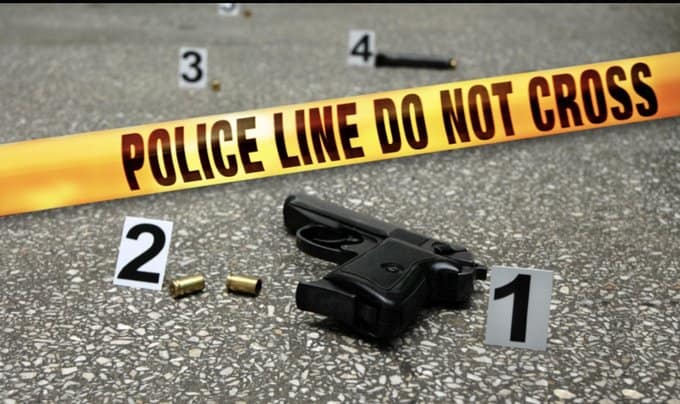
What began as a routine intelligence-gathering operation in one of Durban’s most desirable northern suburbs descended into a bloody massacre on Wednesday afternoon, when an unidentified group of gunmen launched a sophisticated, targeted ambush on a vehicle carrying two KwaZulu-Natal Crime Intelligence officers. By the time the shooting stopped, one officer—a seasoned detective with nearly two decades of service—lay dead at the scene, while his colleague, a younger operative, was fighting for his life in hospital with multiple gunshot wounds.
The attack, which police have described as “professional, ruthless, and almost certainly planned,” has sent shockwaves through South Africa’s law enforcement community and raised urgent questions about the safety of intelligence operatives working in the country’s most violent province. It also marks a chilling escalation in the ongoing war between police and organized criminal networks that have long used KwaZulu-Natal as a corridor for drug trafficking, cash-in-transit heists, and political assassination.
The Shooting
The incident occurred at approximately 2:45 PM on Wednesday, on a quiet stretch of Edgecombe Avenue, just off the M41 freeway near the upmarket Gateway Theatre of Shopping. Witnesses described a scene of sudden, brutal violence that shattered the suburban afternoon calm.
According to preliminary police reports, the two officers—whose names have been withheld pending family notification—were driving in an unmarked silver Hyundai sedan, dressed in civilian clothing as is standard for Crime Intelligence personnel. They had reportedly been conducting follow-up observations on a target linked to a series of truck hijackings in the greater Durban area when they were boxed in by two vehicles: a white BMW 3 Series and a dark grey Volkswagen Polo.
“It happened so fast,” said a woman who lives in a townhouse overlooking the road and who asked not to be named for fear of reprisal. “I heard tyres screeching, then the noise of metal hitting metal. I looked out my window, and I saw men getting out of the cars with guns—big ones, like rifles. They just started shooting into the Hyundai. It was not a fight. It was an execution. The officers never even had a chance to get out of the car.”
Neighbors reported hearing between 15 and 20 shots in rapid succession. By the time private security officers from a nearby complex arrived less than two minutes later, the attackers had already fled, abandoning the BMW—later found to have been stolen in a hijacking in Phoenix two weeks earlier—and speeding off in the Polo. The Volkswagen, police have since confirmed, was also stolen, and its registration plates were false.
Inside the Hyundai, the scene was one of carnage. The driver, a 47-year-old warrant officer who had served in Crime Intelligence for 11 years after a decade in visible policing, had been struck multiple times in the chest and neck. Paramedics from Emer-G-Med declared him dead at the scene at 3:07 PM. His passenger, a 34-year-old constable who had joined the unit only 18 months ago, was found slumped against the dashboard, bleeding profusely from wounds to his shoulder, abdomen, and left thigh. He was airlifted by a private medical helicopter to Netcare Umhlanga Hospital, where he underwent emergency surgery and remained in critical but stable condition as of Wednesday evening.
A Targeted Hit
In a hastily convened press briefing outside the Mount Edgecombe SAPS station on Wednesday evening, KwaZulu-Natal Police Commissioner Lieutenant General Nhlanhla Mkhwanazi did not mince words.
“This was not a random act of violence. This was not a robbery gone wrong. This was a targeted assassination of state operatives,” Mkhwanazi told reporters, his face etched with anger and exhaustion. “The attackers knew exactly who they were targeting. They knew the vehicle. They knew the route. They knew the time. We are dealing with an enemy that is highly organized, highly resourced, and completely without regard for human life. They have declared war on the state. We accept that challenge.”
Mkhwanazi confirmed that the slain officer had been involved in several high-profile investigations in recent years, including a major bust of a drug lab in Verulam in 2024 and the arrest of two suspects linked to the assassination of a Durban businessman in 2023. The younger wounded officer had been attached to a task team targeting cash-in-transit heist syndicates operating between Durban and Pietermaritzburg.
While the commissioner declined to name specific suspects or groups, law enforcement sources speaking on condition of anonymity pointed fingers at a notorious crime syndicate known as the “Bhele Crew,” which has been implicated in a wave of violent crimes across the province, including the murder of two off-duty police officers in Inanda last year. The group is believed to be heavily involved in the illicit cigarette trade, drug trafficking, and contract killing.
“They have been under surveillance for months,” a senior Crime Intelligence source told this publication. “We have been closing in on them. Yesterday’s attack may have been a pre-emptive strike—a message that they are not afraid and that they have eyes inside our operations. That is the most frightening part. How did they know those officers would be on Edgecombe Avenue at that exact time? That is the question keeping us awake tonight.”
Grief and Anger at the Scene
As dusk fell over Mount Edgecombe, a steady stream of police vehicles arrived at the cordoned-off crime scene. Forensic investigators in white suits combed the area for shell casings, bullet fragments, and any trace of the attackers. The silver Hyundai, its windows shattered and body riddled with holes, remained in place as a grim monument to the violence.
A small group of officers from the slain warrant officer’s station gathered at the police tape, some in uniform, others in plain clothes. They hugged each other. Some wept. One man, a burly sergeant with a shaved head, knelt on the pavement and prayed aloud in isiZulu, asking for “strength to continue the fight.”
“He was a brother to me,” said another officer, who identified himself only as Detective S. “Not just a colleague. A brother. He taught me how to interrogate a suspect without raising your voice. He taught me that patience is a weapon. And now he is gone. Shot down like an animal on a suburban street. His children—he has three children. Two are still in primary school. What do we tell them? That their father died for a country that does not protect its protectors?”
Police union representatives were quick to condemn the attack and to demand better protection for intelligence operatives. The South African Police Union (SAPU) issued a statement calling for “immediate deployment of tactical protection details” for all Crime Intelligence officers working on organized crime cases, as well as a review of operational protocols that may have exposed Wednesday’s officers to unnecessary risk.
“We have been warning for years that our members are being sent into combat zones without adequate armor, without adequate backup, and without adequate intelligence of their own,” said SAPU spokesperson Lesiba Thobakgale. “Yesterday’s attack is not an isolated incident. It is the inevitable consequence of a system that treats Crime Intelligence officers as expendable. How many more must die before the national commissioner acts?”
A Province Under Siege
The Mount Edgecombe ambush is the latest in a disturbing trend of attacks on police officers in KwaZulu-Natal, a province that has seen a 23% increase in serious violent crime over the past two years, according to SAPS statistics. In 2025 alone, 14 police officers were killed in the province—more than any other province except Gauteng—with most attacks occurring in the volatile townships of Umlazi, KwaMashu, and Inanda.
But the Mount Edgecombe attack is different. It took place in an affluent, well-policed suburb with high private security presence, CCTV cameras, and rapid response times. The choice of location suggests either arrogance on the part of the attackers or a level of inside knowledge that allowed them to plan around security measures.
“Organized crime has become bolder and more sophisticated,” said Dr. Johan Burger, a senior researcher at the Institute for Security Studies (ISS). “They are no longer hiding in the shadows. They are operating in broad daylight, in well-heeled neighborhoods, targeting the very people tasked with stopping them. This is a declaration of impunity. And unless the state responds with overwhelming force and forensic precision, we will see more of these attacks.”
Burger also noted that the attack comes just weeks before the start of the provincial policing budget review, a period when police unions traditionally lobby for increased resources. “The timing may be coincidental,” he said. “But it certainly adds pressure on the Ministry of Police to approve additional funding for witness protection, intelligence gathering, and specialized units.”
The Hunt for the Killers
As of Wednesday night, no arrests had been made. Police have launched a massive manhunt, with roadblocks set up on the N2 freeway in both directions and tracking teams deployed to follow up on intelligence leads. The abandoned BMW is being forensically examined for DNA, fingerprints, and any other trace evidence. CCTV footage from nearby businesses and residential complexes is being reviewed.
Police have also appealed to the public for any information, releasing a description of the suspect vehicle still at large: a dark grey Volkswagen Polo with unknown registration plates and tinted windows. Anyone with information is urged to contact the Crime Stop hotline on 08600 10111.
General Mkhwanazi, visibly emotional at times during the press briefing, made a direct appeal to the killers. “You think you have won. You think you have silenced us. You are wrong. Every bullet you fired has only strengthened our resolve. We will find you. We will bring you before a court. And we will ensure that the name of our fallen brother is remembered not as a victim, but as a hero who gave everything so that others could live in safety.”
A Community in Shock
For residents of Mount Edgecombe, a suburb known for its golf estates, gated communities, and high-end retail, Wednesday’s violence was a jarring reminder that no area is immune to the crime crisis gripping South Africa.
“I moved here specifically because I thought it was safe,” said Richard Naidoo, 52, an IT consultant who lives in a complex less than 200 meters from the shooting scene. “We have 24-hour security. We have electric fences. We have neighborhood watch. And yet, at three in the afternoon, a police officer is murdered on my street. It makes you question everything. If they can kill the police here, what chance do the rest of us have?”
Others expressed a mixture of fear and admiration for the slain officer. “He died doing his job,” said Thandi Zuma, 34, a domestic worker who was walking home from the bus stop when she heard the shots. “I did not know him. But I am grateful to him. He was trying to keep us safe. Now his family is suffering. It is not right. This country is not right.”
What Comes Next?
The slain warrant officer’s body was transported to the Salt River mortuary in Durban, where a post-mortem examination will be conducted on Thursday. His funeral arrangements have not yet been announced, but police sources indicate that full state honors are expected, with a memorial service likely to be held at the Durban City Hall.
The wounded constable remains under heavy guard at Netcare Umhlanga Hospital, with police concerned that the attackers may attempt to “finish the job” by targeting the hospital. Security has been increased around the facility, and access to the constable’s ward is restricted to family and sworn officers only.
For the KwaZulu-Natal Crime Intelligence unit, the work does not stop. Even as they mourn their colleague, the investigations into truck hijackings, drug labs, and cash-in-transit heists continue. The same files that the slain officer was reviewing on the morning of his death remain open on his desk, untouched.
“He would not want us to stop,” said Detective S., wiping his eyes. “He would want us to finish what he started. That is what we will do. For him. For his children. For every officer who puts on a badge knowing that today might be their last.”
Outside the Mount Edgecombe police station, a small memorial has already sprung up: flowers, candles, and a handwritten sign that reads, simply, “Rest in Peace, Warrior. We have the watch now.”
The sun set on a province in mourning. But in the shadows of Durban’s northern suburbs, the hunters were already becoming the hunted. The war had only just begun.
About The Author