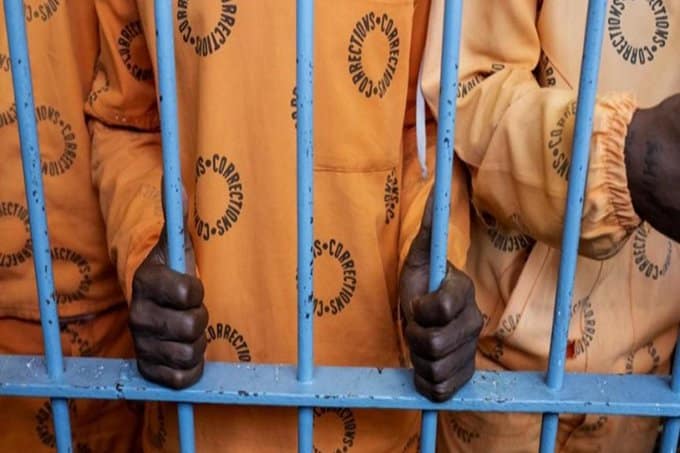
The cell was built for 25 men. On a humid Tuesday night in March, it held 47. They slept in shifts. Some stood against the wall, heads drooping from exhaustion. Others curled on the cold concrete floor, using their orange jumpsuits as thin blankets against the damp. One man, a first-time offender awaiting trial for shoplifting, sat on a bucket in the corner, staring at the ceiling, whispering to himself.
This is not an isolated scene. This is the new normal behind South Africa’s prison walls.
The Department of Correctional Services (DCS) is drowning. With approximately 168,000 inmates crammed into facilities designed for just over 107,000, the national overcrowding rate stands at a staggering 57%—meaning many prisons are operating at 157% of their approved capacity. In some facilities, the numbers climb to 200% or more.
“We are not running prisons anymore,” said a senior official with 22 years of experience, who spoke on condition of anonymity for fear of disciplinary action. “We are running pressure cookers. Every day, I walk in wondering: will today be the day it explodes?”
The Numbers Behind the Nightmare
The latest quarterly report from the Judicial Inspectorate for Correctional Services paints a grim statistical portrait:
- 168,000 inmates are housed in space for 107,000.
- 57% overcrowding rate nationally, up from 48% just two years ago.
- 14 facilities operating at over 200% capacity.
- Over 45,000 remand detainees (awaiting trial) contribute to the crush, many of whom will never be convicted but wait months or years behind bars.
The worst-affected regions include Gauteng (where Johannesburg Medium B runs at 235% capacity), KwaZulu-Natal (Westville Prison, one of Africa’s largest, holds over 8,500 inmates in a facility built for 3,000), and the Western Cape (Pollsmoor, infamous for its overcrowding, regularly houses four men per cell designed for one).
“You cannot rehabilitate a human being in a cage where they cannot lie down flat,” said Judge Tshifhiwa Maumela, chairperson of the Judicial Inspectorate, during a site visit to a Limpopo facility last month. “You cannot provide health care. You cannot provide dignity. What you are doing is manufacturing anger and despair.”
The Human Cost: Guards on the Edge
The pressure does not fall only on inmates. Correctional officials—the men and women in blue who walk the catwalks and unlock the cell doors—are breaking under the strain.
According to internal DCS documents obtained by this publication, staff absenteeism due to stress-related illness has risen by 34% over the past three years. Assaults on officials have increased by 22%. And in the past 12 months alone, seven correctional officers have been hospitalised following inmate attacks.
“You are outnumbered sometimes ten to one,” said Thabo Nkosi (not his real name), a correctional official at a notorious KZN prison. “You cannot search every cell properly. You cannot break up every fight. You learn to let small things slide just to survive the shift. But small things become big things. And when a big thing happens, management blames you.”
The DCS has attempted to address staff shortages—recruiting over 3,000 new officials in the past two years—but retention remains a crisis. New recruits see the overcrowding, hear the horror stories, and leave within months.
“My first day, I opened a cell and the smell—I cannot describe it,” said a former official who resigned after eight months. “Sweat. Feces. Unwashed bodies. And the noise. Constant shouting. I lasted two weeks before my first panic attack. The training never prepared me for that.”
Health Care: A Ticking Time Bomb
When the COVID-19 pandemic swept through South Africa’s prisons in 2020 and 2021, overcrowding turned containment into an impossibility. Thousands of inmates contracted the virus. Dozens died. And while the pandemic has receded, the underlying health crisis has not.
Tuberculosis—already rampant in South African prisons—spreads like wildfire in overcrowded cells with poor ventilation. The TB rate among inmates is estimated at 7 to 10 times higher than in the general population. HIV prevalence is similarly elevated. Skin diseases, respiratory infections, and mental health crises are endemic.
“I have one doctor for 1,200 inmates,” said a nurse at a Gauteng facility. “I have to triage. If you are not bleeding or dying, you wait. Sometimes you wait for weeks. I have seen men develop bedsores because there are not enough beds, and they lie on concrete. I have seen men lose their minds from isolation and noise.”
The DCS has acknowledged the problem, launching a “Decongestion Strategy” in 2023 that includes parole reforms, court-mandated alternatives to incarceration, and the construction of new facilities. But progress has been glacial. Only one new prison—in Makhado, Limpopo—has opened in the past five years.
The Remand Detainee Crisis: Justice Delayed, Justice Denied
Perhaps the most heartbreaking dimension of overcrowding involves remand detainees: individuals awaiting trial who have not been convicted of any crime but sit behind bars for months or even years.
Of the 168,000 inmates, over 45,000 are remand detainees. Many cannot afford bail of even R500. Some have their cases postponed repeatedly due to understaffed courts, missing dockets, or absent legal representation. A handful have been in remand for over two years.
“I have a client who spent 14 months in Pollsmoor awaiting trial for stealing a loaf of bread,” said legal aid attorney Nthabiseng Mokoena. “Fourteen months. The prosecutor finally dropped the charges because the CCTV footage was never submitted. Fourteen months of his life gone. He lost his job. His wife left him. He developed anxiety and insomnia. For a loaf of bread.”
The DCS has partnered with the National Prosecuting Authority and Legal Aid South Africa to expedite remand cases, but court backlogs—exacerbated by load-shedding, sick-outs, and a shortage of magistrates—remain severe.
Rehabilitation: An Impossible Dream
The constitutional promise of South African prisons is not merely punishment, but rehabilitation. Inmates are supposed to have access to education, skills training, psychological counselling, and reintegration programmes.
In overcrowded facilities, those programmes are a cruel joke.
“We have a woodworking workshop that can take 30 inmates per day,” said a programmes coordinator at a Western Cape prison. “I have 800 inmates on the waiting list. By the time their name comes up, they have been transferred or released or given up hope.”
The result is a revolving door. Over 80% of inmates in South African prisons have been incarcerated before. Overcrowding does not reduce crime—it manufactures recidivism.
“You take a desperate person, lock them in a cage with 50 other desperate people, give them no skills, no counselling, no hope, and then you release them with R50 transport money and a ‘good luck,'” said criminologist Dr. Elvin Shava of the University of Limpopo. “What do you expect them to do? Of course they reoffend. The system is designed to fail them.”
Regional Hotspots: Where It’s Worst
While no facility is untouched, some regions are collapsing faster than others:
Gauteng: Johannesburg Medium B (235% capacity). Inmates sleep in corridors and former storage rooms. Gang violence is endemic. Two inmates were stabbed to death in a single week last November.
KwaZulu-Natal: Westville Prison (283% capacity). Designed for 3,000, holds over 8,500. Overcrowding has led to regular “cell explosions”—coordinated inmate attacks on officials. A 2023 uprising required tactical response teams and left 12 officers injured.
Western Cape: Pollsmoor (190% capacity). The facility’s remand section is the most overcrowded in the country. Over 60% of inmates have no convictions. Tuberculosis rates are among the highest in any confined space in Africa.
Eastern Cape: St. Albans (175% capacity). Understaffing compounds overcrowding. On a single night in February, three inmates escaped after overwhelming a single guard. All were recaptured, but the incident exposed lethal vulnerabilities.
What Officials Say They Need
The Department of Correctional Services has presented a wish list to Parliament’s Portfolio Committee on Justice and Correctional Services. It includes:
- R2.4 billion for urgent infrastructure expansion and refurbishment.
- 5,000 additional staff over three years, with better training and mental health support.
- A national bail and remand reform, including electronic monitoring and community-based alternatives for non-violent offenders.
- Accelerated parole processing, with dedicated tribunals to review low-risk inmates.
“Money alone will not fix this,” said National Commissioner of Correctional Services Makgothi Thobakgale in a rare candid interview. “We need a societal shift. We need courts, prosecutors, social workers, and communities to see incarceration as a last resort, not a first response. But we also need resources. You cannot run a humane system on a shoestring budget.”
The Political Blind Spot
Despite the crisis, overcrowding rarely makes election manifestos. Politicians talk about fighting crime. They talk about building more prisons. They almost never talk about decongesting the ones they already have.
“Prisons are invisible,” said Dr. Shava. “Voters don’t see them. Journalists don’t visit them. Politicians can ignore them until something goes catastrophically wrong—a mass escape, a riot, a death. Then there are headlines, promises, and then silence again.”
Civil society organisations, including Sonke Gender Justice and the Civil Society Prison Reform Initiative, have launched a “Decongest Now” campaign, calling for a presidential commission on prison overcrowding. So far, the Presidency has not responded.
Voices from Inside
On a recent legal visit to a Gauteng prison, this reporter was allowed brief, supervised access to a single cell block. The smell hit first—a thick, sweet-sour miasma of sweat, urine, and stale food. Then the noise: shouts, laughter, arguments, someone singing, someone crying.
A young man, no older than 22, pressed his face against the bars. His eyes were red, unfocused. “I’ve been here eight months awaiting trial for a phone I didn’t steal,” he said, too loudly, as if the walls had stolen his volume control. “I have not seen my mother. My lawyer came once. I don’t know when my case will be heard. I don’t know anything anymore.”
A guard walked past, shaking his head. “Every week there is a new one like him,” she said quietly. “By the time he gets out—if he gets out—he won’t be the person who walked in. None of them are.”
Conclusion: A System at Breaking Point
South Africa’s prisons are not failing. They have already failed. The question now is not whether a catastrophic event will occur—but when. A full-scale riot. A mass escape. A tuberculosis outbreak that spirals beyond control. A hunger strike that turns deadly.
Commissioner Thobakgale acknowledged the fragility: “We are holding the line, but the line is thin. If we do not get relief—real relief, not promises—something will break. And when it breaks, everyone will ask how we let it get this bad.”
The answer, of course, is already there: slowly, silently, one inmate per cell at a time.
For now, the 168,000 wait. The guards watch. The courts delay. And the pressure builds.
Behind bars, under pressure, South Africa’s correctional system holds its breath.
About The Author