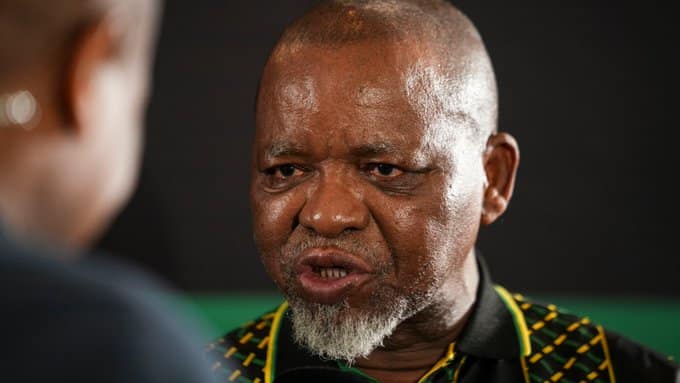
In a statement that signals a pivotal shift in the African National Congress’s (ANC) internal succession landscape, the party’s National Chairperson and former Secretary-General, Gwede Mantashe, has publicly declared himself unavailable for any leadership position at the upcoming 2027 ANC National Elective Conference. The veteran leader, a central and often controversial figure in the party’s post-apartheid political machinery, cited his age and a personal decision to retire from frontline politics as the reasons for his withdrawal.
“I am old, over 70, and I am retiring,” Mantashe stated unequivocally during a media engagement on Monday. “The time has come for a new generation to take the ANC forward. I will serve out my current term with dedication, but I will not be available for any position at the next conference.”
This announcement carries significant weight within the fractious politics of the ruling party. Mantashe, who turned 70 in 2025, is not just a senior leader but a key powerbroker whose influence spans the tripartite alliance between the ANC, the South African Communist Party (SACP), and trade union federation COSATU. His career includes a transformative tenure as Secretary-General from 2007 to 2017—a period covering the tumultuous presidencies of Jacob Zuma and the rise of Cyril Ramaphosa—before assuming the role of National Chairperson. Simultaneously, he has served as the Minister of Mineral Resources and Energy, a portfolio where he has been a staunch defender of state-owned enterprises and a cautious, sometimes resistant, player in South Africa’s energy transition.
His decision to step aside is expected to trigger intense jockeying for the influential position of National Chairperson and will fundamentally alter the balance of power in the lead-up to 2027. The position is often seen as a critical strategic node, responsible for presiding over national conferences and influencing organisational discipline and ideological direction.
Political analysts interpret the move as both a personal and a strategic calculation. “Mantashe is a realist,” said political commentator Prof. Richard Calland. “He understands the growing internal and public pressure for renewal and younger leadership within the ANC. By announcing this well in advance, he avoids being a lame duck and can potentially shape his own legacy and influence the succession race from a position of perceived authority, rather than being seen as clinging to power.”
The announcement was met with mixed reactions. Allies praised his long service and acknowledged the need for generational change, while opponents within the party may see it as an opportunity to reshape the ANC’s leadership structure. It also places immediate focus on who from the so-called “old guard” will follow suit and which younger cadres will now position themselves for the party’s top six leadership positions.
Gwede Mantashe’s impending departure from the ANC’s highest structures marks the end of a consequential chapter. A former mineworker and trade unionist who rose to the apex of power, his legacy is intertwined with some of the party’s greatest internal battles and policy debates. His retirement declaration is more than a personal exit; it is a stark recognition of time’s passage and a deliberate opening for the next act in the ANC’s ongoing and uncertain evolution.
About The Author