The light streamed through the high windows of the Union Buildings’ amphitheatre, illuminating a room filled with activists, civil servants, students, and survivors. On any other day, it might have been a routine government briefing. But the woman at the podium was not there to deliver routine remarks. She was there to deliver a reckoning.
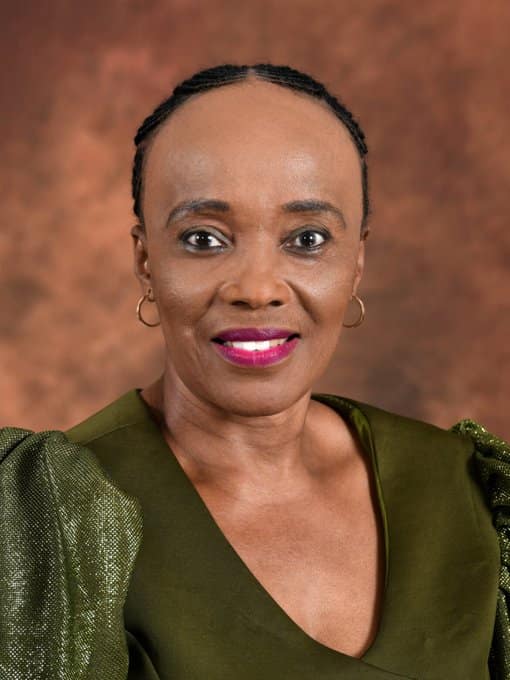
Minister in the Presidency for Women, Youth and Persons with Disabilities, Sindisiwe Chikunga, stood before a hushed audience on a crisp autumn morning and reminded them—reminded the country, reminded the ghosts of history—that anniversaries are not the same as endings.
“We gather in a year of milestones,” she said, her voice steady but threaded with urgency. “Three milestones. Three generations. And one struggle that remains unfinished. Let us not mistake the calendar for the finish line.”
The year 2026 carries a heavy historical load for South African women. It marks the 70th anniversary of the 1956 Women’s March to the Union Buildings—that iconic day when 20,000 women of all races left their petitions at the doors of Prime Minister J.G. Strijdom and sang “Wathint’ Abafazi, Wathint’ Imbokodo” (You Strike a Woman, You Strike a Rock). It also marks the 30th anniversary of the 1996 Constitution, which enshrined gender equality and prohibited discrimination on the grounds of sex, gender, and sexual orientation. And it marks the 10th anniversary of the 2016 #TotalShutdown movement, which forced the nation to confront the epidemic of gender-based violence (GBV) with a new, unignorable ferocity.
Three generations. Three different fights. One throughline.
But Chikunga’s message was not celebratory. It was, in her own words, “a loving but firm intervention.”
The First Milestone: 1956 – The Mothers of the Nation
The minister began with 1956, not as history but as living memory. She invoked the names of Lilian Ngoyi, Helen Joseph, Albertina Sisulu, Sophia Williams-De Bruyn—women who risked arrest, banishment, and death to stand in front of the very building where Chikunga now spoke.
“They marched so that we could vote,” Chikunga said. “They sang so that we could speak. They were arrested so that we could be free. But let us be honest: they did not march so that their great-granddaughters could still be raped, still be paid less, still be told to sit down and be quiet.”
The audience shifted. Some nodded. Others looked at their shoes.
The 1956 march is often invoked as a moment of triumph—a successful protest that forced the apartheid state to back down on pass laws for women. But Chikunga reminded the room that the pass laws were merely postponed, not abolished. And the broader struggle for women’s autonomy—over their bodies, their labour, their lives—continued long after the singing stopped.
“Those women died without seeing the South Africa we live in today,” Chikunga said. “The question is: will we die without seeing the South Africa our daughters deserve?”
The Second Milestone: 1996 – The Promise of Paper
The minister then turned to 1996, the year the post-apartheid Constitution was signed into law by President Nelson Mandela in Sharpeville. Section 9 of that Constitution is a thing of beauty—a guarantee of equality that explicitly prohibits discrimination based on gender, sex, pregnancy, marital status, and sexual orientation. It is, by many measures, one of the most progressive constitutional provisions on gender in the world.
But Chikunga was not interested in admiring the prose.
“A beautiful constitution is not a safe home,” she said. “A beautiful constitution does not stop a man from beating his wife. A beautiful constitution does not open a bank account for a woman in a rural village. The paper is glorious. The implementation is a scandal.”
She pointed to the gap between constitutional promise and lived reality. Thirty years after the Constitution, South African women still earn, on average, 23% less than men for equivalent work. Only 46% of senior management positions are held by women, despite women making up 51% of the population. And the gender-based violence statistics—the ones that make South Africa one of the most dangerous countries in the world to be a woman—have barely budged.
“We wrote the best constitution in the world,” Chikunga said. “Then we forgot to enforce it.”
The Third Milestone: 2016 – The Reckoning That Wasn’t
The minister’s voice changed when she reached 2016. It became quieter. More deliberate. As if she were walking through a minefield of memory.
The #TotalShutdown movement erupted in August 2016, following the brutal rape and murder of student Uyinene Mrwetyana at a post office in Cape Town. Thousands of women took to the streets, shutting down major intersections, occupying government buildings, and refusing to move until the state declared a national emergency on GBV.
The movement forced concessions: specialized GBV courts, increased funding for Thuthuzela Care Centres, the National Strategic Plan on GBVF. But a decade later, Chikunga argued, the emergency has become normalized.
“After #TotalShutdown, we had marches. We had hashtags. We had vigils with candles and teddy bears,” she said. “And then? Then we went back to our lives. The men went back to their habits. And the women went back to being afraid.”
She cited the latest crime statistics: an average of 11 women murdered every day in South Africa. A rape reported every 12 minutes. And a conviction rate for sexual offences that remains stubbornly below 20%.
“The young women of 2016 are now ten years older,” Chikunga said. “Some of them are dead. Some of them are survivors. Some of them have given up. That is not a movement. That is a mourning ritual.”
The Thread That Binds: Unfinished Struggle
Having laid out the three milestones, the minister tied them together with a single, insistent thread: leadership.
“Each of these moments produced a generation of leaders,” she said. “The mothers of 1956. the constitutional architects of 1996. the street warriors of 2016. But leadership is not a one-time event. It is a relay race. And the baton is on the ground.”
Chikunga’s central argument was that South Africa has become complacent about gender equality, treating it as a problem that has been “solved” on paper and therefore requires only maintenance, not transformation. She called this “a dangerous, almost fatal, delusion.”
“We have ministers. We have departments. We have laws. We have strategies. And still, women are dying. Still, girls are dropping out of school because there are no sanitary pads. Still, lesbian women are being ‘correctively’ raped. Still, disabled women are invisible in every policy document.”
She paused, allowing the weight of the list to settle.
“Having a Minister for Women is not the same as having a country for women. And I say that as the Minister.”
The Call: Stronger Public Leadership
The core of Chikunga’s address was a demand for what she called “stronger public leadership on gender equality”—not from her department alone, but from every sphere of government, every political party, every traditional leader, every CEO, every school principal, every father, every brother, every son.
She proposed a five-point framework:
- Binding gender targets for all public entities, with consequences for non-compliance—not just reporting requirements.
- Mandatory gender sensitivity training for all magistrates and prosecutors, given that judicial bias remains a major barrier to justice for survivors.
- A dedicated gender equality budget line in every national and provincial department, audited annually by the Auditor-General.
- The revival of the Gender Equality Council, a multi-sectoral body with real enforcement powers, which has been dormant since 2019.
- A public register of individuals convicted of gender-based violence, to prevent perpetrators from moving between provinces and jobs undetected.
“We do not need another task team,” Chikunga said. “We do not need another summit. We do not need another framework. We need action. We need accountability. And we need it now.”
The Skeptics: Words Are Not Enough
Outside the Union Buildings, where a small group of activists had gathered with placards reading “30 Years of Promises, Still Waiting,” the reaction to Chikunga’s speech was mixed.
“She talks well,” said Nomsa Dlamini, a GBV survivor and activist from Soweto. “But we have heard good speeches before. The question is: will she go back to her office and do anything different? Or will this be another press release that we quote next year when nothing has changed?”
Others were more hopeful. “At least she is naming the problem honestly,” said Thabo Mokoena, a community organiser working with men’s behavioural change programmes. “Most ministers pretend everything is fine. She said it’s not fine. That is a start.”
Chikunga herself seemed aware of the skepticism. In her closing remarks, she addressed it directly.
“I know that words are cheap. I know that you have heard promises before. I know that trust is a currency this government has spent carelessly. But I am not asking you to trust me. I am asking you to watch me. Watch my department. Watch Parliament. Watch the courts. And if we fail, hold us accountable. That is not trust. That is democracy.”
The Generations to Come
The minister ended where she began: with the three generations. She asked a young woman in the front row—a 19-year-old student named Lerato—to stand.
“Lerato was born in 2007,” Chikunga said. “She missed the 1956 march by 51 years. She missed the 1996 Constitution by 11 years. She was nine years old during #TotalShutdown. She has no memory of any of these milestones. She only knows the world she inherited.”
She turned to face the young woman.
“Lerato, what do you want from us?”
Lerato paused. The room was silent.
“I want to be safe,” she said quietly. “I want to walk to the shop without looking over my shoulder. I want to finish my degree without being harassed by a lecturer. I want to get a job that pays me the same as a man. That is all. That is not too much.”
Chikunga nodded. “That is not too much,” she repeated. “That is the bare minimum. And we have failed to deliver it for 70 years.”
She turned back to the audience.
“Three milestones. Three generations. One unfinished struggle. The question is not whether we will finish it. The question is whether we will start trying. Today. Not tomorrow. Not next year. Today.”
The applause was long but uncertain—the kind of applause that comes from people who want to believe but have been disappointed too many times. As the minister stepped down from the podium, a journalist whispered to a colleague: “She’s right, you know. About all of it. But being right has never been enough.”
Perhaps that is the lesson of the three milestones. Being right is not the same as winning. Marches are not the same as outcomes. Anniversaries are not the same as endings.
The struggle continues. And on a autumn morning in Pretoria, one minister asked a nation to stop celebrating the past and start building the future.
Whether the nation will listen—whether it has ever truly listened—is a question that will not be answered by a speech. It will be answered by the next statistic, the next survivor, the next funeral, the next march.
And by the next generation of women, who will not wait forever.
*Minister Chikunga’s full address will be published on the Department of Women, Youth and Persons with Disabilities website. The five-point framework is open for public comment until 31 July 2026.*
About The Author