At exactly 9:00 AM on a crisp April morning, thousands of thumbs began tapping. Some were at taxi ranks, balancing phones on their knees. Others were in open-plan offices, sneaking a glance beneath desk monitors. A few had camped on the ticketing website since 6 AM, refreshing like gamblers at a slot machine.
By 9:47 AM, it was over.
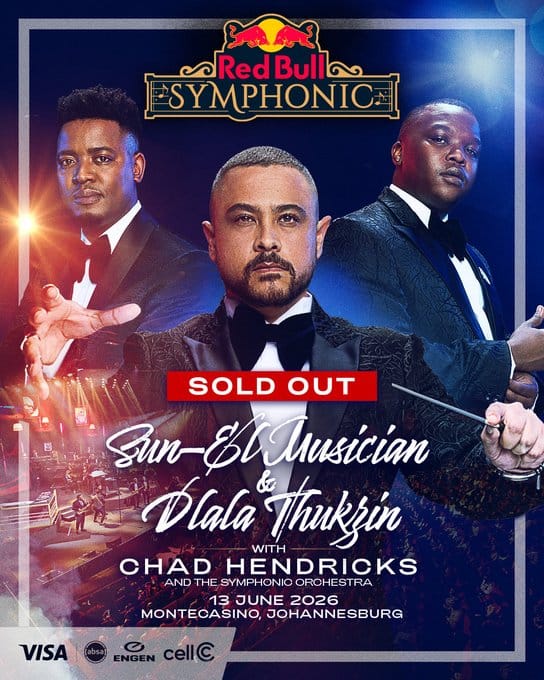
Red Bull Symphonic 2026—the annual collision of South African electronic dance music and classical orchestration—had sold out completely. Forty-seven minutes. Every seat. Every VIP package. Every last standing ticket at the Teatro at Montecasino in Johannesburg. Before most people had finished their morning coffee, the event was gone.
The reaction on social media was immediate and visceral. Screenshots of “SOLD OUT” signs. Crying-laughing emojis layered over genuine tears. Memes of people digging under couches for loose change. And one particularly creative fan Photoshopping a violin onto a photo of a weeping Amapiano dancer.
“Red Bull, please,” wrote a user named @Amapiano_4Life. “You cannot announce a show with Sun-El and Dlala Thukzin and only give us one date. That is cruelty. That is punishment. That is a war crime.”
But beneath the chaos was a quiet truth: South Africa’s house music scene had outgrown its venues. And this year’s double-header—featuring two of the genre’s most distinct voices—had tapped into something deeper than hype. It had tapped into history.
The Double Headliner That Broke the Mold
For the first time since Red Bull Symphonic launched in South Africa, the event would feature not one but two headline acts. On June 13, at the acoustically pristine Teatro at Montecasino, Sun-El Musician and Dlala Thukzin will share the stage—not as a back-to-back DJ set, but as co-conductors of a symphonic reimagining of their most beloved tracks.
Sun-El Musician, born Sanele Sithole, brings the spiritual. His music is cathedral-like—soaring melodies, gospel-inflected vocals, and drops that feel less like dancefloor moments and more like benedictions. His 2017 hit “Ubomi Abumanga” (isiZulu for “Life Is Not a Lie”) is a national treasure, a song that has soundtracked weddings, funerals, protests, and parties in equal measure. To hear it played by a 65-piece orchestra is not a gimmick. It is a homecoming.
Dlala Thukzin, born Thukzin Mkhize, brings the grit. His signature track “iPlan” (featuring Zaba and Sykes) is a log drum masterpiece—that distinctive, heavy, almost percussive Amapiano beat that feels like a heartbeat with a limp. Where Sun-El ascends, Dlala Thukzin digs in. Together, they represent the two poles of modern South African house: the celestial and the terrestrial, the choir and the streets.
“We are very different artists,” Sun-El said in a joint video interview released by Red Bull. “But the music? The music knows each other. The orchestra will show you how.”
Conductor Chad Hendricks, a 34-year-old prodigy who trained at the Royal Academy of Music in London but cut his teeth arranging for Soweto Gospel Choir, will wield the baton. His challenge is formidable: how to translate the raw, digital, sometimes chaotic energy of Amapiano and Gqom into the rigid language of sheet music and string sections.
“People think orchestral means slow,” Hendricks said in a behind-the-scenes clip. “Wait until you hear log drums played by timpani and bassoons. Wait until you hear a Sun-El drop performed by thirty violins. We are not quieting the music. We are giving it new lungs.”
The Series That Became a Pilgrimage
Red Bull Symphonic did not appear out of thin air. It has been building a quiet revolution since 2024, when Kabza De Small—the “King of Amapiano”—became the first South African electronic artist to headline the format. That show sold out in two hours. Fans wept. Critics raved. A new tradition was born.
In 2025, Kelvin Momo took the stage, bringing his deep, soulful, almost meditative take on piano to the symphonic treatment. That show sold out even faster: ninety minutes. And the crowd—a sea of black designer wear, designer sneakers, and genuine tears—proved that house music fans were hungry for something more than lasers and smoke machines. They wanted majesty.
By 2026, the pattern was clear. The announcement dropped on a Tuesday. The ticket link went live on Thursday. By Thursday lunchtime, the only way to get in was to know someone who knew someone—or to refresh the resale pages with the desperation of a scavenger.
“The demand is telling us something,” said a Red Bull spokesperson in a brief statement. “South African house music is not a trend. It is a canon. And the symphonic treatment is our way of saying: this music belongs in the same conversation as Mozart, as Beethoven, as Miriam Makeba’s live recordings with orchestras. It is that serious.”
From Kwaito to Gqom to Amapiano: A Sonic Lineage
The press release for the 2026 event made a point that many casual listeners overlook: house music in South Africa did not emerge from nowhere. It is the great-grandchild of Kwaito—the post-apartheid genre that gave voice to a generation born free. It is the child of Gqom, the raw, minimalist, almost industrial sound that erupted from Durban’s underground in the early 2010s. And it is the present form of Amapiano, the genre that has conquered not just South Africa but the world.
Red Bull Symphonic has always understood this lineage. In 2024, Kabza De Small’s set included a symphonic medley of classic Kwaito tracks—Mandoza’s “Nkalakatha,” TKZee’s “Shibobo”—that reduced the Teatro to a weeping, singing, dancing congregation. In 2025, Kelvin Momo paid tribute to Gqom pioneers like DJ Lag and Citizen Boy, turning their sparse, aggressive beats into something almost mournful.
This year, Sun-El and Dlala Thukzin are expected to continue that tradition. Rumors—unconfirmed, but persistent—suggest that the duo will collaborate on a new, never-before-heard symphonic original, composed specifically for the night. Others whisper that a surprise guest vocalist might appear, someone from the early days of South African house, now in their 50s, making a rare return to the stage.
Red Bull has neither confirmed nor denied these rumors. They do not need to. The tickets are already sold.
The Fans Left Behind
For every fan celebrating a successful ticket purchase, there are a dozen refreshing broken links. The comment sections of Red Bull’s social media pages have become digital wailing walls.
“I was in the queue at 9:00:00. I clicked buy at 9:00:12. SOLD OUT,” wrote a user named @PianoTillIDie. “Twelve seconds. I have been waiting for this since 2024. Twelve seconds.”
Others have already begun organizing “listening parties” outside Montecasino on the night of the event—gathering in the parking lot, playing Sun-El and Dlala Thukzin from car speakers, hoping to catch a few notes drifting through the venue’s walls.
“The acoustics at Teatro are so good that if you stand near the loading dock, you can hear everything,” said one fan who declined to give her name, worried the venue might block her spot. “I’m bringing a picnic blanket and a Bluetooth speaker. It’s not the same, but it’s something.”
Red Bull has so far refused to comment on the possibility of an additional date. Industry insiders suggest that both Sun-El and Dlala Thukzin have packed touring schedules for the rest of 2026, making a second show logistically difficult. But the pressure is mounting. A Change.org petition titled “One More Night, Red Bull” has already gathered 12,000 signatures.
What to Expect on June 13
For the lucky few who secured tickets, June 13 promises to be a sensory overload. The Teatro at Montecasino is an intimate venue by South African standards—just over 1,000 seats—which means every note, every bow stroke, every breath will be audible. The orchestra, led by Hendricks, will be arranged in a semi-circle around the stage, with Sun-El and Dlala Thukzin positioned at twin DJ consoles, flanked by a grand piano and a full percussion section.
The setlist is still under wraps, but based on previous years, fans can expect:
- Symphonic versions of Sun-El’s “Ubomi Abumanga” and “Into Ingawe” (featuring vocalist Ami Faku, who is rumored to appear live)
- Dlala Thukzin’s “iPlan” reimagined with string glissandos and a harp playing the log drum pattern
- A possible joint track where the two artists trade bars over a live orchestral build-up
- A tribute section featuring classic Gqom and Kwaito tracks, arranged for full orchestra
The dress code, according to unspoken tradition, is “black-tie Amapiano”—sharp suits and elegant dresses, paired with sneakers. Because you cannot stand still when the orchestra drops the bass.
The Bigger Picture
What makes Red Bull Symphonic 2026 significant is not just the sold-out sign. It is what the sold-out sign represents. South African house music, once dismissed as “township noise” by critics and radio programmers who preferred imported genres, has finally claimed its place in the nation’s cultural pantheon.
An orchestra is not a club. A teatro is not a tavern. When a violinist plays a Sun-El melody, when a cellist bows a Dlala Thukzin bassline, the music is being validated not by streams or TikTok dances but by the same institutional structures that have historically excluded it.
“This is our classical music now,” said a musicologist from the University of the Witwatersrand, who has attended every Red Bull Symphonic since 2024. “In 100 years, students will study ‘Ubomi Abumanga’ the way they study Beethoven’s Fifth. And they will listen to recordings of these symphonic shows and say: ‘This is when it became art.'”
For now, though, it is not about legacy. It is about June 13. It is about the 1,000 people who will pack into the Teatro, phones away, ears open, as a 65-piece orchestra and two of South Africa’s greatest living producers attempt something that has never been done before.
The tickets are gone. The waiting is almost over. And somewhere in Johannesburg, a timpanist is practicing a log drum pattern, over and over, until the beat becomes a heartbeat, and the heartbeat becomes a prayer.
Red Bull Symphonic 2026 takes place on June 13 at the Teatro Montecasino. Sold out. For those without tickets: start praying for a second date.
About The Author