The courtroom was packed, as it has been at every hearing since January. Mothers wearing T-shirts printed with the faces of their lost children. Fathers with hollow eyes and trembling hands. Community members who had lined the streets to wave at the yellow buses every morning—and who now line the courthouse corridors, hoping for answers that never seem to come.
On Wednesday, the case against 22-year-old Ayanda “Biggie” Dludla, the scholar transport driver at the centre of the January 2026 crash that killed 14 school learners, was postponed once again. The brief hearing, lasting no more than 15 minutes, yielded no new information, no charges, and no closure. Instead, Magistrate Thabo Ndlovu announced that the matter would be held over to allow the Director of Public Prosecutions (DPP) to finalize its decision on what charges to bring—and in which court the trial should be heard.
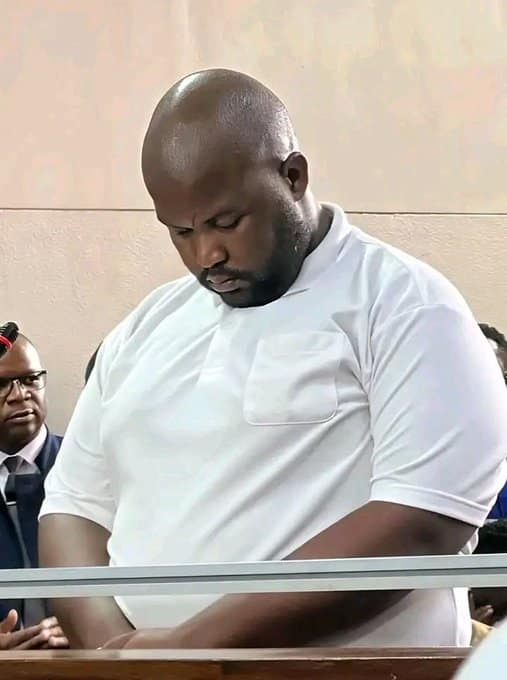
Dludla, who has been out on bail since February, sat in the dock with his head bowed, his legal team huddled around him. He did not speak. He did not look at the families who packed the public gallery. He stared at the floor as if hoping it would open and swallow him.
Outside the courthouse, the families of the 14 dead children—some still wearing funeral programmes laminated and hung around their necks—expressed frustration and despair.
“Every time we come here, they tell us to wait,” said Nomsa Mthembu, whose 12-year-old daughter Thando died in the crash. “Wait for the prosecutor. Wait for the DPP. Wait for the judge. We have been waiting for four months. How long must we wait? Our children are not coming back. But we need someone to pay for what happened. We need that man to go to prison. That is not too much to ask.”
The tragedy, which unfolded on a cold January morning on the R59 highway outside Vanderbijlpark, remains one of the deadliest scholar transport accidents in South African history. The crash claimed the lives of 14 learners aged 6 to 14, injured 21 others, and exposed deep and systemic failures in the regulation of scholar transport across the country.
But four months later, no one has been held accountable. And the wheels of justice—like the wheels of the overloaded, unroadworthy minibus that crashed that morning—are turning slowly.
The Crash: A Morning That Changed Everything
The crash occurred on 22 January 2026, the second week of the 2026 school year. The yellow minibus, a Toyota Quantum registered to a private scholar transport operator, was ferrying children from Sebokeng and surrounding townships to schools in Vanderbijlpark. According to eyewitnesses and preliminary crash reports, the minibus was traveling at high speed when it attempted to overtake a truck on a stretch of the R59 known for heavy traffic and poor visibility.
The minibus clipped the truck’s side, swerved, rolled multiple times, and came to rest in a ditch. The scene was described by first responders as “apocalyptic.” Children’s schoolbags, lunchboxes, and shoes were scattered across the highway. Bodies lay in the veld. The screaming of the injured was drowned out by the sirens of approaching ambulances.
By the end of the day, 14 children were dead. The youngest, six-year-old Lethabo Moloi, had just started Grade 1. The oldest, 14-year-old Kabelo Nkosi, was in Grade 9 and dreamed of becoming a doctor.
“He was so proud of his school uniform,” his mother said at a memorial service a week later. “He ironed it himself every night. He wanted to look smart. He wanted to make us proud. And now I iron nothing. His room is the way he left it. I cannot change it. I cannot let him go.”
The driver, Ayanda Dludla, survived the crash with minor injuries. He was arrested at the scene after a preliminary breathalyser test allegedly indicated alcohol consumption. Blood samples were taken and sent for forensic analysis. The results have not yet been made public.
The Driver: Who Is Ayanda ‘Biggie’ Dludla?
Ayanda Dludla, known by his nickname “Biggie,” is a 22-year-old from Sebokeng. According to neighbours and acquaintances, he had been driving scholar transport for approximately two years before the crash. He was not the owner of the minibus; he was a hired driver working for a company that has since had its operating license suspended pending an investigation.
Dludla’s family has maintained his innocence, insisting that the crash was an accident caused by poor road conditions and a truck driver who swerved into his lane.
“Ayanda is a good boy,” his mother told reporters outside the family home in February. “He would never drink and drive. He loved those children. He knew their names. He knew their parents. He is devastated. He cries every night. He is not a monster. He is a boy who made a mistake. He is paying for it every day.”
But the parents of the dead children are unimpressed by such pleas. “Fourteen children are dead,” said one father. “That is not a mistake. That is negligence. That is criminal. He got behind the wheel of a minibus that should not have been on the road. He drove too fast. He tried to overtake when he should not have. And now 14 families are destroyed. I do not care if he cries. I want him in prison.”
Dludla was granted bail in February in the amount of R10,000, despite the State’s opposition. The magistrate cited Dludla’s lack of a prior criminal record, his cooperation with investigators, and his willingness to surrender his passport as factors in the decision. His release sparked outrage among the families of the victims, who held a protest outside the courthouse.
“He walks free while our children are in the ground,” one mother screamed at the time. “Where is the justice? Where is God?”
The Legal Proceedings: A Slow Crawl Toward Accountability
Wednesday’s postponement marks the fourth time the case has been delayed. The legal hurdles are significant. The DPP must decide not only on the charges—which could range from culpable homicide to murder (if alcohol is proven and intent can be established)—but also on the appropriate trial venue.
The options include:
- The Vanderbijlpark Magistrate’s Court, which handles less serious offences and has limited sentencing powers (maximum 15 years).
- The Gauteng High Court in Johannesburg, which handles serious offences including murder and has unlimited sentencing powers (including life imprisonment).
- The Palm Ridge Regional Court, a middle option with sentencing powers of up to life imprisonment for certain offences.
The choice of venue is critical. If the DPP decides to charge Dludla with murder—a rare but not unprecedented charge in drunk driving cases—the matter must be heard in the High Court. If the DPP opts for culpable homicide, the case could remain in the Magistrate’s Court.
“We are considering all options,” said a spokesperson for the DPP’s office. “The loss of 14 young lives is an unimaginable tragedy. We owe it to the families to ensure that the charges reflect the full gravity of the alleged conduct. That decision will be made carefully, based on the evidence, the law, and the public interest.”
Legal experts say the DPP is likely to charge Dludla with multiple counts of culpable homicide, as well as reckless and negligent driving, driving under the influence (if the blood alcohol test is positive), and violations of the National Land Transport Act (overloading, unroadworthy vehicle, etc.).
“It is very difficult to prove murder in a driving case,” said criminal defence attorney Nomalanga Khumalo, who is not involved in the matter. “You have to show intent—that the driver knew his actions would likely cause death and proceeded anyway. That is a high bar. Culpable homicide is easier to prove. But the sentence for culpable homicide can still be significant, especially when there are multiple victims.”
The DPP also has the option of charging the owner of the minibus, who may be liable for allowing an unroadworthy vehicle to be used for scholar transport. That investigation is ongoing.
The Victims: 14 Lives, 14 Stories
Behind the legal jargon and the court postponements are 14 children who will never grow up. Their names and faces have become symbols of a national crisis, but to their families, they are simply irreplaceable.
The 14 learners who died in the crash were:
- Lethabo Moloi, 6 – Grade 1, loved drawing and singing. Wanted to be a teacher.
- Karabo Mokoena, 7 – Grade 2, obsessed with soccer. Dreamed of playing for Kaizer Chiefs.
- Thabo Ndlovu, 8 – Grade 3, a quiet child who loved reading.
- Lerato Dlamini, 9 – Grade 4, a budding dancer who performed at every family gathering.
- Amahle Nkosi, 10 – Grade 5, the class clown who wanted to be a comedian.
- Sipho Khumalo, 11 – Grade 6, a math whiz who tutored younger students.
- Thando Mthembu, 12 – Grade 7, a gentle soul who loved animals.
- Bongani Zwane, 12 – Grade 7, a talented artist who drew portraits of his classmates.
- Precious Gumede, 13 – Grade 8, a budding fashion designer who sewed her own clothes.
- Kabelo Nkosi, 14 – Grade 9, a straight-A student who wanted to be a doctor.
- Naledi Mthembu, 13 – Grade 8, a passionate netball player.
- Andile Dlamini, 14 – Grade 9, a kind boy who helped his grandmother every weekend.
- Busisiwe Ndlovu, 11 – Grade 6, a friendly child who never met a stranger.
- Mpho Khumalo, 12 – Grade 7, a quiet boy who loved playing guitar.
Fourteen names. Fourteen stories. Fourteen futures erased in a single moment on a highway that has seen too much tragedy.
“We will never forget them,” said a teacher at one of the schools affected. “Every day, we walk into empty classrooms. We see empty desks. We see photographs on the walls. We see children who are not there. The pain does not fade. It just changes shape.”
The Scholar Transport Crisis: A Systemic Failure
The Vaal tragedy exposed deep and long-standing failures in South Africa’s scholar transport system. Every day, hundreds of thousands of children are transported to and from school in minibuses, taxis, and private vehicles. Many of these vehicles are unroadworthy, unregulated, and driven by unqualified drivers.
According to the Department of Basic Education, approximately 60% of scholar transport vehicles in South Africa do not meet minimum safety standards. Overloading is rampant. Many drivers have no formal training. Vehicle inspections are rare. And enforcement is almost non-existent.
“We have known about this problem for years,” said education activist Thabo Mkhabela. “We have submitted reports. We have held protests. We have written letters. And nothing changes. It takes a tragedy like this to get attention. And even then, the attention fades. The promises are made. The money is allocated. And then the next tragedy happens. It is a cycle of neglect.”
In the aftermath of the Vaal crash, the Department of Transport announced a series of measures, including:
- A nationwide audit of all scholar transport vehicles and operators.
- The introduction of a mandatory scholar transport permit system.
- Increased funding for vehicle inspections and driver training.
- A public awareness campaign for parents on how to identify safe scholar transport.
But four months later, implementation has been slow. Only three provinces have completed their audits. The permit system has not yet been launched. And driver training programmes are still in the planning phase.
“It is not enough,” Mkhabela said. “It is never enough. Our children are dying. And the government is still talking. We need action. We need now. Not next year. Not after the next tragedy. Now.”
The Families: Between Grief and Anger
The families of the 14 children have formed a support group, the Vaal 14 Families United for Justice. They meet weekly in a community hall in Sebokeng, sharing meals, memories, and frustrations. They have become a formidable advocacy force, lobbying Parliament, speaking to the media, and demanding accountability.
“We are not going away,” said Nomsa Mthembu, the group’s unofficial spokesperson. “We will not be silenced. We will not be pacified. We will not accept excuses. We want justice for our children. And we will fight for it until our last breath.”
The group has retained a legal team to represent their interests in the criminal case and to explore civil claims against the transport company and the driver. They are also pushing for a public inquiry into scholar transport safety, with the power to compel testimony and recommend policy changes.
“A public inquiry would shine a light on the whole system,” said their lawyer. “It would expose the failures. It would name the names. It would force the government to act. That is what we need. Not more promises. Action.”
The Coming Months: What Happens Next
The DPP is expected to announce its decision on charges and trial venue within the next 30 days. Once the decision is made, the case will be transferred to the appropriate court, and a trial date will be set. Legal experts expect the trial to begin in late 2026 or early 2027, depending on the complexity of the case and the availability of court resources.
If Dludla is convicted, he faces a range of possible sentences:
- Culpable homicide (multiple counts): Up to 15 years imprisonment per count, potentially to run concurrently.
- Driving under the influence: Up to 6 years imprisonment or a fine.
- Reckless and negligent driving: Up to 6 years imprisonment or a fine.
- Overloading/vehicle violations: Fines and possible imprisonment.
The families of the victims have made it clear that they expect a significant prison sentence. “Anything less than 20 years would be an insult to our children,” one father said. “He took 14 lives. He should give up 14 times 10 years. That is 140 years. He should die in prison.”
But Dludla’s legal team is expected to argue for a lighter sentence, citing his youth, his lack of prior criminal record, and the alleged role of other factors (road conditions, the truck driver, etc.) in the crash.
“He is a young man who made a terrible mistake,” his lawyer said outside court on Wednesday. “He is not a monster. He is not a murderer. He is a 22-year-old who will carry the weight of this tragedy for the rest of his life. A long prison sentence would serve no purpose. It would not bring the children back. It would not heal the families. It would only destroy another life.”
The families disagree. Vehemently.
The Vigil: Candles and Questions
On Wednesday evening, after the court hearing, the families gathered at the crash site on the R59. They lit candles, placed flowers, and stood in silence. A pastor led a prayer. A woman sang a hymn. Then one of the mothers spoke.
“We are here because we have nowhere else to go,” she said, her voice trembling. “We are here because we need to feel close to our children. We are here because we need to remind the world that they existed. That they mattered. That they were not just numbers. They were our hearts. They were our hopes. They were our everything.”
She paused, wiping her eyes.
“They say justice is coming. They say the DPP is thinking. They say the court will decide. But we have been thinking. We have been deciding. We have decided that we will not rest until Ayanda Dludla is behind bars. We have decided that we will not stop fighting until every scholar transport vehicle in this country is safe. We have decided that our children will not have died for nothing.”
The candles flickered in the evening breeze. The stars came out, one by one. And on a highway that had seen too much death, a small group of grieving parents stood together, holding onto each other, holding onto hope, holding onto the memory of 14 children who would never grow up.
About The Author