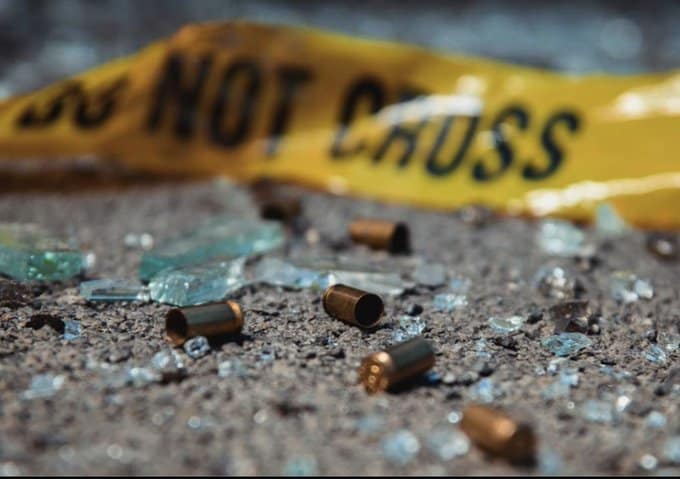
The bullet that killed him did not come from a police officer’s service pistol. It did not come from a rival gang’s drive-by shooting. It did not come from a state-sanctioned execution or a vigilante’s ambush. The bullet that ended the life of Sifiso “Coach” Malwane—one of KwaZulu-Natal’s most wanted criminal suspects, a man whose name had become synonymous with violence, intimidation, and a particular kind of brazen lawlessness—came from inside the home he was allegedly trying to rob.
In the end, the hunter became the hunted. The man who had terrorised communities, evaded capture for years, and built a criminal empire in the remote northern reaches of the province died on the floor of a stranger’s house, shot by a homeowner who refused to be a victim.
The incident took place in the Thengani area of Emanguzi, a sprawling, rural settlement in the Umkhanyakude District, near the border with Mozambique and eSwatini. It is a region of dense bush, dirt roads, and scarce police presence—a landscape that had become Malwane’s playground and his fortress.
But on a Tuesday evening, in a house that was not his own, the playground turned into a kill box. And Sifiso “Coach” Malwane, 39, played his last game.
“He was dangerous,” said a resident of Thengani, who spoke on condition of anonymity for fear of reprisals. “Everyone knew his name. Everyone was afraid. But last night, someone was not afraid. Last night, someone fought back. And now Coach is dead. We are not sad. We are relieved.”
The Man: Who Was ‘Coach’ Malwane?
Sifiso Malwane earned his nickname, “Coach,” not on a sports field but in the criminal underworld of northern KZN. He was reportedly a mentor to young criminals, recruiting teenagers from impoverished villages and training them in the arts of housebreaking, vehicle theft, and armed robbery. His students called him Coach. His victims called him a monster.
Malwane was wanted by police in connection with at least 30 serious crimes, including:
- A 2022 farm murder on the outskirts of Hluhluwe, where a 67-year-old farmer was beaten to death during a robbery.
- A 2023 cash-in-transit heist in Mkuze, where guards were tied up and explosives were used to blow open a safe.
- Multiple house robberies across Umkhanyakude, Zululand, and even into Mpumalanga.
- A string of vehicle hijackings, including the theft of a police vehicle in 2024.
- Drug trafficking, with alleged ties to cross-border smuggling networks operating between South Africa, Mozambique, and eSwatini.
Despite a provincial task force dedicated to his capture, Malwane had eluded law enforcement for years. He was known to move constantly, rarely sleeping in the same place twice. He used a network of informants—many of them coerced or paid—to stay one step ahead of the police. He was rumoured to have family members in the security industry, giving him access to police band radios and inside information on operations.
“He was smarter than the average criminal,” said a police officer who had pursued Malwane for three years. “He was organised. He was disciplined. He had a system. That is why he lasted so long. But systems fail. And people make mistakes. His mistake was greed. He went to one too many houses. And the last house, he did not come out.”
The Incident: A Botched Robbery, A Fatal Encounter
The details of the shooting remain under investigation, but preliminary reports paint a picture of a robbery gone catastrophically wrong.
According to police spokesperson Colonel Robert Netshiunda, three armed men—allegedly including Malwane—forced their way into a home in Thengani around 8 PM on Tuesday. The homeowners, a couple in their 50s, were watching television when the men entered through a back door that had been pried open.
“They demanded cash, cell phones, and valuables,” Netshiunda said. “The suspects were armed with a pistol and a knife. They threatened to kill the occupants if they did not cooperate.”
What happened next is the subject of conflicting accounts. One version, favoured by police, suggests that the male homeowner—a former security guard with firearms training—managed to reach a licensed firearm hidden in a bedroom. When Malwane allegedly turned toward him, the homeowner fired multiple shots, striking Malwane at least twice.
Another version, circulating in the community, suggests that the homeowner’s wife managed to alert neighbours, who surrounded the house and opened fire on the suspects as they attempted to flee. In this version, Malwane was shot outside, not inside, the home.
What is not disputed: Malwane was pronounced dead at the scene. His two accomplices fled and remain at large. A firearm, believed to be the one used in the robbery, was recovered from Malwane’s body. No other injuries were reported.
“The homeowner and his wife are in shock but physically unharmed,” Netshiunda said. “They are cooperating with the investigation. No charges have been filed against them at this stage. The law is clear: a person may use reasonable force to defend themselves or their property against an unlawful attack.”
The Aftermath: A Community’s Mixed Emotions
In Thengani and the surrounding areas, news of Malwane’s death spread quickly. By Wednesday morning, residents had gathered outside the house where he died, some to gawk, others to celebrate, and a few—a very few—to mourn.
“I am not ashamed to say I am happy,” said a 45-year-old woman who runs a small spaza shop in the village. “That man terrorised us. He took from us. He made us afraid to sleep at night. Now he is gone. The sun feels brighter today. The air feels cleaner.”
A young man, no more than 20, had a different perspective. “Coach was a criminal, yes,” he said. “But he was also from here. He was our people. He grew up in these villages. He knew our names. He helped some of us when we had nothing. I am not saying he was good. But I am not celebrating his death. That is not who we are.”
A local pastor, who declined to give his name, offered a more measured view. “We do not rejoice in the death of anyone, even an enemy,” he said. “But we also do not deny that this man caused great suffering. His death is a tragedy—not because he died, but because he lived the way he did. He had choices. He made the wrong ones. And now his family must bury him. We should pray for them. And we should pray for his victims. And we should hope that this is the end of a very dark chapter.”
The Criminal Empire: How ‘Coach’ Built His Kingdom
To understand why Malwane’s death is considered a major blow to organised crime in northern KZN, one must understand the ecosystem in which he operated. The Umkhanyakude District is one of the poorest and most underdeveloped in South Africa. Unemployment is high. Opportunities are few. Policing is sparse.
Into this void stepped Malwane. He was not a kingpin in the traditional sense—he did not control vast drug networks or run protection rackets across multiple provinces. But he was a facilitator, a recruiter, a trainer. He took desperate young men and turned them into desperate criminals. He gave them weapons, taught them tactics, and sent them out to steal.
“He was like a spider,” said a criminologist who has studied criminal networks in rural KZN. “He sat in the centre of a web, and he sent his threads out into the community. He did not need to do the dirty work himself. He had dozens of young men willing to do it for him. He was a force multiplier. That is what made him so dangerous.”
Malwane’s network extended across borders. The proximity to Mozambique and eSwatini allowed for easy movement of stolen goods—vehicles, electronics, firearms—across international boundaries. Police believe Malwane had established relationships with criminal networks in both countries, exchanging stolen goods for drugs, cash, and safe passage.
“He was not just a local problem,” said a provincial police source. “He was a regional problem. He was connected. And now he is dead. But his network is not dead. There are others who will try to fill the vacuum. We must be vigilant.”
The Police Perspective: A Victory, But Not a Conclusion
For the South African Police Service, the death of Sifiso “Coach” Malwane is a significant victory—but not the one they had envisioned. They would have preferred to capture him alive, to interrogate him, to dismantle his network through intelligence and prosecution. Instead, he died in a shootout that had nothing to do with the police.
“We would have liked to bring him before a court,” said Colonel Netshiunda. “He had many victims who deserved to see justice done. They deserved to see him sentenced. They deserved to confront him. That will not happen now. But we cannot pretend that we are sorry he is no longer a threat. The community is safer today than it was yesterday.”
Provincial Police Commissioner Lieutenant General Nhlanhla Mkhwanazi echoed the sentiment. “Coach Malwane was a menace,” Mkhwanazi said. “He caused untold suffering. His death is a relief. But the fight against crime in northern KZN is far from over. We have many other criminals to catch. We have many other networks to dismantle. This is not the end. It is one battle in a long war.”
Mkhwanazi also issued a warning to anyone thinking of filling the void left by Malwane. “We are watching,” he said. “We know who you are. We know what you are doing. If you think Coach’s death is an opportunity for you, think again. You will end up dead or in prison. There is no other path.”
The Victims: Those Coach Left Behind
While the headlines focus on the death of the criminal, the victims of Malwane’s crimes have been largely forgotten. Their stories are scattered across the court records of rural KZN—cases that will now never go to trial, witnesses who will never take the stand.
Thandiwe Mthembu, 54, was one of those victims. In 2023, Malwane and his gang broke into her home in Mkuze, tied her up, and stole her life savings—R40,000 that she had saved for her daughter’s wedding.
“I heard he was dead,” she said, her voice flat. “I did not feel anything. I thought I would feel happy. I thought I would feel relieved. But I felt nothing. The money is still gone. My daughter could not have her wedding. She married in a small ceremony with no guests. That cannot be undone. His death does not change that.”
A farmer in Hluhluwe, whose father was killed in the 2022 farm murder, was more direct. “I hope he is burning in hell,” the farmer said. “I hope the last thing he saw was the face of someone who was not afraid of him. I hope he died knowing that he was not invincible. That is all I wanted. Not justice. Just that.”
The Accomplices: Still at Large
The two men who allegedly accompanied Malwane to the Thengani house remain at large. Police have released limited descriptions: both are believed to be males in their twenties, of slender build, and wearing dark clothing. One may have been injured during the shootout.
“We believe they are still in the area,” said Colonel Netshiunda. “They may be hiding with relatives or sympathisers. We are conducting door-to-door searches. We are appealing to the community to come forward with information. These men are dangerous. They have already shown that they are willing to use violence. They must be caught.”
Rewards have been offered for information leading to their arrest. Police have also warned that anyone harbouring the suspects will face charges of aiding and abetting.
The Broader Context: Vigilante Justice and the Limits of the Law
The death of Sifiso “Coach” Malwane raises uncomfortable questions about the role of citizens in defending themselves against violent crime. The homeowner who shot Malwane is unlikely to face charges—the law allows for the use of reasonable force in self-defence. But where is the line between self-defence and vigilantism?
South Africa has a long and troubled history of vigilante justice, from the “necklacing” of suspected informants during the apartheid era to the more recent “community courts” that have executed suspected criminals in townships across the country. In many communities, trust in the police is so low that residents take the law into their own hands.
“We do not want to encourage vigilantism,” said a legal expert who asked not to be named. “The state has a monopoly on the legitimate use of force. That is a foundational principle of any democracy. But we also recognise that citizens have the right to defend themselves and their families when they are in imminent danger. The homeowner in Thengani was not a vigilante. He was a victim who fought back. That is different.”
Others disagree, arguing that any use of lethal force by a private citizen is problematic. “We do not know the full circumstances,” said a human rights lawyer. “We do not know if Malwane was retreating when he was shot. We do not know if there were other options. The police should investigate thoroughly. If the homeowner used excessive force, he should be charged. The death of a criminal does not automatically mean justice was served.”
The Funeral: A Contested Legacy
Plans are reportedly underway for Malwane’s funeral, which is expected to take place next weekend in his home village, somewhere in the Hluhluwe area. The funeral is likely to be controversial, with some community members demanding that he be denied a “respectable” burial.
“He does not deserve a proper funeral,” said one resident. “He does not deserve flowers and speeches. He deserves to be buried in an unmarked grave, forgotten, like the people he killed.”
But others argue that even a criminal deserves to be mourned by his family. “His mother is still alive,” said a family friend. “She is heartbroken. She raised him. She loved him. She does not condone what he did. But he is still her son. She should be allowed to bury him without being judged. That is not too much to ask.”
The SAPS has offered to provide security at the funeral to prevent violence or public disturbances. Malwane’s family has not yet made a public statement.
The Lessons: What the Death of ‘Coach’ Teaches Us
The death of Sifiso “Coach” Malwane is a story of crime, punishment, and the thin line between justice and revenge. It is a story of a community that lived in fear and a criminal who died in violence. It is a story with no heroes and no easy answers.
But it is also a story with lessons:
- Crime does not pay: Malwane spent years evading justice, but he died at 39, shot in a stranger’s house. His wealth—if he had any—cannot follow him to the grave.
- Communities are not powerless: The homeowner who shot Malwane was not a police officer. He was an ordinary citizen who refused to be a victim. His courage may save others.
- The police need more resources: Malwane evaded capture for years because the SAPS is underfunded and understaffed in rural areas. His death was a fluke, not a strategy.
- Prevention is better than cure: The best way to stop criminals like Malwane is to prevent young people from becoming criminals in the first place. That means jobs, education, and hope. That is harder than a bullet. But it is the only long-term solution.
The Final Whistle
Sifiso “Coach” Malwane is dead. The coach has played his last game. His team—his network of young criminals—has lost its leader. Some of them may scatter. Some may find new mentors. Some may end up dead themselves, shot in someone else’s house, on someone else’s floor, bleeding out under someone else’s roof.
The cycle of violence does not end with a single death. It ends when the conditions that produce criminals—poverty, hopelessness, inequality—are addressed. That is a long game, a generational game. And no one has figured out how to win it.
But for one night in Thengani, in a small house on a dirt road, the cycle paused. A homeowner fought back. A criminal fell. And a community breathed a little easier.
The sun rose on Wednesday. The birds sang. The children played in the streets. And somewhere, a mother wept for a son she had lost long before he died.
The coach is gone. The game goes on. But for now, in the far north of KwaZulu-Natal, there is peace. Fragile, uncertain, but peace.
About The Author