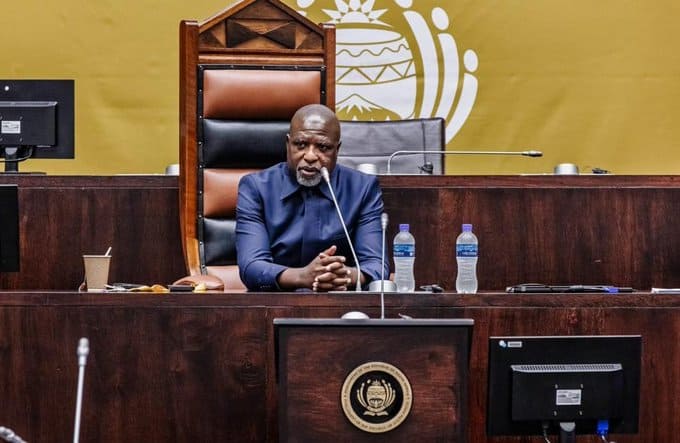
CAPE TOWN – The Ad Hoc Committee of the National Assembly tasked with investigating serious allegations made by KwaZulu-Natal Police Commissioner Lieutenant General Nhlanhla Mkhwanazi has officially concluded its public oral hearings, bringing a months-long parliamentary process to a critical juncture. The committee now turns its attention to the painstaking work of compiling and releasing a final report that will carry significant implications for the country’s top police leadership.
The hearings, which unfolded over several weeks in Cape Town, saw a parade of high-profile witnesses, heated exchanges, and damning testimony that laid bare allegations of political interference, corruption, and factional battles within the South African Police Service (SAPS) in KwaZulu-Natal. At the center of the storm is Lieutenant General Mkhwanazi, whose explosive claims about attempts to undermine his authority and derail high-profile investigations have sent shockwaves through the police service and the political establishment.
With the oral hearings now behind them, committee members face the formidable task of distilling volumes of testimony, documentary evidence, and legal submissions into a coherent set of findings and recommendations. The final report, once tabled in the National Assembly, is expected to trigger further action—potentially including referrals to law enforcement agencies, disciplinary proceedings against senior officials, or legislative interventions aimed at insulating police leadership from political meddling.
The Allegations That Sparked the Inquiry
The Ad Hoc Committee was established in late 2025 following a formal submission by Lieutenant General Mkhwanazi, who detailed a sustained campaign of interference in his work as the top police official in KwaZulu-Natal. In his submission, Mkhwanazi alleged that senior politicians and high-ranking SAPS officials had repeatedly attempted to shield influential figures from prosecution, interfere in operational matters, and undermine his efforts to clean up the province’s policing structures.
Central to his allegations were claims that cases involving politically connected individuals—including matters related to the 2021 July unrest, organized crime networks, and corruption within government—were improperly influenced or deliberately stalled. Mkhwanazi’s testimony painted a picture of a police service under siege from internal and external forces determined to protect vested interests.
The allegations struck at the heart of South Africa’s ongoing struggle to establish a non-political, professional police service. They also resurrected painful memories of the “state capture” era, during which critical law enforcement institutions were systematically hollowed out for political gain.
The Oral Hearings: Drama and Disclosure
Over the course of the hearings, the committee heard from a wide array of witnesses, including Mkhwanazi himself, his superiors in the SAPS national leadership, representatives from the Independent Police Investigative Directorate (IPID), and several political figures whose names surfaced in the testimony.
The hearings were marked by several dramatic moments. Mkhwanazi’s own testimony was delivered with a combination of meticulous detail and palpable frustration, as he described what he characterized as years of obstruction. He provided the committee with a dossier of evidence, including internal SAPS correspondence, whistleblower accounts, and documented instances where, he alleged, investigations were shut down after political pressure was applied.
Perhaps the most explosive sessions came when senior SAPS executives were called to testify. In some instances, witnesses contradicted one another, leaving committee members to sift through competing versions of events. On several occasions, legal representatives for witnesses objected to lines of questioning, leading to tense exchanges between committee members and counsel.
Opposition party members on the committee repeatedly accused the SAPS leadership of attempting to shield the truth, while African National Congress (ANC) members cautioned against drawing premature conclusions. Despite the political tensions, the hearings were largely conducted with a degree of professionalism, as committee members from across the political spectrum acknowledged the gravity of the allegations.
Key Themes and Emerging Findings
As the committee begins drafting its final report, several key themes have emerged from the testimony. Chief among them is the question of whether there exists a systemic vulnerability within SAPS that allows political and criminal interests to influence police work at the provincial level. Witnesses described a culture in which senior police officials sometimes received direct instructions from politicians on which cases to prioritize—or, conversely, which to deprioritize.
Another recurring theme was the alleged factionalism within the SAPS itself. Testimony suggested that rival blocs within the national leadership had competing loyalties, and that Mkhwanazi’s efforts to assert his authority as provincial commissioner were resisted by those aligned with opposing factions.
The role of IPID also came under scrutiny. The police watchdog faced criticism for delays in investigating complaints lodged by Mkhwanazi, with some witnesses suggesting that IPID itself had been compromised. IPID representatives, however, defended their record, citing resource constraints and the complexity of the matters under investigation.
What Happens Next
With the oral hearings concluded, the Ad Hoc Committee’s work now shifts behind closed doors. Committee chairperson Dr Mathapelo Siwisa confirmed that the coming weeks would be dedicated to drafting the final report, which must be adopted by the committee before being tabled in the National Assembly.
The report is expected to contain a detailed account of the evidence presented, a set of findings on each of the allegations made by Mkhwanazi, and a series of recommendations. These recommendations could range from calls for further investigation by law enforcement agencies, to proposals for disciplinary action against specific individuals, to legislative reforms aimed at strengthening the independence of provincial police commissioners.
Crucially, the report may also address the question of accountability at the highest levels. Should the committee find that political figures improperly interfered in police work, the matter could be referred to the National Prosecuting Authority (NPA) for potential criminal prosecution.
“The people of KwaZulu-Natal and the country as a whole deserve to know the truth about what has been happening in our police service,” Siwisa said following the conclusion of the hearings. “This committee was established to uncover that truth, and we are committed to producing a report that is thorough, balanced, and actionable.”
Broader Implications
The outcome of the inquiry carries significant weight beyond the immediate fate of Lieutenant General Mkhwanazi or the individuals implicated in the testimony. At a time when South Africa continues to grapple with high crime rates, political violence, and questions about the capacity of the state to protect its citizens, the credibility of the police service remains a foundational concern.
For civil society organizations and anti-corruption watchdogs, the inquiry has been viewed as a crucial test of Parliament’s ability to hold the executive and law enforcement agencies accountable. Many have expressed cautious optimism that the process has been more transparent than previous parliamentary inquiries, but they warn that the ultimate measure of success will be whether the recommendations are implemented.
“We have seen too many parliamentary reports gather dust on shelves,” said one legal analyst who followed the hearings closely. “The real work begins when the report is released. Will there be consequences? Will those who abused their power be held to account? That is what South Africans will be watching.”
Conclusion
As the Ad Hoc Committee retreats to draft its final report, Lieutenant General Mkhwanazi remains in his post as KwaZulu-Natal Police Commissioner, though speculation about his future has swirled throughout the inquiry. For now, he has expressed gratitude to the committee for the opportunity to air his grievances and has indicated that he awaits the outcome with confidence.
The final report, when released, is expected to land like a thunderclap in a political environment already charged with tension. Whether it leads to meaningful reform or becomes yet another document of unfulfilled promises will depend on the political will of those who receive it.
One thing, however, is certain: the allegations made by Mkhwanazi have already changed the conversation around police independence in South Africa. The committee’s findings will determine whether that conversation translates into lasting change.
The Ad Hoc Committee is expected to finalize its report within the coming weeks, with tabling in the National Assembly anticipated before the end of the parliamentary term.
About The Author