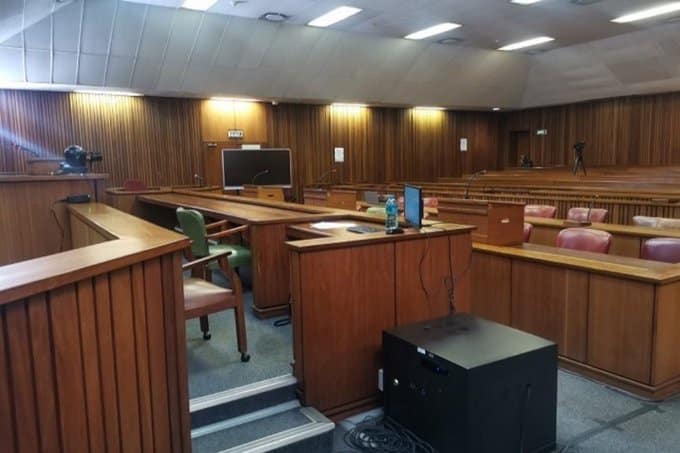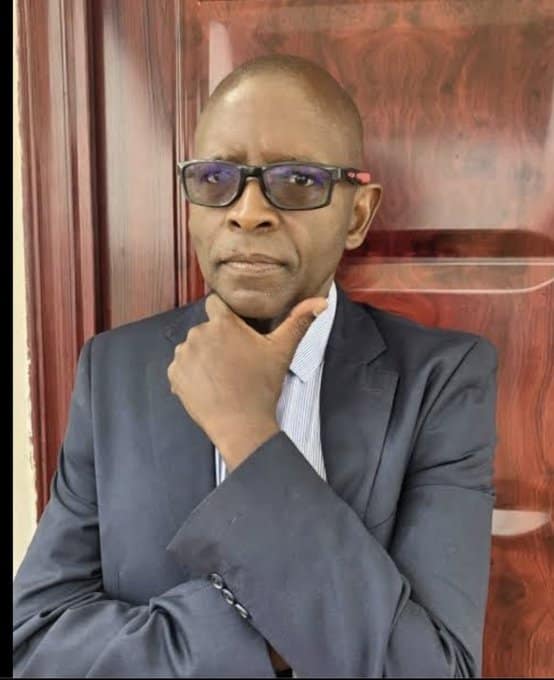
The courtroom fell silent as the accused rose to his feet. Deacon Tshepo Ntshimane, a man who once stood at the front of a congregation, leading prayers and offering blessings, now stood in the dock of the Roodepoort Magistrate’s Court, his head bowed, his hands cuffed before him. His legal representative leaned in, whispered something inaudible, then turned to face the magistrate.
“My client wishes to abandon his bail application,” the lawyer said. “He will remain in custody.”
A collective exhale rippled through the public gallery. Some of the women present—mothers, grandmothers, activists who had followed the case from the beginning—nodded grimly. Others wept silently. One man, his face a mask of controlled fury, whispered loud enough for the journalists to hear: “Coward. He knows what they would do to him outside.”
Ntshimane, 47, a lay preacher and community figure in Dobsonville, Soweto, was arrested in February 2026 following a tip-off from a concerned neighbour. He is accused of the repeated rape of a 12-year-old girl over a period of several months. The alleged assaults took place in his home, a modest house on a dusty street where children once played freely and neighbours left their doors unlocked.
That trust is now shattered.
The Abandonment: Strategy or Surrender?
In South African criminal procedure, abandoning bail is unusual but not unheard of. Accused persons typically seek bail—even when it is likely to be denied—because any time spent outside custody is time to prepare a defence, to see family, to maintain employment. To abandon bail is to accept, at least for now, that incarceration is unavoidable.
Legal analysts offered two competing interpretations of Ntshimane’s decision.
The first is strategic. The State was expected to oppose bail vigorously, citing the severity of the charges (rape of a child under 16 carries a minimum life sentence on conviction), the strength of the evidence (which reportedly includes DNA and witness statements), and the risk that Ntshimane might intimidate the victim or her family. By abandoning bail, Ntshimane avoids a formal bail hearing in which damaging evidence would be made public.
“He is controlling the narrative,” said criminal defence attorney Lindiwe Mkhabela, who is not involved in the case. “By stepping back, he denies the State a platform to lay out its case in detail. The public will hear less, at least for now. That is a tactical retreat, not a surrender.”
The second interpretation is more visceral: Ntshimane is afraid. Not of the State’s case, but of the community outside the courthouse doors. Since his arrest, his name and photograph have circulated widely on social media, accompanied by calls for vigilante justice. The Dobsonville community, already traumatised by the alleged crimes, has reportedly been divided—some calling for calm and due process, others demanding that Ntshimane be handed over to them.
“If he walked out of here on bail, he would not make it home,” said a police officer stationed outside the courtroom, speaking on condition of anonymity. “We have seen it before. The community takes matters into their own hands. He knows that. He is safer inside.”
The Victim: A Child’s Unimaginable Ordeal
The 12-year-old girl at the centre of the case cannot be named, by law and by decency. But her presence was felt in every silence, every sharp intake of breath, every time a prosecutor whispered to a colleague.
According to the indictment, the alleged abuse began in late 2025. Ntshimane, who was known to the family, offered to “mentor” the girl, helping her with schoolwork and providing “spiritual guidance.” The family, trusting a man of the cloth, agreed.
It was, the State alleges, a grooming operation disguised as pastoral care.
The girl reportedly told a school counsellor in January 2026 that she had been raped “many times,” that Ntshimane had threatened to harm her family if she told anyone, and that she had stopped sleeping because the nightmares were worse than the waking reality. The counsellor, a mandated reporter, contacted the South African Police Service (SAPS) within hours.
A medical examination at the Thuthuzela Care Centre in Soweto found evidence consistent with repeated sexual assault. Ntshimane was arrested three days later.
“Every time I hear his name, I feel sick,” the girl’s mother said outside the court, her voice trembling, her eyes red. She clutched a small Bible to her chest. “He prayed with my daughter. He put his hands on her head and prayed. And then he did those things. I let him into my home. I trusted him. I will never forgive myself.”
A social worker gently guided the mother away from the journalists. She did not resist. She had no more words.
The Deacon: From Podium to Prison Cell
Ntshimane was not a famous preacher. He did not have a television ministry or a million followers on social media. He was a local deacon at a Pentecostal church in Dobsonville—a man known for his warm smile, his booming voice during worship, and his willingness to help struggling families in the community.
“He would visit the sick,” recalled a neighbour, an elderly woman who asked not to be named. “He would bring food to the widows. He would lead prayers at funerals. Everyone trusted him. That is why this is so painful. He used God’s name to hide.”
Church elders have since confirmed that Ntshimane has been “suspended from all duties pending the outcome of the legal process.” But they have declined to comment further, citing the ongoing investigation.
One congregant, a young man who grew up in the church, was less restrained. “He is not a deacon anymore,” he said. “He is a monster. And God does not protect monsters. He protects that little girl. That is what I believe.”
The Community: Between Rage and Despair
Dobsonville is a community that has seen its share of pain. Poverty, unemployment, and crime are daily realities. But child rape—especially by a trusted religious figure—has struck a nerve that even hardened residents find unbearable.
In the days following Ntshimane’s arrest, community members held a candlelight vigil outside his home. They did not chant. They did not throw stones. They stood in silence, holding candles, as a local pastor led a prayer for the victim and for “the soul of a community that has been violated.”
But the silence did not last. In the second week, a group of young men gathered outside the Roodepoort courthouse, carrying placards that read “Hang the Preacher” and “No Bail for Monsters.” Police in riot gear were deployed, but no violence occurred.
“We are angry, but we are not animals,” said one of the protesters, a 24-year-old construction worker. “We want justice, not revenge. But we want it fast. This man should never see the light of day again. Not as a free man.”
Others expressed frustration with what they see as a slow and ineffective justice system. “He abandoned bail. Good. But that is not justice. Justice is a trial. Justice is a conviction. Justice is a sentence. We are months, maybe years, away from that. And in the meantime, that little girl has to live with what he did.”
The Broader Context: South Africa’s Child Rape Crisis
The Ntshimane case is one of thousands. South Africa has one of the highest rates of child sexual abuse in the world, with the South African Police Service recording over 10,000 sexual offences against children in the 2024/25 financial year. Experts believe the true number is much higher, as most cases go unreported.
Conviction rates remain stubbornly low. According to the latest report from the National Prosecuting Authority (NPA), fewer than 15% of reported child sexual abuse cases result in a conviction. Reasons include poor police investigations, witness intimidation, and the trauma that prevents young victims from testifying.
The NPA has designated the Ntshimane case as a priority, assigning a senior prosecutor with experience in child sexual offences. The State is expected to call the victim, her mother, the school counsellor, the medical examiner, and at least two forensic experts.
“We will leave no stone unturned,” a spokesperson for the NPA said outside court. “This is a horrific case, and we owe it to this child and to the community to pursue justice with every tool at our disposal.”
The Legal Road Ahead: A Long Wait for Justice
With Ntshimane in custody, the case will now proceed to the Regional Court, which has jurisdiction over serious offences like rape. A formal indictment will be prepared, and a trial date will be set. Given the complexity of the case and the anticipated volume of evidence, legal observers expect the trial to begin in late 2026 or early 2027.
Ntshimane will remain at the Johannesburg Correctional Centre, commonly known as Sun City (not to be confused with the resort), where he will be held in a section designated for accused persons. He will have access to legal counsel, medical care, and—crucially—protection from other inmates.
“Prisoners accused of crimes against children are often targeted by other prisoners,” said a correctional services official. “He will be in protective custody. His life is not in danger inside. Outside, that is a different story.”
Ntshimane’s legal team has indicated that he intends to plead not guilty. They have not disclosed the basis of his defence, but sources close to the case suggest they may challenge the admissibility of the child’s testimony, arguing that she was “coached” by her mother and the counsellor.
The State has dismissed that suggestion as “baseless and offensive.”
The Survivor’s Journey: What Happens to the Girl
While the legal system grinds forward, the 12-year-old victim is in the care of a child protection organisation. She is receiving trauma counselling and is not attending school, though tutors have been arranged. Her mother visits daily, but the girl reportedly struggles to sleep, to eat, and to speak about what happened.
“Healing from this kind of trauma takes years, if it happens at all,” said a child psychologist who has worked with similar cases but is not involved in this one. “The court case is just one part of the journey. The real work happens in therapy, in the quiet moments, in the long nights. We owe her patience. We owe her support. We owe her a system that does not re-traumatise her.”
The Thuthuzela Care Centre model—which integrates medical, psychological, and legal services for rape survivors—has been praised as world-class. But resources are stretched thin, and not every survivor receives the same level of care. The girl in this case is fortunate to have been referred quickly. Many are not.
The Verdict of the Public: Trust Broken, Faith Shaken
Back outside the Roodepoort courthouse, as the journalists packed up their equipment and the last of the protesters drifted away, a group of women remained. They stood in a circle, holding hands, their heads bowed.
One of them, a grandmother in her sixties, explained: “We are praying. Not for him. For her. And for ourselves. Because when a deacon does this, who do we trust? Who do we send our children to? The church was supposed to be safe. Now we know it is not. Now we know nowhere is safe.”
She paused, wiping her eyes with the back of her hand.
“My own granddaughter is 12 years old. I look at her and I think: it could have been her. It could have been any of them. And that thought—that thought does not leave. It sleeps in my bed with me.”
The women began to sing—a hymn, old and slow, in isiZulu. It was a song about God’s protection, about angels watching over the innocent. But the voices wavered. The faith that once made the words certain now made them sound like questions.
Deacon Tshepo Ntshimane will appear again in court on 15 July 2026 for the formal transfer of the case to the Regional Court. He remains in custody. The identity of the victim and her family are protected by law.
About The Author