The faucet in Munsieville, a township west of Johannesburg, has been dry for three days. In the agricultural heartland of the Free State, farmers watch irrigation canals run at a trickle, their crops wilting under a relentless sun. And in the bustling financial hub of Sandton, residents have received notices warning of “intermittent supply” as reservoirs dip to critically low levels. This is the patchwork reality of South Africa’s water crisis in 2025—a crisis that Water and Sanitation Minister Pemmy Majodina warns is no longer a series of isolated incidents, but a systemic collapse in the making.
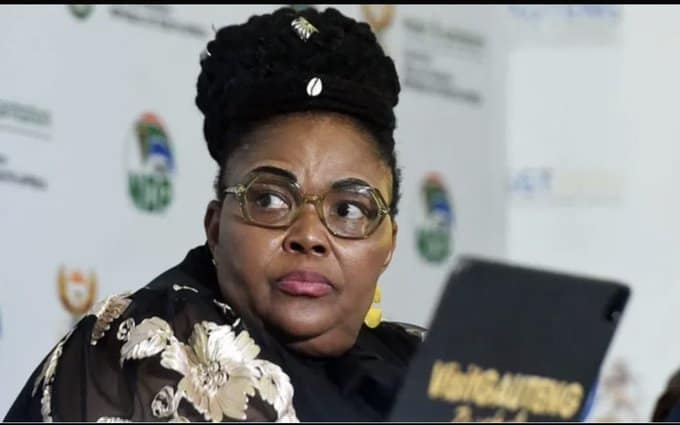
Standing before reporters in Pretoria on a warm autumn morning, Minister Majodina delivered a stark message that cut through the usual political platitudes. The nation’s water infrastructure, much of it built decades ago for a smaller population, is groaning under the weight of demand. It is a system, she implied, that is being asked to run a marathon on an engine due for a complete overhaul.
“What we are seeing across provinces is not a temporary glitch,” Majodina stated, her tone reflecting the gravity of the issue. “It is the sound of a system under immense stress. High demand is relentlessly testing the limits of ageing and, in some cases, failing infrastructure. We are in a race against time to prevent more widespread breakdowns.”
Her comments pulled back the curtain on a national crisis decades in the making. While loadshedding has dominated headlines for years, a slower-moving but equally devastating disaster has been brewing beneath our feet and behind our reservoir walls. The country’s water treatment plants, pumping stations, and pipe networks—a sprawling web of assets worth billions—have been systematically weakened by a trifecta of threats: chronic underinvestment in maintenance, the unpredictable blows of climate change, and the relentless pressure of a growing and urbanizing population.
From the taps of Johannesburg that sputter and run dry, to the coastal towns of KwaZulu-Natal facing saltwater intrusion into estuaries, the symptoms are undeniable. Restrictions have become a way of life in multiple municipalities, with residents forbidden from watering gardens or washing cars, even as they watch precious water leak from cracked pipes back into the ground.
The minister was blunt about the staggering financial hurdle standing in the way of a solution. Fixing the country’s water future comes with a price tag that dwarfs municipal budgets: an estimated R400 billion is needed for repairs and upgrades, primarily at the local government level where the infrastructure is most decrepit and the technical skills are often thinnest.
“It is a sum no single sphere of government can carry alone,” Majodina acknowledged. “We cannot simply wait for the national fiscus to provide. We must be innovative. We must build bridges.”
The “bridges” she spoke of are partnerships, specifically with the sector that both uses vast amounts of water and possesses deep pockets: the mining industry. The Minister called on big water users—the mines that rely on the resource for everything from dust suppression to mineral processing—to become part of the solution. The proposal is for a new kind of public-private partnership, where industrial giants co-invest in the very infrastructure that sustains them. A mine that helps fund a new pipeline or a water treatment plant is, in effect, securing its own future.
But the challenges extend far beyond funding. The crisis is also one of maintenance, skills, and accountability. Many municipalities lack the engineering expertise to design and oversee repairs, while others are plagued by financial mismanagement that sees funds intended for water infrastructure disappear before a single pipe is laid. The R400 billion figure, therefore, represents not just the cost of concrete and steel, but the cost of rebuilding institutional capacity.
For ordinary South Africans, Majodina’s warning translates into a call for a fundamental shift in mindset. The era of water as an endlessly cheap and reliable resource is over. In its place is a new reality of conservation, pressure management, and difficult trade-offs. Will water be prioritised for thirsty cities or for the food security provided by irrigated farms? How do we balance the needs of industry with the constitutional right of every citizen to clean water?
As the Minister concluded her address, the weight of the moment hung in the air. She was not announcing a new dam or a grand project, but something far more fundamental: an admission that South Africa’s water system is perilously close to the edge. The R400 billion question—and the legacy-defining challenge for her tenure—is whether the nation can come together to pull it back, before more faucets run dry.
About The Author