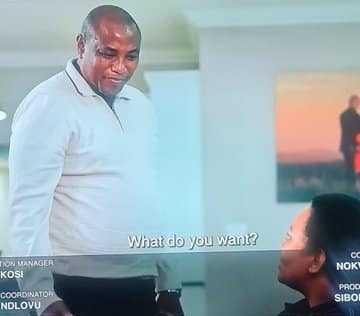
The living room of the Mseleku homestead in Folweni, KwaZulu-Natal, has become one of the most recognized spaces in South African television. It is here, on overstuffed sofas arranged in a careful semicircle, that the drama of Uthando Nes’thembu unfolds week after week: the conversations that are not quite conversations, the negotiations that are not quite agreements, the conflicts that simmer beneath the surface of polygamous domesticity before erupting into the carefully framed shots that Mzansi Magic has turned into appointment viewing for millions.
Season 9, which premiered in early February 2026, arrived with the accumulated weight of eight previous seasons of revelation and concealment, intimacy and estrangement, the particular challenges of maintaining harmony across five households bound by a single husband. Musa Mseleku, the patriarch whose name has become synonymous with the public performance of polygamy, sat in his customary position, flanked by wives who have learned, over years of filming, exactly where to position themselves in the frame.
But the framing cannot contain what is emerging. Season 9 has, within its first few episodes, exposed fault lines that previous seasons managed to obscure. MaKhumalo’s frustration with unmet promises. MaCele’s withdrawal of financial support from MaKhwela. MaNgwabe’s careful navigation of alliances. MaYeni’s quiet observation from the margins. The household that presented itself as a model of functional polygamy is revealing its fractures, and viewers are watching with the particular fascination that attends the unravelling of carefully constructed narratives.
The Promise and Its Breaking
MaKhumalo’s grievance, articulated in the season premiere with the controlled intensity of someone who has waited years to speak, centers on promises made and broken. When she joined the Mseleku household as the fourth wife, she extracted commitments that she understood as foundational to her participation in the polygamous arrangement.
“I asked for two things,” she said, her voice steady but her eyes betraying the depth of her frustration. “I asked that no new wife be taken from my neighborhood. I did not want to encounter my husband’s other wife in the streets where I grew up, in the shops where I shop, in the community that knows me. And I asked for a period of celibacy while I pursued IVF treatment. I wanted to focus on my body, my health, my chance to bear a child.”
Musa’s response, delivered with the particular combination of affection and dismissal that characterizes his interactions with wives who push back against his authority, was immediate and unequivocal.
“I cannot make those promises,” he said. “I cannot control where a wife comes from. I cannot control the circumstances of my fertility. These are not things I can guarantee.”
For MaKhumalo, the response was devastating. The promises she understood as commitments were, from Musa’s perspective, merely expressions of preference—desires that might be accommodated but could not be guaranteed. The gap between understanding and reality has become a chasm that Season 9 explores in uncomfortable detail.
“She believed she had agreements,” said relationship counselor Dr. Nomonde Khumalo, who has followed the series and its portrayal of polygamous dynamics. “He believed he had made no such agreements. This is not merely a communication breakdown. This is a fundamental difference in how each party understood the nature of their relationship. For MaKhumalo, these were conditions. For Musa, they were requests. The distinction is everything.”
The Financial Front
If MaKhumalo’s grievance represents the emotional dimension of polygamous tension, MaCele’s withdrawal of financial support for MaKhwela represents its material expression. The first wife, whose position in the household hierarchy confers certain privileges and responsibilities, had been subsidizing MaKhwela’s household expenses following the fifth wife’s decision to leave her employment.
“I cannot continue,” MaCele said, her voice carrying the weight of accumulated resentment. “I have my own household to maintain. I have my own children to support. I cannot carry the burden of another wife’s decisions indefinitely.”
MaKhwela, for her part, defended her choice to leave employment, arguing that her role within the polygamous structure required her full-time presence and attention. The expectation that she would contribute financially to her own household, she suggested, contradicted the traditional understanding of polygamous arrangements in which the husband bears primary financial responsibility.
“I left my job to focus on my family,” she said. “To be present for my husband, for my children, for the household. Now I am being told that I must also earn money, that I must contribute financially, that I am a burden because I do not have income. This is not what I signed for.”
The dispute illuminates a tension that runs through contemporary polygamy: the collision between traditional expectations of male provision and the economic realities that make single-income households increasingly untenable. Musa Mseleku, a successful businessman with multiple revenue streams, can support his extensive family at a level that most South Africans cannot imagine. But even his resources have limits, and the allocation of those resources among five households and their competing demands has become a recurring source of conflict.
“Polygamy in the 21st century requires economic engineering,” said sociologist Dr. Thabo Ndlovu. “The traditional model assumed a single income source—the husband’s—distributed among wives who managed their households without independent financial contribution. That model is increasingly unsustainable, even for wealthy men. The expectations of wives have changed. The cost of raising children has changed. The economic environment has changed. But the expectations of what a husband should provide have not changed correspondingly.”
The Geography of Favoritism
Viewers of Uthando Nes’thembu have long speculated about the existence of favored wives within the Mseleku household. Season 9 has provided substantial evidence for those speculations, with MaCele and MaYeni receiving screen time and narrative attention that appears disproportionate to their positions in the wife hierarchy.
“I do not believe in favoritism,” Musa said in response to questions about the apparent imbalance. “I love all my wives equally. I provide for all my wives equally. The perception of favoritism arises from the different needs and different personalities of the wives, not from differential treatment on my part.”
The explanation has not satisfied critics, who point to visible disparities in lifestyle, access, and Musa’s attention. MaCele, as the first wife, occupies a position of particular authority within the household structure—a position that Musa has explicitly acknowledged and reinforced. MaYeni, whose relationship with Musa predates some of the other marriages, maintains a connection that appears distinct from the dynamics governing other wives.
“When you have multiple wives, you will have favorites,” said cultural commentator Busisiwe Ndlovu. “It is human nature. It is inevitable. The question is not whether favoritism exists but how it is managed. Does the favored wife use her position to support other wives or to undermine them? Does the husband acknowledge his preferences while maintaining equitable treatment? These are the questions that determine whether polygamy can function harmoniously.”
The evidence from Season 9 suggests that the answers to these questions are not flattering. MaCele’s withdrawal of financial support from MaKhwela can be interpreted as an assertion of hierarchical privilege—a reminder that the first wife’s resources are hers to allocate or withhold as she chooses. MaYeni’s apparent distance from the conflicts consuming other wives can be read as strategic positioning, preserving her relationship with Musa while others engage in exhausting battles for attention and resources.
The Viewers’ Verdict
Social media has provided an实时 chorus to the drama unfolding on screen. Each episode generates thousands of comments, tweets, and WhatsApp discussions, with viewers divided between those who see Musa Mseleku as a villain and those who defend his approach to managing an inherently difficult domestic configuration.
“He is a narcissist,” read one typical comment on Twitter. “He collects wives like trophies and then refuses to take responsibility for their happiness. He makes promises he cannot keep and then blames them for expecting him to keep them. He is the problem.”
Others offered a more sympathetic reading. “Polygamy is not easy,” a Facebook user wrote. “Five women, five personalities, five sets of needs and expectations. Musa is doing his best in an impossible situation. The wives knew what they were signing up for. They cannot blame him now for the realities of polygamous life.”
The divergence of viewer opinion reflects broader societal ambivalence about polygamy itself. For some South Africans, particularly those rooted in traditional cultural frameworks, polygamy represents a legitimate and honorable family structure with deep historical roots. For others, particularly younger, more urbanized viewers, it represents an outdated patriarchal arrangement that subordinates women’s autonomy to men’s desires.
“Uthando Nes’thembu does not resolve this debate,” said media studies professor Dr. Sarah Ndlovu. “It dramatizes it. It gives viewers a window into a world that many would never otherwise encounter, and it allows them to project their own values and judgments onto that world. The show is not documentary. It is not advocacy. It is entertainment that happens to touch on deeply contested cultural territory.”
The Children’s Presence
Season 9 has also devoted increased attention to the children of the Mseleku household, whose presence complicates the narrative in ways that even careful editing cannot fully control. The offspring of multiple wives, growing up in close proximity, navigating the complexities of half-sibling relationships and the particular dynamics of a polygamous childhood—these dimensions of the story resist the simplified framing that applies to adult conflicts.
“The children are the silent witnesses,” said child psychologist Dr. Lindiwe Dlamini. “They absorb the tensions that their mothers experience. They observe the dynamics of favoritism and exclusion. They learn, from the earliest ages, how power operates in their family and where they fit within its hierarchies. This is not necessarily harmful—children in polygamous families can thrive, just as children in monogamous families can struggle. But it is a dimension that the show cannot fully explore without compromising the children’s privacy and wellbeing.”
The show’s producers have navigated this terrain carefully, featuring children in family scenes while limiting their exposure to the most intense conflicts. The result is a portrayal that acknowledges the children’s presence without exploiting it—a balance that critics have generally praised.
The Question of Authenticity
As with all reality television, Uthando Nes’thembu raises questions about the authenticity of its portrayals. How much is genuine? How much is performed for cameras? How much is shaped by editing, by producer intervention, by the self-consciousness that accompanies constant filming?
“I have watched every season,” said longtime viewer Thandi Khumalo. “I have seen the wives change, the dynamics shift, the conflicts evolve. I believe that what we are seeing is real, or at least as real as anything can be when cameras are present. These people are living their lives. The cameras are documenting. Yes, they perform sometimes. Yes, they play to the audience. But the underlying emotions, the genuine tensions, the real relationships—those cannot be faked over nine seasons.”
Musa Mseleku himself has addressed the authenticity question in interviews, insisting that the show presents an accurate portrait of his family’s life while acknowledging the inevitable distortions introduced by the filming process.
“We do not script anything,” he said. “We do not rehearse. The cameras capture what happens. Of course, people are aware that they are being filmed. Of course, that awareness affects behavior. But the feelings are real. The conflicts are real. The love is real. You cannot fake nine seasons of real life.”
The Cultural Politics
Uthando Nes’thembu exists at the intersection of multiple cultural currents: the revival of interest in traditional African practices, the global appetite for polygamy-themed reality television, and South Africa’s ongoing negotiation of its post-apartheid cultural identity. The show’s success reflects the complexity of this moment.
“For some viewers, the show is affirmation,” said cultural critic Sipho Dlamini. “It says that traditional African family structures are valid, are viable, are worthy of respect. For others, it is warning—a demonstration of polygamy’s inherent tensions and the toll it takes on the women who participate. The show does not choose between these readings. It offers material that can support either interpretation.”
The political dimensions of the show extend beyond cultural politics into explicitly political territory. Polygamy in South Africa exists in a legal gray area: recognized for certain purposes (such as marriage recognition and inheritance) but not fully integrated into the legal framework that governs monogamous unions. The show’s portrayal of polygamous life inevitably engages with these legal ambiguities, even if only implicitly.
“We are showing what polygamy looks like in practice,” Musa said. “The law can decide how to respond. Our job is to live our lives authentically and allow others to draw their own conclusions.”
The Season Ahead
With Season 9 still in its early episodes, viewers are speculating about what conflicts remain to be revealed. MaKhumalo’s frustration seems unlikely to diminish. MaKhwela’s housing situation remains unresolved. MaCele’s withdrawal of support may trigger broader realignments among the wives. And Musa’s management of these multiple pressures will be tested as never before.
“I expect this season to be the most dramatic yet,” said television critic Phil Mphela. “The tensions that have been building for eight seasons are reaching a breaking point. The wives are no longer willing to maintain the facade of harmony. Musa is being forced to confront the consequences of decisions he made years ago. The children are growing up and developing their own perspectives. All of this is converging in Season 9.”
The convergence makes for compelling television. It also raises questions about the sustainability of the Mseleku family structure beyond the frame of the show. Can polygamy survive the scrutiny that constant filming imposes? Can relationships bear the weight of public performance indefinitely? Can a family that has built its identity around a television show maintain that identity when the cameras eventually stop rolling?
“We do not think about the future in those terms,” Musa said. “We live our lives. We address challenges as they arise. We trust that our love for each other, our commitment to our family, and our faith in God will carry us through whatever comes. The show is part of our lives, but it is not our lives. Our lives are larger than what appears on screen.”
The Wives’ Perspectives
As Season 9 unfolds, the wives are receiving unprecedented screen time to articulate their experiences. MaKhumalo’s grievances have been explored in depth. MaKhwela’s housing situation has been documented with the particular attention that reality television devotes to material conditions. MaCele’s role as first wife has been examined from multiple angles. MaYeni’s relative distance from conflict has been noted and analyzed.
“What emerges from these portrayals is the reality of polygamy as experienced by women,” said gender studies professor Dr. Pumla Dineo Gqola. “Each wife has her own story, her own grievances, her own strategies for survival within the structure. They are not a monolith. They do not share a single perspective. The show’s willingness to explore these differences is its greatest strength.”
The differences extend to the wives’ relationships with each other. Some alliances have formed across household boundaries. Some tensions have persisted for years. Some wives have found common cause in addressing shared challenges. Others maintain careful distance, preserving autonomy through strategic non-engagement.
“We are a family,” MaCele said in a recent episode. “We may not always agree. We may not always like each other. But we are family. That means something. That means we find ways to move forward, even when moving forward is difficult.”
The Patriarch’s Burden
Musa Mseleku occupies a position that is simultaneously privileged and constrained. As the husband and father at the center of the polygamous structure, he enjoys authority that his wives do not share. But he also bears responsibility for maintaining harmony across five households, for meeting the needs of multiple wives and their children, for managing conflicts that arise from the inherent tensions of polygamous life.
“It is not easy,” he acknowledged. “People see me sitting in my chair, surrounded by my wives and children, and they think I have everything I want. They do not see the weight I carry. They do not see the decisions I must make, the compromises I must accept, the sacrifices that are required to keep this family together.”
The weight is evident in Season 9’s portrayal of Musa. The confident patriarch of earlier seasons appears wearier, more burdened, more aware of the costs that polygamy exacts. His responses to wife’s grievances are less dismissive, more considered. His management of conflicts is less autocratic, more consultative. The change may reflect genuine evolution or may be a response to viewer criticism—or both.
“I am learning,” he said. “I am growing. I am trying to be a better husband, a better father, a better leader for this family. I do not always succeed. I make mistakes. But I am trying. That is all any of us can do.”
The Future of Polygamy
Uthando Nes’thembu’s portrayal of polygamous life arrives at a moment when polygamy itself is contested terrain in South African society. Traditionalists defend it as culturally authentic. Feminists critique it as patriarchal. Legal scholars debate its appropriate recognition. Religious leaders offer divergent interpretations of its permissibility.
The show does not resolve these debates. It does not attempt to. Its contribution is more modest and more powerful: it shows polygamy as it is actually lived by one family, with all the complexity, contradiction, and humanity that actual living entails.
“Polygamy is not an abstraction,” Musa said. “It is not a theory. It is not a debate topic. It is life—real life, with real people, real feelings, real challenges, real joys. That is what we are showing. That is what people respond to. They see themselves in our struggles, even if their family structures are different from ours.”
The response suggests that he is right. Uthando Nes’thembu’s audience extends far beyond those who practice or approve of polygamy. It includes viewers who would never consider such an arrangement but are drawn to the human drama it generates. It includes critics who watch to confirm their negative judgments. It includes supporters who watch for affirmation of their choices. It includes the merely curious, the professionally interested, and the accidentally engaged.
Nine seasons in, the show has become a fixture of South African television—a cultural phenomenon that transcends its apparent subject matter to engage fundamental questions about family, gender, power, and love in contemporary society.
The Continuing Story
As Season 9 continues, viewers will watch the Mseleku family navigate the conflicts that have emerged. MaKhumalo will pursue her grievances. MaKhwela will seek resolution to her housing situation. MaCele will maintain her position as first wife. MaYeni will observe from her carefully constructed distance. MaNgwabe will find her place within the shifting dynamics.
And Musa will attempt to hold it all together—to be husband to five women, father to numerous children, patriarch to an extended family, and public figure to a nation of viewers who have made his household their weekly destination.
It is a burden that would crush many men. Whether it will crush him is the question that Season 9 will answer.
“I am here,” he said. “I am still here. My family is still here. We are still together. Whatever challenges come, we will face them together. That is what family does. That is what we do.”
The cameras continue to roll. The drama continues to unfold. And South Africa continues to watch, fascinated by a family that has invited the nation into its living room and, in doing so, revealed something fundamental about the challenges of love, power, and commitment in any family structure—polygamous or otherwise.
About The Author