A community is draped in mourning and simmering with anger as police confirm they are investigating possible extortion links to the catastrophic mass shooting that turned a local tavern into a killing ground, leaving twelve people dead and thirteen wounded in one of the province’s most violent attacks in recent memory.
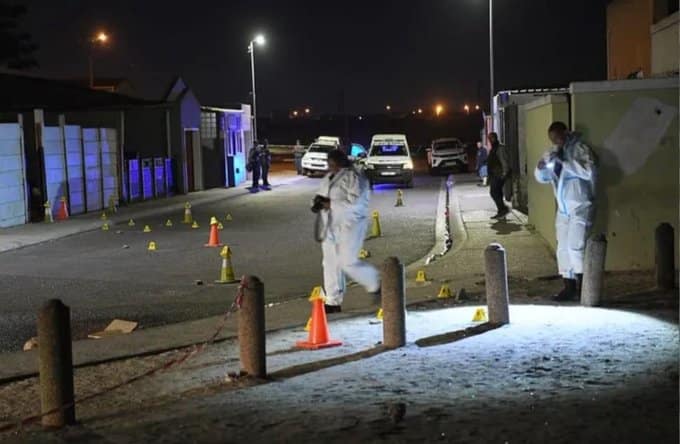
The incident, which occurred in the early hours of Saturday at the Mahlangu’s Lounge in Saulsville, Atteridgeville, saw multiple gunmen armed with high-caliber rifles storm the popular establishment, firing indiscriminately at patrons. The attack lasted mere minutes but left a scene of unimaginable carnage.
A Community Shattered: Grief and Rising Fury
Beyond the stark casualty figures, the human toll is immense. Families spent Sunday at government mortuaries undertaking the harrowing process of identifying loved ones. The wounded, some in critical condition, are being treated at nearby Dr. George Mukhari and Steve Biko Academic Hospitals.
Community leaders describe a populace engulfed in dual emotions: profound grief and mounting fury. “We are burying our children, our brothers, our breadwinners. This is not just crime; this is an annihilation of our community’s spirit,” said Pastor James Mofokeng, who is helping coordinate counselling for affected families. “The people want answers, and they want the killers found.”
The Extortion Angle: A Sinister Pattern Emerges
While the investigation remains in its early stages, senior police sources have revealed a strong line of inquiry focusing on protection rackets targeting tavern and shop owners in Atteridgeville and surrounding townships.
Gauteng Provincial Commissioner, Lieutenant General Elias Mawela, addressed the media outside the still-cordoned-off tavern: “We are looking at all possible motives, but we cannot ignore the pattern of extortion that has been a persistent threat to businesses in this area. There are groups that demand monthly payments from these establishments, and failure to comply results in violence. This is a definite and urgent focus of our investigation.”
Local business owners, speaking on condition of anonymity for fear of reprisal, confirmed the pervasive climate of fear. One tavern owner from a neighbouring section revealed, “They come every month. Sometimes it’s R5,000, sometimes more. If you don’t pay, they burn your place or shoot it up. We are trapped.”
Political Condemnation and Calls for Action
The massacre has drawn sharp condemnation across the political spectrum. Premier Panyaza Lesufi, who visited the scene, called it “a direct attack on the fabric of our society” and vowed unprecedented resources for the manhunt. “We will not rest. We will not allow economic freedom of our people in townships to be held hostage by bullets and extortion,” Lesufi stated.
Opposition parties and community activists, however, have pointed to long-standing allegations of police inefficacy and possible collusion with extortion syndicates. “Where is the police intelligence? These networks operate openly. The community knows who they are. This tragedy is a direct result of systemic failure,” charged DA Caucus Leader in Tshwane, Cilliers Brink.
National Implications: A Symptom of a Wider Crisis
Security analysts note that the Atteridgeville shooting is a grim microcosm of a national crisis. The Global Initiative Against Transnational Organized Crime has repeatedly highlighted South Africa’s growing “blackmail economy,” where extortion—known locally as “izinkabi” or “protection fees”—has metastasized from the construction industry to include virtually all township businesses, particularly in Gauteng and the Western Cape.
“This is organized crime filling a vacuum,” said crime analyst Chad Thomas. “It’s a low-risk, high-reward enterprise for syndicates, and it’s devastating formal and informal economic development in the very communities that need it most. The violence is escalating as competition between groups intensifies.”
The Path Forward: A Massive Manhunt Amidst Trauma
As forensic teams continue to scour the tavern for evidence, a dedicated task team comprising the SAPS Priority Crime Specialized Investigation unit, Crime Intelligence, and members of the Directorate for Priority Crime Investigation (the Hawks) has been established.
Police are appealing to the public for any information, promising confidentiality and protection for witnesses—a plea met with skepticism by some residents who distrust state security guarantees.
For the families of the twelve deceased, the wait for justice begins amid unbearable loss. For the wounded, recovery will be long and fraught. And for the nation, the Atteridgeville massacre serves as another bloody punctuation mark in an ongoing narrative of violence, impunity, and the struggle for community safety against the shadow of organized extortion.
About The Author