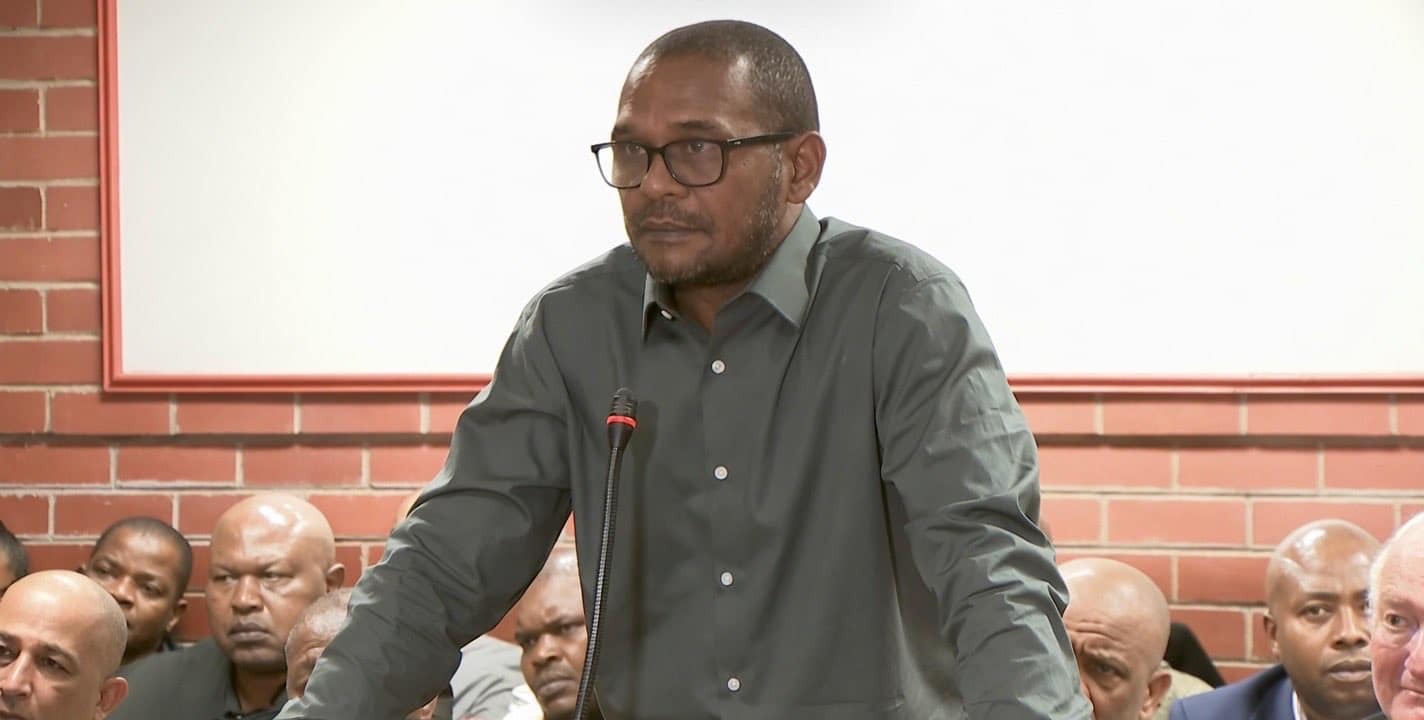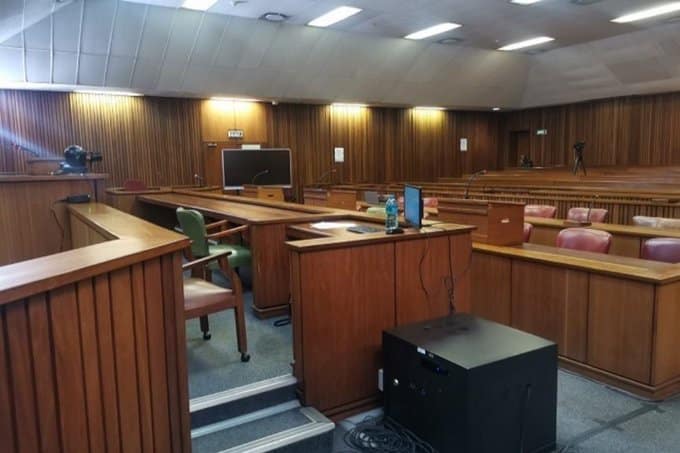
In a high-security Pretoria hearing room, a scene of profound gravity unfolded this week, one that may well define South Africa’s protracted battle against systemic corruption. The Madlanga Commission of Inquiry, tasked with one of the most delicate and dangerous investigations in recent memory, resumed its work on October 14, 2025, not with a public figure in the stand, but with a disembodied, digitally altered voice testifying from a secret location.
This was the testimony of “Witness X,” a source whose evidence is considered so critical, and whose personal safety is so threatened, that the Commission adopted an extraordinary remote and anonymized format for their two-day appearance.
A Commission Forged in Crisis
Established by President Cyril Ramaphosa in July 2025 amid a crescendo of public outrage and damning intelligence reports, the Madlanga Commission carries a Herculean mandate: to investigate allegations of deeply entrenched criminal syndicates successfully infiltrating the very pillars of South Africa’s criminal justice system—the police, the judiciary, and political structures.
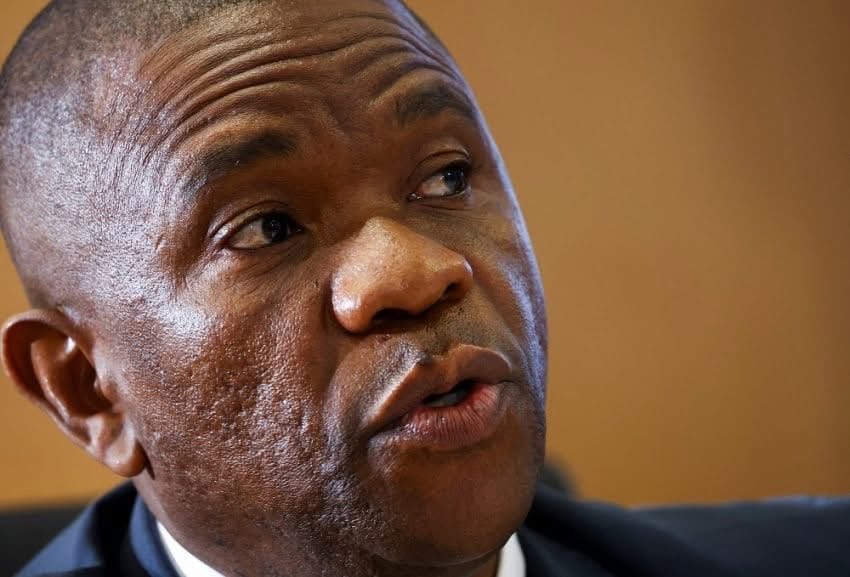
Chaired by the widely respected retired acting Deputy Chief Justice Mbuyiseli Madlanga, the commission began its work by hearing from high-profile figures, including KwaZulu-Natal police commissioner Lieutenant-General Nhlanhla Mkhwanazi, whose initial testimony painted a picture of a system under sophisticated assault. But it is the testimony of insiders like Witness X that is expected to provide the granular, operational detail needed to map the anatomy of this corruption.
A Chilling Testimony, A Cautious Process
The proceedings on Tuesday and Wednesday were a masterclass in controlled tension. Witness X did not appear on screen. Instead, their voice was relayed through secure channels, processed to be unrecognizable—a robotic, monotone echo that belied the explosive nature of the revelations.
The physical conduit in the hearing room was Evidence Leader, Advocate Thabang Pooe, who carefully relayed Commissioner Madlanga’s questions to the witness and then repeated the synthesized responses for the official record. This intricate dance of communication, while occasionally cumbersome, was deemed essential to protect the witness’s identity.
“Can you describe the nature of the communication you witnessed between the individual you have named as ‘The Architect’ and senior figures within the Johannesburg Central police cluster?” Advocate Pooe would ask, his voice calm and measured. A pause would follow, filled with the silent anticipation of the gallery, before he would relay the chilling answer: “The witness states that the communication involved direct instructions on which high-value cases, specifically those involving narcotics and precious metals, were to be ‘lost’ or have evidence disappear from the SAP-13 store.”
The Evidence: A Veiled Glimpse into the Abyss
Supporting the testimony were exhibits, but even these were sanitized for public consumption. Phone records, financial statements, and internal memoranda were displayed on large screens with all identifying details—names, numbers, account details—blacked out. Commission officials and legal teams had access to the unredinated versions, but the public was given only a shadowy glimpse of the proof: a network of calls on a specific date, a series of unexplained deposits into a blurred account, all pointing to a coordinated and deeply embedded scheme.
The testimony suggested a sophisticated network where criminal syndicates not only bribed individual officers but had cultivated “enablers” at the prosecutorial and even judicial level, ensuring that even when cases did make it to court, they would be struck from the roll or result in acquittals due to “missing” dockets or “unavailable” witnesses.
A Nation Watches and Waits
The use of such extreme protective measures underscores the perceived reach and ruthlessness of the networks under investigation. It sends a clear message: the threat to those who would speak out is not hypothetical, but real and immediate.
As Witness X’s testimony concluded on Wednesday, a palpable sense of unease mixed with cautious optimism filled the room. The commission has demonstrated its commitment to piercing the veil of secrecy that has long protected these syndicates. Each anonymized answer, each blacked-out exhibit, is a piece of a puzzle that, when assembled, could expose the rot at the core of the state’s institutions.
The road ahead for the Madlanga Commission remains long and perilous. But this week, in a Pretoria hearing room, a faceless, nameless voice in the dark began the arduous task of letting the light in. The nation now waits to see what that light will ultimately reveal.
About The Author