In the sterile, blue-lit corridors of the Kgosi Mampuru II Correctional Centre, a suspended police sergeant lies in the hospital wing — not because he is ill, but because the state believes he may be one of the most dangerous men to ever wear the badge.
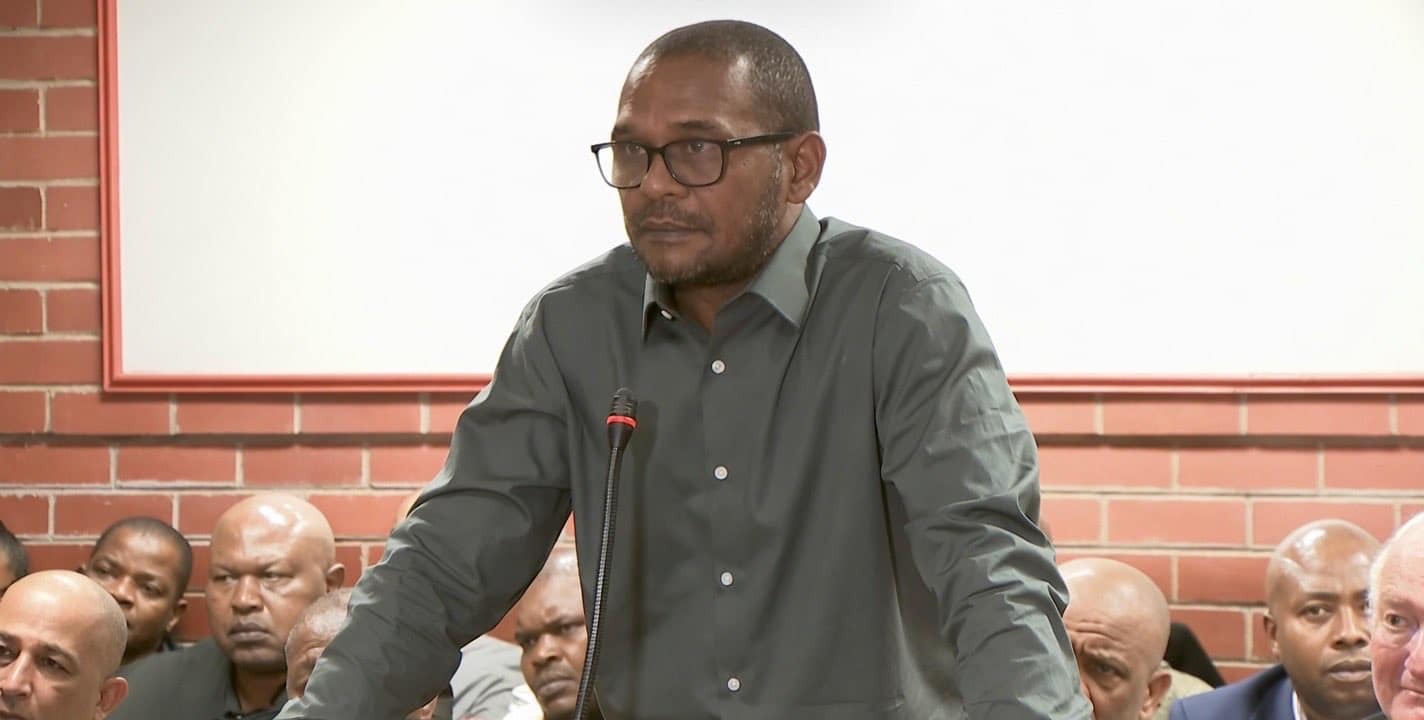
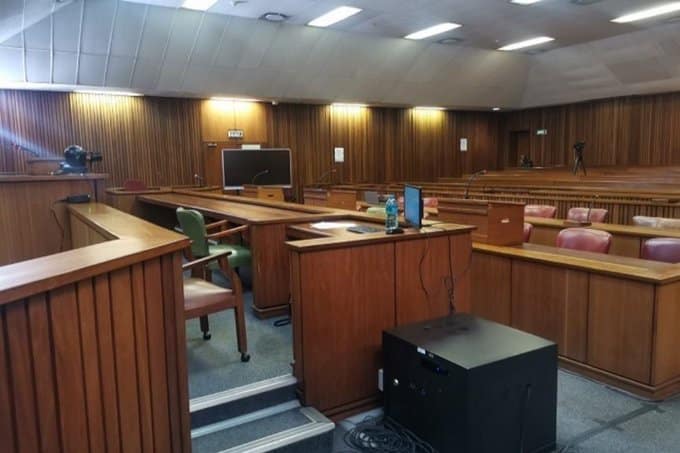
Sergeant Johannes Nkosi (40), a former member of the elite Gauteng Organised Crime Unit, appeared briefly in the Pretoria Magistrate’s Court on Wednesday, where his bail application was officially postponed to April 13. Until then, he will remain behind bars, separated from the general population, awaiting a decision that could expose one of the deepest cracks in South Africa’s criminal justice system.
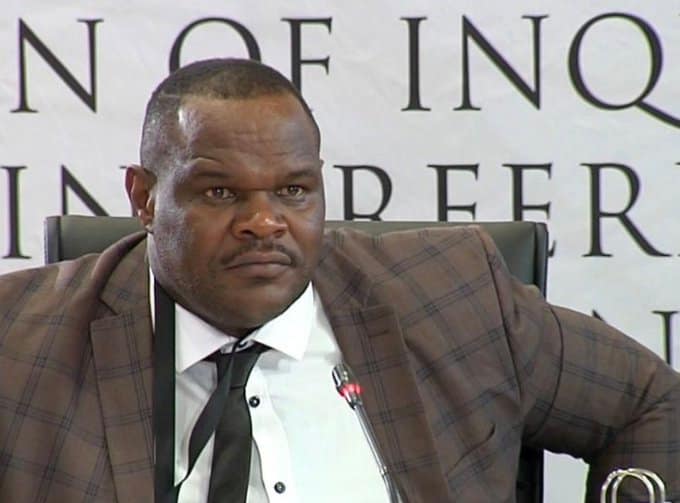
Nkosi was arrested on April 2 by the Hawks’ Serious Corruption Investigation unit during a dramatic early-morning raid linked to the ongoing Madlanga Commission of Inquiry — a judicial commission investigating allegations of corruption and criminal infiltration within the South African Police Service (SAPS). The commission, chaired by retired Constitutional Court Justice Mbuyiseli Madlanga, has already heard explosive testimony about “ghost dockets,” police-protected criminals, and a shadowy cartel operating within the ranks of law enforcement.
But even by those scandalous standards, what Hawks investigators allegedly found in Nkosi’s possession has left even seasoned detectives speechless.
The Arsenal: More Than Just Firepower
According to the charge sheet, which was read aloud in court, Nkosi faces multiple counts under the Firearms Control Act and the Prevention of Organised Crime Act (POCA). The list of seized items reads less like a police officer’s personal collection and more like a small military arsenal:
- Seven licensed firearms — pistols, rifles, and a shotgun — allegedly stored improperly and in violation of SAPS regulations.
- 490 rounds of unlicensed ammunition — enough to sustain a prolonged firefight.
- One hand grenade — a fragmentation device that is illegal for private possession under any circumstances.
- Six complete police dockets — case files related to unsolved violent crimes, including cash-in-transit heists, armed robberies, and multiple murders.
It was the discovery of the dockets that sent shockwaves through the SAPS command structure. These were not photocopies or administrative duplicates. Sources say they were original case files, removed from the police system without authorization, and found in Nkosi’s private residence during the search.
“Why would an organised crime detective have six active, unsolved dockets in his home?” asked a Hawks investigator, speaking anonymously because he was not authorized to comment on an open case. “Those files belong in a secure vault. They contain witness names, informant identities, and operational strategies. In the wrong hands, they are weapons.”
The Madlanga Commission Connection
Nkosi’s arrest is directly linked to testimony heard before the Madlanga Commission in March of this year. At that time, a witness identified only as “Witness F” — now confirmed to be Nkosi himself — was called to answer allegations that he had been acting as a “middleman” for a powerful criminal cartel operating inside SAPS.
According to commission transcripts, Witness F/Nkosi was accused of:
- Feeding confidential police intelligence to suspected cash-in-transit heist syndicates.
- Accepting cash bribes in exchange for tipping off criminals about impending raids.
- Using his position in the Organised Crime Unit to “lose” evidence or misdirect investigations.
When he testified in March, Nkosi denied all allegations under oath, calling them “a conspiracy by jealous colleagues” and “a political witch hunt.” He insisted he was a loyal officer with an unblemished record.
Less than three weeks later, the Hawks raided his home.
“It is deeply ironic,” said Paul Berkowitz, a veteran crime analyst. “He denied being a cartel facilitator. Then the state found a grenade, hundreds of bullets, and stolen dockets in his house. That is not the inventory of an innocent man. That is the inventory of a man preparing for war — or preparing to sell secrets to the highest bidder.”
The Bail Hearing That Wasn’t
When Nkosi’s legal team attempted to argue for bail on Wednesday, the state prosecutor requested a postponement, citing the “extraordinary volume of evidence” still being processed. The court heard that digital forensics teams are still analyzing Nkosi’s cellphones, laptops, and encrypted messaging apps.
The prosecutor also raised concerns about witness intimidation, noting that several individuals named in the recovered dockets are still alive and potentially at risk.
“The accused is a trained police officer with knowledge of covert surveillance techniques, safe houses, and witness protection protocols,” the prosecutor told the court. “He has the skills and the contacts to disappear. We submit that he is a flight risk and a danger to the community.”
Magistrate Lerato Mbeki agreed to the postponement, ordering Nkosi to remain in custody at Kgosi Mampuru prison’s hospital wing — a section typically reserved for inmates with medical conditions or those requiring protection from other prisoners.
“A police officer accused of cartel links would not last a night in general population,” noted legal commentator Rebecca Davis. “The hospital wing is the only safe place for him right now.”
The Missing Dockets: A National Crisis
Perhaps the most troubling aspect of the case is the content of the six recovered dockets. While the state has not released full details, sources confirm that they involve:
- Two unresolved cash-in-transit heists in Gauteng, where millions of rands were stolen and three security guards were killed.
- One farm murder in Mpumalanga, where the suspects remain at large.
- Three armed robbery cases linked to a syndicate believed to operate across provincial borders.
In each case, the investigations had stalled. Leads had gone cold. Witnesses had recanted or disappeared. Now, investigators are asking a chilling question: Did those cases stall because Sergeant Nkosi was actively sabotaging them?
“The dockets were not just sitting in his house gathering dust,” said a senior police source. “Some of them had sticky notes in Nkosi’s handwriting, with names circled and question marks next to them. It looked like he was keeping score. Or keeping a hit list.”
The Hawks’ Statement
In a brief media release issued after Wednesday’s court appearance, Hawks spokesperson Colonel Katlego Mogale confirmed the postponement but declined to provide additional operational details.
“The investigation is ongoing and sensitive,” Mogale said. “We can confirm that the accused remains in custody. The State is preparing its case. We urge the public not to speculate about the identities of other possible suspects.”
That last line — “other possible suspects” — has fueled speculation that Nkosi may not be acting alone. The Madlanga Commission has heard testimony about a “cartel” of corrupt officers operating within the Gauteng Organised Crime Unit, sharing intelligence with heist syndicates in exchange for a cut of the loot.
If Nkosi is indeed the “middleman” described by earlier witnesses, who was he reporting to? And who was paying him?
COSATU and Civil Society React
While the Congress of South African Trade Unions (COSATU) has not yet issued a formal statement on the Nkosi case, the South African Policing Union (SAPU) expressed “deep dismay” at the allegations.
“One rotten apple spoils the barrel,” said SAPU spokesperson Lesiba Thobejane. “But when that apple is a sergeant in the Organised Crime Unit, with access to grenades and murder dockets, we are no longer talking about one apple. We are talking about an orchard that has been poisoned.”
The Democratic Alliance’s shadow police minister, Andrew Whitfield, called for the immediate suspension of all officers implicated in the Madlanga Commission’s findings.
“How many more cash heists will happen before we admit that the police are protecting the criminals?” Whitfield asked in a statement. “Sergeant Nkosi is not a rogue officer. He is the logical outcome of a system without accountability.”
What Happens Next
Nkosi will return to the Pretoria Magistrate’s Court on April 13 for the formal hearing of his bail application. The state is expected to present a detailed affidavit outlining the evidence against him, including forensic reports and witness statements.
His legal team has indicated they will argue that the raid was unlawful and that the seized items were planted or mischaracterized. “My client is a decorated officer with 18 years of service,” said his attorney, who declined to be named. “He denies every allegation. He will fight this.”
But for now, Sergeant Johannes Nkosi — former hunter of criminals, now accused cartel middleman — lies in a prison hospital bed, staring at a ceiling he never expected to see.
Outside the gates of Kgosi Mampuru, a nation waits. The Madlanga Commission waits. And six unsolved dockets — filled with the names of the dead, the missing, and the betrayed — wait for a truth that has been buried far too long.
About The Author