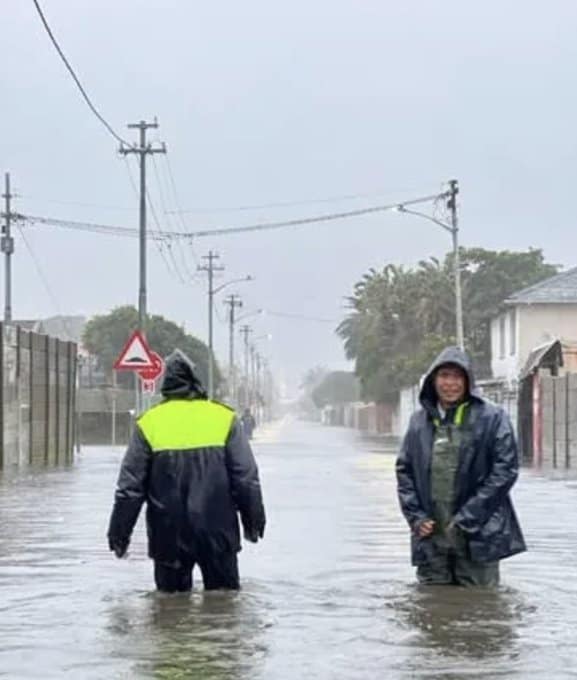
A formidable line of severe thunderstorms is poised to unleash its fury on the Western Cape, prompting the South African Weather Service (SAWS) to issue a critical Yellow Level 4 weather warning for Monday. The alert signals a high likelihood of significant impacts, placing emergency services and residents across multiple districts on high alert.
The looming system is expected to be a multi-hazard event, packing a dangerous trio of torrential rainfall, large hail, and damaging winds in excess of 80 km/h. The SAWS has pinpointed the primary window of risk from mid-afternoon through the evening rush hour and into the night, warning that conditions may deteriorate rapidly with little warning.
“The atmospheric setup is conducive to intense, slow-moving thunderstorms,” stated senior SAWS forecaster, Mbali Nkosi. “A Yellow Level 4 warning is not issued lightly. It indicates a disruption threshold where widespread damage to property and infrastructure is possible, and there is a tangible risk to life due to flash flooding, falling trees, and hail. Communities in the warning area need to take proactive steps to ensure their safety.”
Areas of Highest Impact
The warning covers a broad swath, including the Cape Winelands, Overberg, and parts of the West Coast districts. Major population centres such as Stellenbosch, Paarl, Worcester, Hermanus, and Caledon are directly in the path. Outlying areas and informal settlements are considered particularly vulnerable due to the heightened risk of flash flooding and structural damage.
The Triple Threat
- Flash Flooding: The core danger lies in intense, short-duration deluges that could deposit 30-50mm of rain in under an hour. Dry riverbeds, low-lying roads, and inadequate drainage systems may be overwhelmed instantly. The SAWS has urged motorists to avoid crossing submerged roads.
- Destructive Hail: Models indicate a strong potential for hail of significant size, which could smash vehicle windshields, skylights, and greenhouse structures, and cause severe damage to agriculture. Vineyards and soft fruit farms in the Boland are preparing for potential crop losses.
- Damaging Winds: Strong, gusty downdrafts accompanying the storms pose a serious threat of felling trees and power lines, leading to localised power outages and blocking key roadways.
Authorities Mobilise, Public Urged to Prepare
Provincial Disaster Management Centre head, Colin Deiner, confirmed that all relevant agencies have been activated. “Our teams are on standby—from traffic authorities to rescue personnel. We are coordinating with municipalities to ensure sandbags are available in flood-prone areas and that emergency shelters can be opened if needed.”
The public is advised to:
- Secure loose outdoor items and park vehicles under cover if possible.
- Avoid non-essential travel during the storm.
- Charge mobile devices and have emergency kits ready.
- Monitor official SAWS and municipal social media channels for updates.
The aftermath of the storms may extend into Tuesday morning, with cleanup operations likely and potential delays to transport and power restoration in the hardest-hit areas. This severe weather event serves as a stark reminder of the region’s vulnerability to intense convective storms, which climate scientists note may become more volatile in a warming climate.
Residents are reminded to report emergencies to their local municipalities or the national emergency number 112.
About The Author