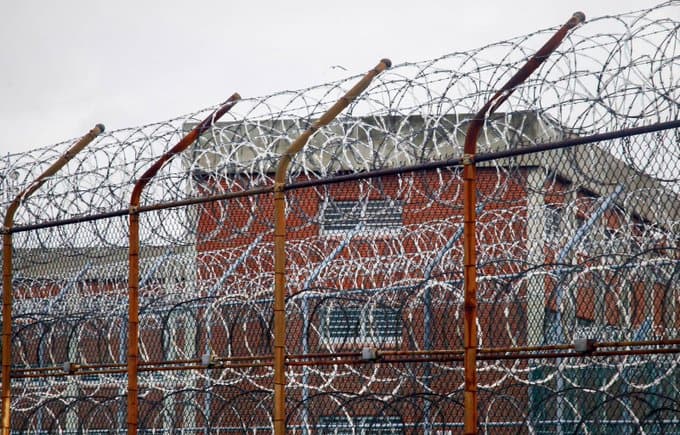
Pretoria – They are murderers, alleged rapists, and armed robbers—individuals deemed dangerous enough to be stripped of their liberty. Yet, despite being in the grip of the state, more than 200 of them have melted back into communities across South Africa, their absence a glaring indictment of a law enforcement system struggling to hold the line.
According to a recent South African Police Service (SAPS) report, a staggering 202 dangerous offenders who escaped from custody in the last year remain at large. These are not petty criminals who slipped away years ago; they are individuals who broke free from police holding cells or overpowered officers during transit in 2023, exploiting moments of human error and systemic weakness to regain their freedom.
The figure has ignited a firestorm of criticism against the SAPS, with opposition parties and community safety organizations questioning how individuals already under the state’s lock and key can simply vanish. The concern is not just about the numbers, but the nature of the crimes that put these individuals behind bars in the first place.
“Every single one of these escapees represents a potential victim waiting to happen,” said Thandi Ndlovu, a criminal justice researcher at the Pretoria-based Institute for Security Studies (ISS). “When the state fails to secure a convicted murderer or a suspect awaiting trial for a violent crime, it is actively jeopardizing the safety of the very public it is sworn to protect.”
Anatomy of an Escape: How Do They Get Away?
The escapes, which total 253 incidents over the past fiscal year, paint a picture of a system under immense strain. While some escapes involved brazen, Hollywood-style breakouts, police sources indicate the majority were far more mundane—and therefore, more preventable.
Common scenarios include prisoners overpowering a single, unarmed officer during a court transport, exploiting faulty door locks in ageing police station holding cells, or simply fleeing when left unattended at a public hospital or during a forensic appointment. In some cases, inmates have been able to cut through security mesh or remove roof panels in dilapidated cells.
Of the 253 individuals who escaped, SAPS reports that 51 have been rearrested. But the remaining 202 remain unaccounted for, a fugitive army that represents a profound failure of the “detection and prevention” mandate the police are constitutionally bound to uphold.
“The Public Has a Right to Be Furious”
The political response has been swift and scathing. The Democratic Alliance (DA), which obtained the report, has lambasted Police Minister Bheki Cele and National Police Commissioner General Fannie Masemola for what it calls a “dereliction of duty.”
“The fact that 202 dangerous criminals are roaming our streets freely because of police incompetence is a national scandal,” said Okkie Terblanche, the DA’s shadow minister of police. “These are not minor offenders. These are individuals who pose a direct threat to our communities. Every day they are free is a day our right to safety is violated.”
Civil society groups have echoed these sentiments, pointing to a crisis of morale and resources within the SAPS. Understaffed stations, a shortage of functional police vehicles for transporting prisoners, and a lack of basic maintenance for holding facilities are all cited as contributing factors. The escapes also strain detective resources, as officers who should be investigating complex crimes are instead tasked with hunting for fugitives who should never have been free in the first place.
Inside the Manhunt: The Search for the 202
SAPS maintains that抓捕 these escapees remains a “top priority.” National spokesperson Brigadier Athlenda Mathe confirmed that dedicated teams have been established to track down the fugitives. “We have activated our most wanted lists, and we are appealing to the public to assist with information,” Mathe said in a statement. “We are confident that we will account for each and every one of them.”
However, critics argue that the manhunt is hampered by the very same issues that allowed the escapes to happen. The SAPS is already grappling with a severe backlog of unsolved cases, and tracking down fugitives requires significant manpower and resources. Furthermore, in a country with high unemployment and porous borders, escapees have multiple avenues to evade capture: they can move in with relatives in remote rural areas, blend into dense urban townships, or even flee across South Africa’s borders into Eswatini, Mozambique, or Zimbabwe.
A Call for Accountability
As the search continues, the debate is shifting toward accountability and prevention. Opposition parties are calling for a full parliamentary inquiry to investigate the systemic failures within the SAPS that allow prisoners to escape with such alarming frequency. They are demanding consequences for the individual officers whose negligence directly led to these incidents.
For the communities living in the shadow of these 202 fugitives, the report is a chilling reminder of the fragility of their security. In a country already grappling with some of the highest crime rates in the world, the knowledge that the police have lost control of over a hundred dangerous individuals adds a layer of anxiety to everyday life.
Until the last of these escapees is recaptured, or until the systemic rot that allowed them to flee is fixed, the question will remain: how many more will pay the price for the state’s failure to keep its most dangerous prisoners behind bars?
About The Author