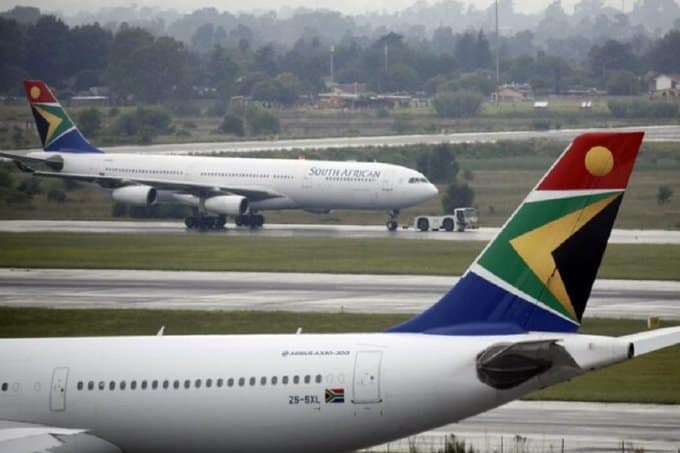
Cape Town International Airport has been thrown into chaos as a powerful second cold front barrels into the Mother City, bringing relentless heavy rain, howling winds, and dangerously low visibility. Several inbound flights have been diverted to OR Tambo International Airport in Johannesburg, leaving hundreds of passengers stranded, delayed, or rerouted as the extreme weather shows no signs of abating.
The airport, which had only just recovered from the first cold front earlier in the week, is now grappling with conditions that aviation authorities have described as “marginal at best” for safe landing operations. By midday Tuesday, at least 12 flights – including domestic carriers FlySafair, Airlink, and Lift, as well as two international arrivals from Namibia and Zimbabwe – had been redirected to Johannesburg, while several outbound flights remain indefinitely delayed on the tarmac.
“Safety is our absolute priority,” said a spokesperson for Airports Company South Africa (ACSA) in a statement. “The combination of crosswinds exceeding 40 knots, rainfall intensity reducing runway friction, and visibility dropping below 800 meters has made landing at Cape Town International extremely challenging. We are working with airlines to accommodate diverted passengers and are closely monitoring the weather for any improvement window.”
A Second Front, A Double Blow
The first cold front arrived over the weekend, dumping nearly 50mm of rain on parts of the Cape Peninsula and causing localized flooding in low-lying areas such as Philippi, Khayelitsha, and Milnerton. That system moved eastward on Monday, offering a brief respite. But the reprieve was short-lived. A second, more intense cold front slammed into the Western Cape coastline in the early hours of Tuesday morning, packing stronger winds and more sustained rainfall.
According to the South African Weather Service (SAWS), the second front has already deposited an additional 35mm of rain at Cape Town International since midnight, with another 20–30mm expected before the system weakens on Wednesday morning. Maximum sustained winds at the airport have reached 65 km/h, with gusts exceeding 85 km/h – well above the crosswind limits for many commercial aircraft.
“We have upgraded the warning to Orange Level 6 for the Cape Town metro,” said SAWS forecaster Luthando Masimini. “This is not typical winter rain. This is a significant, energetic frontal system moving through at a time when the ground is already saturated. Flooding is likely. Travel disruption is almost certain. And for aviation, conditions are extremely hazardous.”
Passengers Stuck in Limbo: ‘We’ve Been on the Tarmac for Four Hours’
The impact on travellers has been severe. Passengers originally scheduled to land in Cape Town have found themselves touching down in Johannesburg instead – over 1,400 kilometers away – with little clarity on when or how they will reach their intended destination.
“We were supposed to land at 9 a.m. from Durban,” said Thandi Ndlovu, a 34-year-old marketing executive, speaking from OR Tambo International’s crowded arrivals hall. “Halfway through the flight, the pilot announced that Cape Town was ‘unavailable’ due to weather. Next thing we know, we’re in Joburg. No hotel vouchers yet. No rebooking confirmation. Just ‘wait for an update.’ It’s a mess.”
Other passengers remain trapped on the ground in Cape Town, sitting in planes that cannot take off. One FlySafair flight to Johannesburg was delayed for over three hours as crew waited for a weather window that never came. Eventually, passengers were deplaned and bused back to the terminal, where queues at airline customer service desks stretched for hundreds of meters.
“I have a connecting flight to London this evening,” said Michael van der Merwe, a businessman from Stellenbosch. “If I don’t get out of Cape Town by 3 p.m., I miss my international connection. The airline is saying nothing. There’s no information. Just chaos.”
City’s Infrastructure Tested: Flooding, Fallen Trees, and Road Closures
The airport disruptions are only one facet of a broader weather crisis gripping the Cape. The City of Cape Town’s disaster management teams have been activated, responding to dozens of incidents across the metro. Fallen trees have blocked major thoroughfares including the M3 near Kirstenbosch and the N2 at Borcherds Quarry. Several low-water bridges in the Southern Suburbs have been closed as streams burst their banks.
The suburb of Strandfontein has reported the most severe flooding, with over 80 informal structures inundated by rising stormwater runoff. Emergency services have evacuated 23 families to community halls, though no injuries have been reported.
“We are dealing with a significant volume of water in a very short period,” said Alderman JP Smith, Mayoral Committee Member for Safety and Security. “Our stormwater systems are designed for Western Cape rainfall, but this is extreme. We are urging residents to stay indoors unless absolutely necessary. Do not drive through standing water. Do not walk in rivers or canals. The danger is real.”
Airlines Scramble to Accommodate Stranded Passengers
For the airlines, the diversions and delays represent a logistical nightmare. FlySafair confirmed that three of its inbound morning flights had been diverted to Johannesburg, with two more held on the ground in Cape Town awaiting a break in conditions.
“Affected passengers are being rebooked on the next available flights, and accommodations are being arranged for those who cannot travel today,” said FlySafair spokesperson Kirby Gordon. “We understand how frustrating this is, but safety is non-negotiable. The wind at Cape Town is currently beyond the operating limits of the Boeing 737. We cannot land there. We will not try.”
Airlink issued a similar statement, noting that its regional flights from smaller airports like George and Plettenberg Bay had also been affected. The airline, which operates a fleet of Embraer regional jets, has cancelled three routes to Cape Town entirely for the remainder of Tuesday.
Lift, the boutique carrier co-founded by Jonathan Ayache, announced that it is waiving rebooking fees for all flights to and from Cape Town on Tuesday and Wednesday, and is allowing affected passengers to reschedule within 14 days at no extra charge.
International Arrivals Also Impacted
The diversions have not been limited to domestic flights. Two international arrivals scheduled for Tuesday morning – a Proflight Zambia flight from Lusaka and an Air Namibia flight from Windhoek – were both redirected to Johannesburg. Passengers on both flights were reportedly offered bus transport to Cape Town, a journey of roughly 16 hours, or overnight accommodation in Johannesburg with rebooking for Wednesday.
A British Airways flight from London Heathrow, originally due to land at Cape Town at 8 p.m. Tuesday evening, has been placed on notice of possible diversion. The airline told passengers via email to “prepare for an alternate landing location” and to ensure they have necessary documentation for entry into other South African provinces.
Weather Outlook: When Will It End?
The South African Weather Service forecasts that the second cold front will peak on Tuesday evening before gradually weakening overnight. Conditions at Cape Town International are expected to improve by late Wednesday morning, though winds may remain gusty throughout the day.
“By Wednesday afternoon, we should see some recovery,” Masimini said. “Thursday looks much calmer. But Tuesday is a loss. Anyone with travel plans to or from Cape Town today should expect significant disruption and should contact their airline before heading to the airport.”
ACSA has advised passengers to monitor flight status online and to arrive at the airport no more than two hours before departure, as terminal overcrowding has become a concern. The airport’s departures hall was described by one traveller as “absolute bedlam” – a scene of long queues, frustrated voices, and the occasional crack of thunder overhead.
Climate Context: A Wetter Cape?
Meteorologists note that while Cape Town is no stranger to winter cold fronts, the intensity and frequency of these systems – two major fronts within a single week – are notable. Some have drawn tentative links to a developing El Niño pattern, though SAWS has cautioned against attributing individual weather events to climate change without long-term trend analysis.
“What we can say is that the Cape’s winter rainfall season appears to be arriving with more energy this year,” Masimini said. “Whether that is a one-year anomaly or a new pattern, we cannot yet determine. But residents should prepare for more events like this.”
Travel Insurance and Passenger Rights
The disruption has revived discussions around passenger rights during weather-related cancellations and diversions. Unlike mechanical issues or crew shortages – which are within an airline’s control – weather events are considered “extraordinary circumstances” under South African consumer protection law. This means airlines are not required to pay compensation for delays or cancellations, though they remain obligated to provide rebooking or refunds.
Consumer advocate Thabiso Makhubela urged passengers to check their travel insurance policies. “Many travel insurance products include cover for weather-related disruption – accommodation, meals, alternative transport,” he said. “But you must keep receipts and get written confirmation from your airline that the disruption was weather-related. Without that paper trail, insurers may deny claims.”
Advice for Stranded Passengers
For the hundreds of passengers now scattered between Cape Town, Johannesburg, and other diversion points, the advice from travel experts is straightforward:
- Do not leave the airport without speaking to an airline representative first – some rebooking must be done in person.
- Take screenshots of all communication from airlines and ACSA.
- If offered a hotel voucher, ask for meal allowances as well – many hotels do not include meals.
- Check credit card travel insurance – some premium cards include automatic cover for weather delays.
- Be patient and polite – ground staff are working under extreme pressure and are not responsible for the weather.
Conclusion: A Waiting Game
As the second cold front continues to batter the Mother City, the message from all authorities is the same: wait. Wait for the wind to drop. Wait for the rain to ease. Wait for the skies to clear enough for planes to land safely.
For now, Cape Town International remains open but severely compromised. The diversions to Johannesburg will continue as long as conditions demand. And for thousands of travellers, the dream of a Cape Town arrival – or departure – has been replaced by the grim reality of airport lounges, crowded terminals, and the uncertain promise of tomorrow.
One stranded passenger, a young woman from the United Kingdom, summed up the mood as she stared at a departures board flickering with red “DELAYED” notifications. “I came to Cape Town for the beauty,” she said, rain lashing the windows behind her. “Right now, I’d settle for just getting there.”
ACSA has promised to provide further updates every two hours. The South African Weather Service’s next briefing is scheduled for 6 p.m. Until then, the Mother City waits – and the planes circle, divert, and wait with her.
About The Author