A somber silence has fallen over the dusty streets of Klaarstroom, a small hamlet cradled between the majestic Swartberg and Rooiberg mountains, after authorities confirmed the recovery of a man’s body following a desperate river crossing gone horribly wrong this past weekend.
The incident, which has sent shockwaves through this tight-knit community in the Western Cape, unfolded late Saturday afternoon along a swollen tributary near the iconic Meiringspoort pass—a region known for its dramatic geology, winding mountain roads, and, during heavy rains, dangerously unpredictable waterways.
According to a statement from the Garden Route District Municipality’s Joint Operational Centre, the victim—whose name has not yet been released pending family notification—was attempting to cross the fast-moving river on foot when the force of the water swept him off his feet. Witnesses at the scene described a chaotic and terrifying sequence of events: the man wading into what appeared to be shallow water near the edge, only to step into a sudden drop where the current intensified without warning.
“One moment he was there, trying to make his way across. The next, the water just took him,” said a local resident who asked not to be named due to the sensitivity of the situation. “People were screaming, but there was nothing anyone could do. The river was too strong. Too fast.”
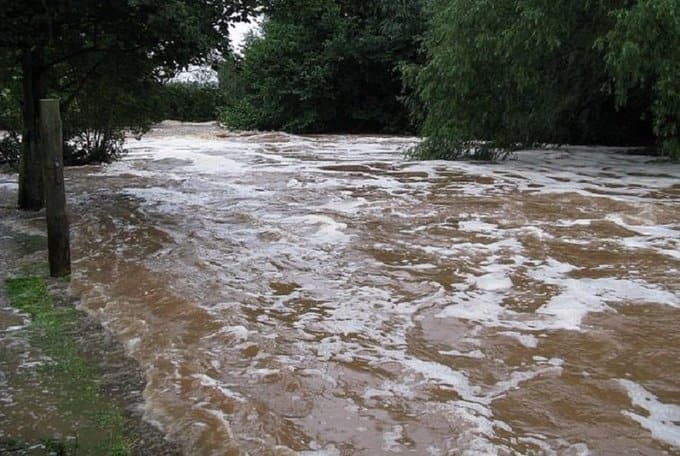
The area around Klaarstroom and Meiringspoort had experienced persistent rainfall in the days leading up to the tragedy, with local weather stations recording above-average precipitation for this time of year. What are usually gentle, rock-strewn streams had transformed into raging, brown torrents—capable of sweeping away not only debris but fully grown adults, livestock, and even light vehicles.
Emergency services were alerted shortly after the man disappeared beneath the churning surface. A search-and-rescue operation was immediately launched, involving swift-water rescue teams from the Garden Route District Municipality, Western Cape police divers, and volunteers from neighboring farming communities. However, treacherous conditions and fading daylight hampered initial efforts.
“Our teams worked tirelessly through the night, but the water levels remained dangerously high,” said Gerhard Otto, a spokesperson for the municipality’s disaster management unit. “We had to balance the urgency of the search with the safety of our responders. Nobody wanted to make a difficult situation worse by losing another life.”
It was not until Sunday afternoon—nearly 24 hours after the drowning—that searchers located the victim’s body approximately two kilometers downstream from the original crossing point, lodged against a tangle of uprooted trees and flood debris along a bend in the river. He was pronounced dead at the scene.
The tragedy has reignited concerns among locals about the lack of visible warning signs or physical barriers at informal river crossings in the region. Meiringspoort, while a beloved tourist route connecting Prince Albert to De Rust, has claimed multiple lives over the decades during flash floods. Heavy summer and winter rains frequently transform its picturesque stream crossings into death traps for the unprepared.
“This is not the first time, and sadly, it probably won’t be the last,” said an elderly farmer from the outskirts of Klaarstroom, shaking his head. “The rivers here go from ankle-deep to a raging monster in less than an hour. Visitors don’t understand. Sometimes even locals forget.”
Western Cape police have opened an inquest docket, and the victim’s body was transported to a nearby mortuary where a post-mortem examination will be conducted to confirm the exact cause of death. Authorities have urged residents and travelers alike to exercise extreme caution when approaching any river or low-water bridge after heavy rains—and to avoid crossing altogether if water levels appear even moderately elevated.
“No destination, no shortcut, no errand is worth a life,” Otto emphasized. “These floodwaters carry immense power. Respect the force of nature. Turn around. Find another route. Or simply wait. The river will go down, but you won’t come back.”
As the sun set behind the jagged peaks of the Swartberg on Sunday evening, a small group of mourners gathered on the riverbank, lighting candles and whispering prayers into the wind. Locals say the Little Karoo has a long memory for loss—and that the waters that carve its canyons and feed its vineyards also keep a silent ledger of those who dared to cross at the wrong moment.
For now, the community of Klaarstroom grieves. The river, having claimed its due, has begun to recede—but the pain will linger far longer than the floodwaters.
About The Author