The sun over the Free State capital was unusually gentle on the morning of Freedom Day, April 27, 2025. Thousands had gathered at the Dr. Petrus Molemela Stadium, draped in the green, gold, black, blue and red of the national flag. Thirty-one years after the first democratic election, South Africa was celebrating the long walk to freedom—but the echoes of that walk now collided with a new, jagged debate: who belongs?
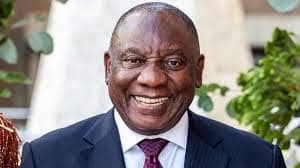
President Cyril Ramaphosa, dressed in a dark suit and an African-print face mask (a lingering nod to post-pandemic caution), took to the podium with the measured gravitas of a leader who has spent much of his tenure trying to hold a fractious nation together. He began on familiar, triumphant ground. He spoke of education: how more children were in school than ever before, how the National Student Financial Aid Scheme (NSFAS) had opened university doors for the poor. He spoke of poverty reduction, citing expanded social grants that kept millions from hunger.
But then, his tone shifted. The speech, originally drafted as a celebration of democratic resilience, had been hastily reworked overnight. The elephant in the stadium—and indeed, in every township, every taxi rank, every parliamentary caucus room—was immigration.
“My fellow South Africans,” Ramaphosa said, his voice echoing off the stadium’s concrete rafters, “our Constitution promises rights to all who live in this land. But those rights must be exercised within the law. We are a nation of laws, not of lynchings.”
The crowd, a sea of faces from all nine provinces, listened intently. The president acknowledged the rising tensions: South Africans angry about foreign nationals running spaza shops, taking jobs, allegedly undermining local businesses. He validated the frustration, but drew a sharp, unwavering line.
“We have heard the cries of our people,” he continued. “And we are acting. In the past six months alone, government raids have led to the closure of over 120 businesses illegally employing undocumented foreign nationals. The Department of Home Affairs is undergoing a radical overhaul—modernizing our border management, digitizing permits, and deporting those who flout our laws.”
He listed the numbers with precision: 3,400 undocumented immigrants arrested in the last quarter. 850 employers fined. A new Border Management Authority finally, after decades of talk, operational.
But then came the plea—the part of the speech that would dominate headlines. Ramaphosa invoked a word that has become both a national slogan and a national accusation: Ubuntu.
“We cannot allow anger to turn into cruelty,” he said softly, leaning into the microphone. “There are thousands of legal African residents in this country—doctors, engineers, shopkeepers, domestic workers—who came here fleeing war, poverty, or simply seeking opportunity. They pay taxes. They raise families. Their children speak isiZulu and Afrikaans and English. They are us. We must treat them with humanity. If we turn on them, we turn on the very spirit of 1994.”
He warned against vigilante justice with unusual force: “No citizen has the right to take the law into their own hands. No mob, no matter how angry, has the authority to burn a foreigner’s shop, to beat a neighbor, to drive a family from their home. That is not protest. That is anarchy. And we will not tolerate it.”
The Interruption: A Brief Panic
As the president reached the crescendo of his immigration address, a sudden commotion erupted from the VIP seating area. A man—later identified as a disgruntled local activist unaffiliated with any major party—broke through a temporary security barrier and rushed toward the edge of the stage. Gasps rippled through the crowd. Cellphones shot into the air. For three seconds, time seemed to hold its breath.
But the presidential protection services (PPS) reacted with drilled precision. Two plainclothes officers intercepted the man before he could mount the stage steps, wrapping him in a controlled takedown. He was whisked away through a side tunnel. No weapons were found. No one was injured. Within ninety seconds, Ramaphosa, who had paused briefly and stepped back a pace, returned to the microphone.
“Let us continue,” he said calmly, adjusting his lapel. “Our democracy is strong enough to withstand one man’s frustration.”
The crowd applauded nervously, then genuinely. The incident, though briefly alarming, became a footnote—but it underscored the raw nerves running through the event.
A Nation Divided: Praise and Fury
As the president’s convoy left Bloemfontein, the political reaction machine roared to life.
From the Western Cape, Cape Town Mayor Geordin Hill-Lewis (Democratic Alliance) issued a measured statement of support. “The President is right to focus on a balanced approach,” Hill-Lewis wrote on X (formerly Twitter). “We need both border enforcement and basic human decency. Cape Town stands ready to work with national government on enforcement, but we also welcome legal refugees. The answer is not xenophobia.”
But just a few hours later, a far sharper response came from an unlikely critic—or perhaps, a very predictable one. Herman Mashaba, the firebrand former Johannesburg mayor and leader of ActionSA, held an impromptu press conference outside the party’s Braamfontein headquarters. He was visibly angry, clutching a missing person flyer.
“Ubuntu? Respect for illegal residents?” Mashaba jabbed a finger at a photograph of the missing 27-year-old Vosloorus spaza shop owner—the entrepreneur who had vanished on April 2 after resisting pressure to sell his store. “This young man’s case is stalled. Two suspects were released without charges. The police have done nothing. And President Ramaphosa wants to talk about kindness to foreigners while a South African citizen is missing—probably dead—because he dared to reclaim his own community’s economy?”
Mashaba’s voice rose. “The President speaks of raids and Home Affairs reforms. But where are the results? Where is the arrest of ‘Zulu’—the man named by the victim’s own sister? This is not leadership. This is rhetoric for a television camera while families weep in their living rooms.”
The contrast was stark. On one side, a president trying to steer a middle path between constitutional protections and legitimate public anger. On the other, a populist opposition leader stoking that anger, demanding blood and arrests. And caught in between: the family of a missing young man, who had begged for answers on the very same Freedom Day.
The Promise and The Peril
Ramaphosa concluded his speech in Bloemfontein with a pledge. “We will not allow vigilantes to define who is South African,” he said. “But neither will we allow criminals, domestic or foreign, to hide behind the banner of human rights. The law will come for everyone who breaks it—equally, without fear, without favor.”
He promised a special task force on spaza shop-related crimes. He promised a hotline for South African entrepreneurs facing intimidation. He promised, again, to fix Home Affairs.
For the thousands who cheered him, it was enough. For the family in Vosloorus, still waiting by a silent phone, it was not nearly enough. And as the stadium emptied and the flag was lowered, the question lingered in the dry Free State air: In a nation of so many competing freedoms, whose justice will prevail first—the court’s, the president’s, or the street’s?
About The Author