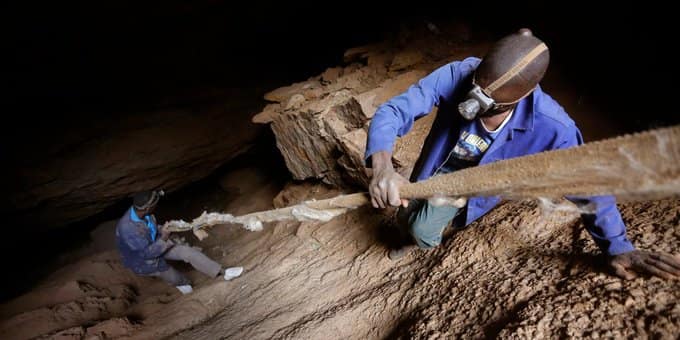
The deserted mine dumps of Riverlea and Roodepoort tell a story of neglect. But lately, they have also become a theater of the absurd. For months, the rumble of military vehicles and the presence of soldiers in full combat gear have signaled a high-stakes crackdown on the zama zamas—the illegal miners who have turned Johannesburg’s decaying gold-bearing land into a subterranean war zone. The operation, a joint R800 million initiative between the South African National Defence Force (SANDF) and the South African Police Service (SAPS), was given a name pregnant with promise: Operation Prosper.
Yet, nearly a year after its launch, the only thing prospering appears to be the ridicule directed at the authorities. Sources on the ground, community leaders, and even whispers from within the security establishment paint a damning picture of an initiative plagued by poor planning, inter-departmental chaos, and a fundamental misunderstanding of the enemy it was sent to fight.
Far from being a model of inter-agency cooperation, Operation Prosper has been described as haphazard, uncoordinated, and profoundly ineffective. And most embarrassingly of all, the very people it targets—the zama zamas—are reportedly laughing at it.
The Sound and the Fury
On paper, the operation looked decisive. Following a series of deadly turf wars between rival mining gangs and the discovery of dozens of bodies in disused mine shafts, the government finally acknowledged that the situation in the West Rand had spiraled beyond the control of the police alone. The SANDF was deployed in a high-profile show of force. Tents were erected. Roadblocks were set up. Politicians posed for photographs in flak jackets.
But beneath the veneer of military precision, chaos reigned.
According to multiple insiders who spoke to the media, the integration between the SANDF and SAPS has been a disaster from day one. The two forces operate under different mandates, different rules of engagement, and, crucially, different intelligence structures. While the soldiers are trained for high-intensity combat, they lack the investigative capacity to build cases against the syndicates that control the illicit mining trade. The police, meanwhile, have the legal authority to arrest and prosecute but lack the manpower to secure the vast, porous terrain.
The result is a standoff. Soldiers patrol the surface, visible and intimidating, while the zama zamas simply retreat deeper underground, waiting them out.
The Miners Are Laughing
The most stinging critique of Operation Prosper comes not from opposition politicians or academic experts, but from the zama zamas themselves. In interviews conducted by ground-level journalists who have ventured into the shadowy world of the miners, a consistent theme emerges: the operation is a joke.
One illegal miner, speaking on condition of anonymity, told a local publication that he and his colleagues watch the soldiers from hidden vantage points. “They walk around with their big guns, but they don’t know where the entrances are. They don’t know the tunnels. We’ve been here for years. We know every hole, every shaft. When they come, we go down. When they leave, we come back up. It’s a game.”
This sentiment is echoed by community members in affected areas like Riverlea, who report that life has continued largely unchanged since the soldiers arrived. The zama zamas still emerge at night to buy food and supplies from local spaza shops. The tunnels still echo with the sound of illegal drilling. The only difference now is the presence of bored soldiers standing around in the sun.
The Price Tag: R800 Million and Counting
The cost of this ineffectiveness is staggering. The R800 million allocated to Operation Prosper covers the deployment of soldiers, the fueling of vehicles, the procurement of equipment, and the payment of allowances. It is money that critics argue could have been spent on long-term solutions: rehabilitating mine shafts, providing alternative livelihoods for artisanal miners, or strengthening border controls to prevent the flow of undocumented foreign nationals who make up a significant portion of the zama zama workforce.
Instead, the money is being consumed by what amounts to a holding pattern. The soldiers are there, but they are not winning. The criminals are still there, but they are not being caught.
A Failure of Imagination
The fundamental flaw in Operation Prosper, analysts argue, is that it treats a complex socio-economic problem as a simple law-enforcement problem. The zama zamas are not a conventional enemy that can be defeated by overwhelming force. They are a symptom of deeper maladies: mass unemployment, the collapse of the mining industry, porous borders, and corruption within the very structures meant to police the trade.
“Until you address why people go underground—because there are no jobs, because poverty is endemic, because the legitimate economy has failed them—you will never stop illegal mining,” said a University of Johannesburg criminologist specializing in organized crime. “The military can push them from one shaft to another, but they will always find a new hole. It’s like squeezing a balloon.”
Furthermore, the illicit gold trade is sustained by a sophisticated network of buyers, refiners, and exporters who operate with near-impunity. The real kingpins never go near a mine shaft. They sit in offices, run jewelry stores, or operate on the international bullion market. Operation Prosper, focused as it is on the visible tip of the spear, leaves this entire infrastructure untouched.
Political Fallout and the Road Ahead
As the 2026 local government elections approach, the failure of Operation Prosper is becoming a political liability. Opposition parties have seized on the R800 million figure, using it to hammer the ANC-led government for wasting public funds on performative security operations. The Democratic Alliance has called for a full parliamentary inquiry into the planning and execution of the operation, while the Economic Freedom Fighters have demanded that the money be redirected toward mine rehabilitation and job creation.
The government, for its part, has defended the operation, insisting that it has led to numerous arrests and the seizure of equipment. But the numbers tell a different story. Relative to the scale of the problem—thousands of illegal miners operating across hundreds of kilometers of mine dumps—the arrest rate is a drop in the ocean.
A Losing Battle
In the shadows of Johannesburg’s mine dumps, the war against the zama zamas grinds on. The soldiers stand guard. The miners dig. And R800 million of public money disappears into a void of poor planning and bureaucratic paralysis.
For the residents of places like Riverlea, the situation is deeply disheartening. They live in fear of the armed gangs that control their streets at night, yet they see no end to the cycle of violence and impunity. They watch as a small fortune is spent on a military operation that, by any honest measure, is failing.
And somewhere deep underground, in the darkness of a disused shaft, a zama zama lights a cigarette and chuckles to himself. The soldiers are still up there. They’re still walking in circles. And he’s still digging for gold.
About The Author