In the sprawling, dusty streets of Olievenhoutbosch, an informal settlement south of Pretoria, Pamela Ncumisa Selani’s shebeen was more than just a place to buy a drink. For the locals, it was a hub, a place where the day’s labour was washed away with cheap beer and the air hummed with the gossip of the township. Pamela, a 47-year-old woman known for her sharp tongue and fierce independence, was a familiar figure, presiding over her small domain from behind a counter.
But beneath the feet of her patrons, just a few metres from where they laughed and clinked bottles, a secret was festering in the hard, red earth. In a shallow pit in her backyard, three generations of a fractured story lay stacked upon one another, silenced by the very woman who was supposed to nurture them.
The story of the bodies in the yard began, as so many tragedies do, with a whisper of betrayal. In 2016, Pamela was in a relationship with a man named Isaac Motlhabane. When she discovered she was HIV-positive, her world narrowed into a funnel of rage and blame. She pointed a finger at Isaac, accusing him of infecting her, of sealing her fate. The accusation was a death sentence in her mind, and she decided it would be a physical one for him.
One evening, as Isaac sat with her, perhaps sharing a drink, the argument turned violent. Pamela, her vision red with fury, seized a hammer. The tool, a mundane object for building and fixing, became an instrument of destruction. She struck him repeatedly, the blows thudding in the small room until his body went limp. The initial act of passion gave way to a cold, calculated calm. She dragged his body into the yard and began to dig. The grave was shallow, a hurried scar in the earth, but it was deep enough to hide her secret.
For a while, it did. Life at the shebeen continued. Pamela found another partner, a man named Jongisizwe Mtshali. But the shadow of the first grave loomed, and the secret began to warp the fabric of her family. She confided in her son, Avile, a young man who became an unwilling accomplice to his mother’s darkness.
In 2018, the relationship with Jongisizwe soured. This time, the murder was not a spontaneous act of rage, but a calculated plan executed with her son’s help. The method was sinister: poison. After the substance took effect, Pamela and Avile held Jongisizwe underwater until the life left his body. The murder was complete, and the secret doubled. They added his body to the pit, stacking it upon Isaac’s remains, and covered them both with a new layer of soil.
But secrets are a corrosive currency. They began to eat away at Avile. The memory of the two men in the ground, the feeling of his own hands holding one of them down, became a heavy, unbearable weight. Plagued by guilt and fear, he started to drink, and in his cups, he became a liability. He would mutter dark things, hint at the horror in the backyard.
Pamela saw the threat clearly. To her, Avile was no longer her son; he was a loose end, a witness who could unravel everything. Her maternal instinct, already deeply compromised, was completely consumed by the primal urge for self-preservation. She saw the same hammer that had silenced Isaac, still a tool of both creation and destruction.
One night, in 2018, the final, most horrific act unfolded. An argument erupted, and Pamela, perhaps fearing what Avile would do next, picked up the hammer once more. The son who had helped her bury her secrets became a secret himself. She bludgeoned him to death, and in the most chilling display of her detachment, she dragged his body to the same pit. She laid her own son on top of the two men he had helped her kill, and filled the grave for the last time. The pit in Olievenhoutbosch now held three: a boyfriend, another boyfriend, and her son.
Years passed. The story of the missing men faded into the background noise of the township. People moved on. But the grave remained, a festering wound in the earth. The turning point came in 2020, from a source Pamela could not silence. Her surviving son, the one not buried in the yard, finally broke. Perhaps haunted by his brother’s disappearance, or by whispers he had heard, he walked into a police station and told them everything.
The police arrived at the shebeen with shovels. The residents of Olievenhoutbosch gathered, a morbid curiosity drawing them close. The digging was grim work. First, they found Avile. Then, beneath him, the remains of Jongisizwe Mtshali. And at the very bottom, the first to fall, Isaac Motlhabane. The shallow pit that had held its silence for years gave up its dead, and the full, gruesome scale of Pamela Selani’s crimes was unearthed for all to see.
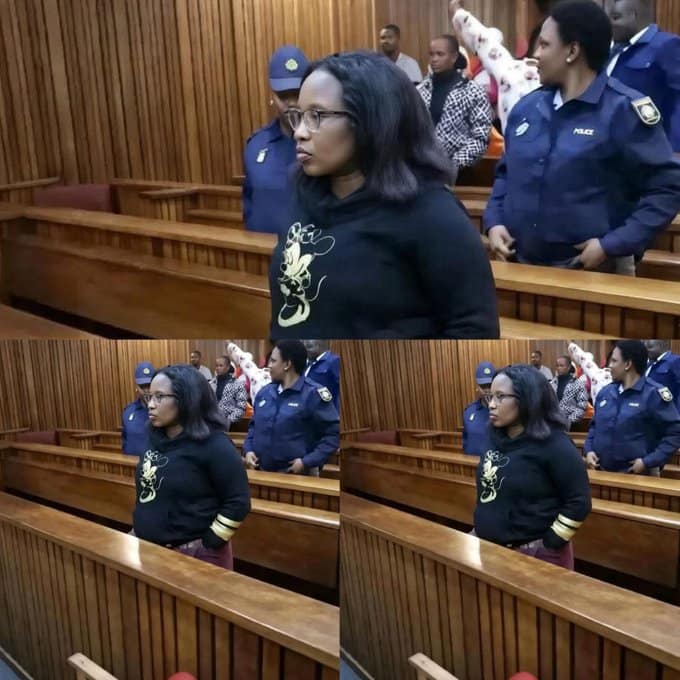
In the hushed and somber chamber of the Gauteng High Court in Pretoria in June 2024, the weight of those exhumed bones was finally laid upon Pamela Selani. Judge Papi Mosopa looked at the woman in the dock, the shebeen queen who had traded her humanity for a secret. There was no leniency, no understanding for the mitigating circumstances her lawyers might have pleaded.
“The acts you committed are degrading and heinous,” Judge Mosopa declared, his voice echoing in the silent courtroom. He described the murders as a sequence of chilling pragmatism, each killing a solution to a problem she had created. The stacking of the bodies was not just an attempt to hide evidence, but a profound desecration, a final insult to the lives she had ended.
Pamela Ncumisa Selani showed no emotion as she was sentenced to three terms of life imprisonment for the three counts of murder, with an additional five years for defeating the ends of justice. The sentence was a formality; her fate had been sealed the moment the first shovel broke the ground in her backyard. As she was led away, the community of Olievenhoutbosch was left to grapple with the chilling reality that for years, they had been drinking, laughing, and living just inches away from a mass grave, and that the monster they would have never suspected wore the familiar face of the woman who served their beer.
About The Author