For the first time in eight years, residents of Olievenhoutbosch and surrounding areas in Centurion have a tangible reason to believe that the constant threat of blackouts may soon be a memory, as the City of Tshwane has officially commenced the comprehensive refurbishment of the long-dormant and vandalised Noordwes Secondary Substation.
The substation, which was crippled by vandalism in 2017, has been the primary cause of chronic power instability across Region 4, leaving households and businesses vulnerable to frequent, unscheduled outages that have damaged appliances, disrupted daily life, and stifled local economic activity. The metro’s announcement that a contractor has now been formally appointed marks the most significant step to date in a critical infrastructure recovery project.
A Phased and Meticulous Restoration Plan
According to metro spokesperson Lindela Mashigo, the project will be executed under a “strict project management framework to ensure quality delivery and adherence to timelines.” The refurbishment is a complex, multi-phase operation designed to not only repair but modernize the facility.
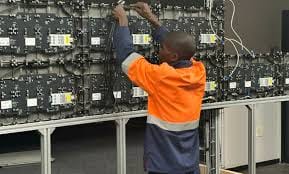
The first phase involves the essential general renovation of the substation building itself, making it secure and operational. This will be followed by the core technical phase: the installation of new, state-of-the-art electrical panels, lighting, and sophisticated protection and control equipment. The final, crucial stage will be the meticulous reintegration of the substation into Tshwane’s broader power network, a delicate process requiring precise synchronization.
In a parallel and complementary project, the city is fortifying the area’s backbone by strengthening approximately 7 kilometres of the 11kV underground feeder cable network along the Olievenhoutbosch, Rua Vista, and Noordwes corridor. This dual-pronged approach addresses both the node (the substation) and the pathways (the cables) of the electricity supply.
More Than Megawatts: A Project for Community Empowerment
Mashigo emphasized that the initiative’s scope extends far beyond restoring electrons to the grid. “This refurbishment is as much about economic empowerment as it is about infrastructure renewal,” he stated. The project has been structured to directly benefit the local community, with a commitment to employing qualified contractors, suppliers, and labourers from Olievenhoutbosch and its surrounds.
This community-centric approach is a key part of rebuilding the frayed trust between residents and the municipality. The project has allocated approximately R1 million for its second phase in the 2025/26 financial year, with further funding secured for the final commissioning.
A Community’s Cautious Optimism
For residents who have endured years of frustration, the announcement has been met with a mixture of relief and cautious hope.
“We’ve lost count of the number of times we’ve had to throw away spoiled groceries or scramble to find money to repair a gate motor or a fridge,” shared Mandla Mthethwa, a resident from Extension 26. “For years, it felt like we were forgotten. This announcement finally feels like a light at the end of a very long, dark tunnel.”
The promise of local job creation has also resonated deeply. “Seeing our own people, our local youth, getting involved in a project of this scale is incredibly encouraging,” said community member Asisipho Ngobese. “It shows that this isn’t just a temporary fix, but an investment in our community’s skills and future. It builds a different kind of power – the power of opportunity.”
The Noordwes refurbishment stands as a flagship project in the metro’s broader infrastructure renewal drive. Officials have assured residents that progress will be closely monitored and reported regularly to the Mayoral Committee and community stakeholders, promising a new era of reliability and dignity for a region long left in the dark.
About The Author