The Police Ministry has announced that it is actively working to rebuild public confidence in the South African Police Service (SAPS) while simultaneously lifting the spirits of the officers who serve on the front line every day. In a series of briefings and internal communications this week, the ministry outlined a multi-pronged strategy aimed at addressing long-standing concerns about trust, accountability, and the well-being of police personnel.
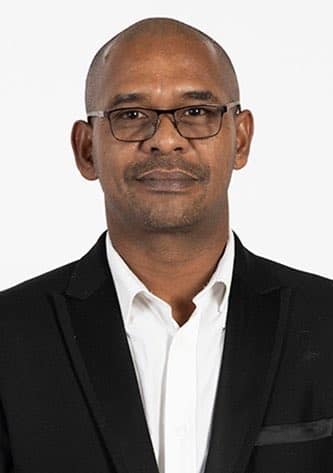
Police Ministry spokesperson Kamogelo Mogotsi confirmed that several initiatives are already underway, with more planned for the coming months. These efforts come at a critical time, as recent surveys show public trust in the police remains alarmingly low, with some reports indicating that only about 22 percent of South Africans have confidence in the service’s ability to protect them and investigate crime effectively.
“We are under no illusions about the scale of the challenge,” Mogotsi said during a media briefing at the ministry’s headquarters in Pretoria. “For too long, the relationship between the police and the communities they serve has been strained—by incidents of corruption, by allegations of brutality, by a perception that the police are either unable or unwilling to act. We are determined to change that. But change cannot be imposed from above. It must be built from the ground up, starting with the morale of our own officers.”
The Trust Deficit: A Crisis of Confidence
The statistics are sobering. According to the latest Afrobarometer survey released in March 2026, only 22 percent of South Africans said they trusted the police “somewhat” or “a lot.” This represents a decline of 12 percentage points since 2018 and places SAPS among the least trusted public institutions in the country, behind the judiciary, the electoral commission, and even local government.
Other surveys paint an even bleaker picture. A 2025 study by the Human Sciences Research Council (HSRC) found that only 18 percent of crime victims reported the incident to the police, citing fear of secondary victimization, belief that the police would not act, or direct experience of police indifference or hostility.
“People don’t report crimes because they don’t believe anything will happen,” said criminologist Dr. Phuti Kgomo. “And they don’t believe anything will happen because they have seen, with their own eyes, cases being dropped, dockets being lost, and suspects being released. The trust deficit is not abstract. It is lived experience.”
The Police Ministry acknowledges this reality. “We cannot ask communities to trust us if we do not first show them that we are worthy of that trust,” Mogotsi said. “That means arresting our own when they break the law. That means investigating complaints thoroughly. That means treating every victim with dignity and respect. It sounds simple. But simple does not mean easy.”
The Morale Crisis: Officers at Breaking Point
If public trust is low, officer morale is arguably even lower. Police unions have repeatedly warned that SAPS is facing a burnout crisis, with officers working excessive overtime, facing chronic resource shortages, and feeling abandoned by leadership.
“Officers are demoralized. They are overworked. They are underpaid. And they feel that the public hates them and the government doesn’t care about them,” said Lesiba Thobejane, spokesperson for the Police and Prisons Civil Rights Union (POPCRU). “You cannot expect officers to protect communities when they feel unprotected themselves.”
The statistics on police well-being are deeply concerning. According to internal SAPS data obtained by this publication, suicide rates among police officers increased by 34 percent between 2020 and 2025. Absenteeism due to stress-related illnesses is at an all-time high. And the attrition rate—officers leaving the service before retirement age—has nearly doubled in the past five years.
“We are losing our best people,” said a senior officer in Gauteng who spoke on condition of anonymity. “Young, talented officers who joined because they wanted to make a difference. They last two or three years. Then they leave. They go into private security. They go overseas. They do anything except stay here. And I don’t blame them.”
The Ministry’s Initiatives: A Four-Pillar Strategy
The Police Ministry’s new strategy rests on four pillars: accountability, wellness, community engagement, and visible policing.
1. Accountability: Cleaning House from Within
The first pillar focuses on rooting out corruption and misconduct within SAPS. The ministry has announced the establishment of a new Internal Accountability Unit (IAU), which will operate independently of the existing SAPS disciplinary structures and report directly to the Police Minister.
“The IAU will have the power to investigate any officer, at any rank, up to and including the National Commissioner,” Mogotsi said. “It will be staffed by external experts—former judges, forensic auditors, and civil society representatives—to ensure independence. And its findings will be made public, with names and outcomes, unless doing so would compromise an ongoing criminal investigation.”
The ministry has also committed to publishing quarterly “accountability reports” detailing the number of officers arrested, suspended, or dismissed for misconduct, as well as the status of disciplinary proceedings.
“Transparency is the enemy of corruption,” said anti-corruption activist Karam Singh of Corruption Watch. “If the ministry actually follows through on this, it could be a game-changer. But we have seen many such promises before. The proof will be in the implementation.”
2. Wellness: Supporting the Front Line
The second pillar addresses officer morale and well-being. The ministry has announced a R500 million wellness fund, to be rolled out over three years, focused on:
- Mental health support: Free, confidential counseling services for all officers, with a target of having at least one trained psychologist per police station in high-crime areas.
- Physical health: Upgraded gym facilities at major police stations, regular health screenings, and access to physiotherapy for officers injured on duty.
- Financial wellness: Financial literacy programs and access to low-interest loans for officers, aimed at reducing the financial stress that can lead to corruption.
- Work-life balance: A pilot program to test a four-day work week for certain administrative units, with the goal of reducing overtime and burnout.
“Our officers are not robots. They are human beings. They have families. They have fears. They have bills to pay,” Mogotsi said. “If we want them to serve us, we must serve them first.”
Police unions have welcomed the announcement but remain cautious. “It’s a good start, but R500 million over three years is not enough for 180,000 officers,” said Thobejane. “And money alone won’t fix the culture. We need to see real change in how officers are treated by their commanders.”
3. Community Engagement: Building Bridges, Not Walls
The third pillar focuses on rebuilding trust between police and the communities they serve. The ministry has announced a nationwide “Community First” campaign, which will include:
- Regular community imbizos: Each police station will be required to hold at least one public meeting per month, where community members can raise concerns directly with the station commander.
- Civilian oversight committees: Newly empowered community policing forums (CPFs) will receive funding and training to conduct independent oversight of local police stations.
- School outreach programs: Police officers will be deployed to schools to build positive relationships with young people, focusing on crime prevention and career guidance rather than enforcement.
- Victim support units: Every major police station will have a dedicated victim support room, staffed by trained social workers, where victims of gender-based violence, child abuse, and other traumatic crimes can give statements in a safe, supportive environment.
“Communities don’t want to be policed. They want to be protected. There is a difference,” said community activist Nomsa Dlamini. “The question is whether the police are willing to listen. A meeting is just a meeting. Action is what matters.”
4. Visible Policing: Reclaiming the Streets
The fourth pillar focuses on increasing visible policing, particularly in high-crime areas. The ministry has announced the deployment of 10,000 new officers to “hotspot” precincts, funded by a combination of new recruitment and the redeployment of administrative staff to front-line duties.
“People need to see police officers on the streets, in their neighborhoods, at their taxi ranks, outside their schools,” Mogotsi said. “Not just when there is a crisis. Every day. That presence deters crime. And it builds trust.”
The ministry has also announced a major investment in technology, including body-worn cameras for all front-line officers, dash cameras for patrol vehicles, and a centralized digital evidence management system.
“Body cameras protect both the public and the police,” said legal expert Advocate Palesa Mkhize. “When an officer knows they are being recorded, they are less likely to use excessive force. When a civilian knows they are being recorded, they are less likely to lie about what happened. It’s a win-win.”
However, the cost of the body camera program—estimated at R1.2 billion over five years—has drawn criticism from some quarters, who argue that the money would be better spent on hiring more officers or building new police stations.
The Challenge of Implementation
While the ministry’s initiatives have been welcomed in principle, many observers remain skeptical about implementation. SAPS has a long history of ambitious plans that falter due to lack of funding, bureaucratic inertia, or resistance from within the ranks.
“The gap between a press conference and a police station is vast,” said political analyst Professor Susan Booysen. “These initiatives sound good. But will they reach a constable in a rural village in the Eastern Cape? Will they change the behavior of a station commander who has been taking bribes for a decade? That is the real test.”
Others point to the ongoing crisis of leadership within SAPS, with the National Commissioner currently suspended and facing criminal charges. “How can you rebuild trust when the head of the organization is in court?” asked one former senior officer. “You cannot. The rot starts at the top. Until that is fixed, everything else is cosmetic.”
The View from the Ground: Officers Speak
To understand the scale of the challenge, this publication spoke to several front-line officers across the country. Their responses paint a picture of exhaustion, cynicism, and cautious hope.
“I have been a police officer for 12 years. I have seen five ‘renewal’ plans. None of them made any difference to my daily life,” said a constable in Khayelitsha, Cape Town. “I still drive a broken car. I still buy my own bullets. I still work 60-hour weeks. The ministry can say whatever they want. I will believe it when I see it.”
A sergeant in Durban expressed similar sentiments but added a note of optimism. “This time feels different. The new minister actually visited our station. He sat with us. He asked questions. He didn’t just talk. Maybe nothing will come of it. But maybe something will. I have to believe that. Otherwise, why am I still here?”
A young officer in Pretoria, just two years on the job, said she was considering resigning. “I joined because I wanted to help people. But every day, I see my colleagues being abused, being underpaid, being blamed for everything. And the public hates us. I don’t know how much longer I can do this.”
What Happens Next?
The Police Ministry has committed to providing quarterly updates on the progress of its initiatives, with the first report due in July 2026. The ministry has also invited civil society organizations, academic researchers, and the media to conduct independent evaluations.
“We are not afraid of scrutiny. We welcome it,” Mogotsi said. “If we fail, we want to know why. If we succeed, we want to learn from it. This is not a short-term project. This is a long-term commitment to change.”
The R500 million wellness fund is expected to begin disbursing in June 2026. The first batch of body-worn cameras is scheduled for delivery in August 2026, with a pilot program in five high-crime precincts. The Internal Accountability Unit is already operational, with a small team of investigators reviewing a backlog of 3,000 unresolved complaints against officers.
A Long Road Ahead
Rebuilding trust between a nation and its police force is not the work of a single press conference or a single budget allocation. It is the work of years—perhaps decades. It requires not just policies, but culture change. Not just money, but leadership. Not just words, but actions.
The Police Ministry has laid out a vision. The question now is whether that vision can survive contact with reality—with the entrenched interests, the limited resources, the exhausted officers, and the skeptical public.
“I want to believe,” said the Khayelitsha constable. “I really do. But hope is not a strategy. Show me. Don’t tell me. Show me that things are changing. Then I will believe.”
Outside the Police Ministry’s headquarters in Pretoria, a small group of activists held a banner: “Trust is earned, not announced.” Inside, officials pored over spreadsheets and timelines, trying to turn promises into plans.
The road to restoration is long. But for the first time in years, it seems someone has at least started the journey.
About The Author