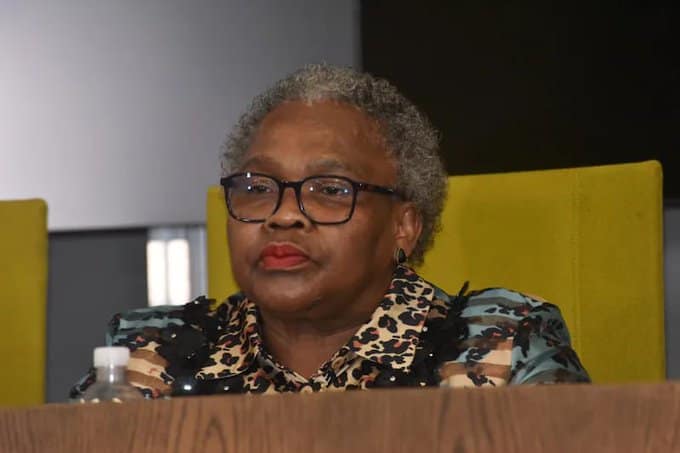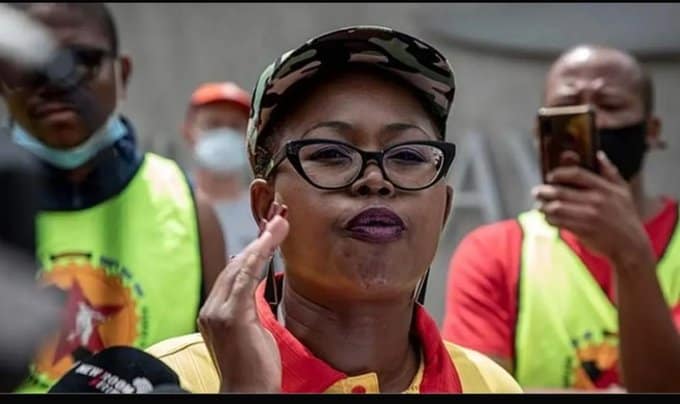
The sudden, jarring ping of a WhatsApp notification cut through the evening quiet of Phakamile Hlubi-Majola’s Johannesburg home. It was not from a colleague about tomorrow’s press briefing, nor a family check-in. The message was terse, clinical, and final: “Assassins have been hired. You are a target. Your time is up.” For a long moment, the seasoned spokesperson for the National Union of Metalworkers of South Africa (Numsa) stared at the screen, the words blurring as the familiar weight of union struggles was replaced by the cold, personal grip of terror.
Twenty-four hours later, the movement was in shock. Hlubi-Majola, the sharp, articulate, and fiercely passionate voice of South Africa’s largest and most militant union, had resigned with immediate effect. Her departure was not a retirement, nor a move to greener pastures, but a forced retreat—a silencing born of the ultimate threat.
A Voice Forged on the Frontlines
Her exit is not merely the loss of a skilled communicator. To the rank-and-file members on the factory floors of automotive plants and engineering workshops, “Phakamile” was a symbol of unwavering defiance. For nearly a decade, she had been the public face during the most bruising battles: the historic metalworkers’ strikes that brought cities to a standstill, the complex negotiations with corporate giants, and the relentless critique of government policies that failed workers. Her voice, clear and unyielding on radio talks shows and in press conferences, translated complex labour politics into a language of resistance and hope.
Colleagues describe her as the union’s “moral compass and megaphone,” a woman who could articulate the raw anger of a dismissed worker with the same conviction as she deconstructed national economic policy. Her visibility was her strength. Now, it had become her vulnerability.
The Shadow Over Activism
The death threat, now under investigation by security authorities, is not an isolated incident. It casts a long, dark shadow over South Africa’s labour and civil society landscape, where outspokenness carries a harrowing price. In recent years, the line between robust political discourse and lethal intimidation has grown dangerously thin. Community activists in mining towns, whistle-blowers in government departments, and now, high-profile unionists, have found themselves in the crosshairs.
“This is an attack on the very right to organise and speak freely,” said a veteran Numsa official, speaking on condition of anonymity due to the sensitive climate. “When the spokesperson of a union like ours is forced out by threats, it’s a message to every worker who dares to stand up. It’s a chilling effect.”
Internal sources suggest the threats may be linked to Numsa’s recent, highly contentious campaigns. The union has been embroiled in fierce internal debates over political strategy, has launched scathing attacks on corruption within state-owned enterprises, and has taken firm stances against certain business interests. Hlubi-Majola, as the messenger, often bore the brunt of the backlash.
An Unfillable Void and a Movement at a Crossroads
Her resignation leaves a cavernous void at a critical juncture. Numsa is navigating a fractured political ecosystem, economic stagnation, and rising unemployment. The task of mobilising, explaining, and uniting falls heavily on its communications. Who will step into that role, and under what conditions? The question hangs heavily over the union’s headquarters.
For Hlubi-Majola, the personal cost is profound. Friends say she is “heartbroken but resolute.” Stepping down was a necessary act of preservation, but it feels to her like an amputation—a severing from a cause that defined her life. In a brief, private statement, she expressed her “inexpressible sadness” at leaving the members she served, but stated that “no cause is worth leaving my children motherless.”
Her story has ignited a firestorm of concern beyond the labour movement. Civil society organisations, human rights bodies, and political figures across the spectrum have condemned the threats and called for urgent action. They demand not just police protection, but a broader societal reckoning with the culture of intimidation that seeks to mute dissent.
As the investigation proceeds, the metalworkers’ union must find a new voice. But the echo of Hlubi-Majola’s forced silence serves as a grim reminder: in the fight for a more just South Africa, the frontline is increasingly a dangerous place, and the weapons are not just words, but the very real threat of a trigger in the dark. The struggle continues, but now with one of its bravest voices tragically removed from the fray, a stark testament to the perilous price of principle.
About The Author