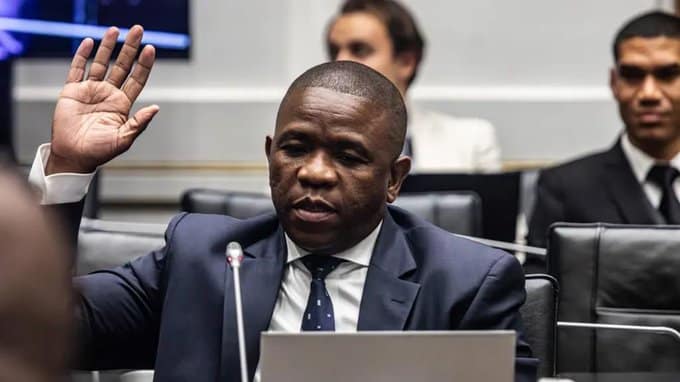
The parliamentary Ad Hoc Committee established to investigate grave allegations levelled by KwaZulu-Natal Police Commissioner, Lieutenant General Nhlanhla Mkhwanazi, will reconvene in a critical closed-door session on Wednesday, as lawmakers intensify efforts to unpack claims that have sent shockwaves through South Africa’s security and political establishment.
The committee, comprising multi-party representatives from both the National Assembly and the National Council of Provinces (NCOP), is tasked with a singular, high-stakes mandate: to establish the veracity of Mkhwanazi’s claims and determine whether they point to a broader crisis of political interference, criminal infiltration, or institutional failure within the South African Police Service (SAPS) and related state organs.
At the Heart of the Inquiry
While the full, detailed content of Mkhwanazi’s testimony remains protected under the committee’s strict confidentiality rules, credible reports indicate the allegations are multifaceted and severe. They are believed to involve:
- Political Interference in Policing: Claims of inappropriate directives or pressure from certain political figures aimed at influencing high-profile investigations, appointments, or operational decisions within the KZN SAPS.
- Obstruction of Justice: Allegations that processes have been deliberately stalled or evidence compromised in sensitive cases, potentially involving politically connected individuals or organized crime networks.
- Threats to Institutional Integrity: Warnings about the erosion of the SAPS’s operational independence and the precarious safety of senior officers who resist undue influence.
Lieutenant General Mkhwanazi, a respected figure often credited with stabilizing the volatile KZN police command, is understood to have presented a detailed dossier, including documents and intelligence reports, to support his claims during earlier in-camera hearings.
The Road to Wednesday’s Session
Wednesday’s meeting marks a pivotal phase in the committee’s work. Having spent previous sessions receiving the initial testimony and clarifying procedural matters, members are now expected to delve into the substantive analysis of the evidence. Key agenda items likely include:
- Witness Sequencing: Finalizing the list and schedule of additional witnesses to be called, which may include other senior SAPS officials, officials from the State Security Agency, representatives from the Independent Police Investigative Directorate (IPID), and potentially individuals named in the allegations.
- Evidence Analysis: Beginning the meticulous process of cross-referencing Mkhwanazi’s submissions with other available information and documentation.
- Legal and Procedural Framing: Consulting with evidence leaders and legal advisors on the scope of the inquiry and the pathways for its findings, which could range from recommending criminal investigations to proposing legislative reforms to insulate the police from political manipulation.
High Stakes and Mounting Pressure
The inquiry operates under intense political and public scrutiny. Opposition parties have framed it as a potential watershed moment for upholding the constitutional independence of the police, while the ANC-led government has emphasized the need for a thorough but fair process that does not pre-judge outcomes.
“The allegations by General Mkhwanazi cut to the very heart of our constitutional democracy—the rule of law and the separation of power,” stated DA MP and committee member, Wendy Phillips. “Wednesday’s meeting must move us from hearing allegations to actively testing them against facts. The public’s trust is on the line.”
Security analysts warn that the committee’s ultimate findings could have profound implications. “This isn’t just about one province or one police commissioner,” said security expert Dr. Johan Burger. “If these allegations of systemic interference are proven, it points to a national security crisis. It would confirm the ‘capture’ of elements of the crime-fighting apparatus, which is arguably even more dangerous than state capture in other sectors.”
As the Ad Hoc Committee convenes behind the heavy wooden doors of a parliamentary committee room, its work remains shrouded in necessary secrecy. However, its conclusions, expected to be compiled into a report for the full Parliament in the coming weeks, promise to be a defining document for the integrity of South Africa’s law enforcement institutions and the political forces that seek to influence them.
About The Author