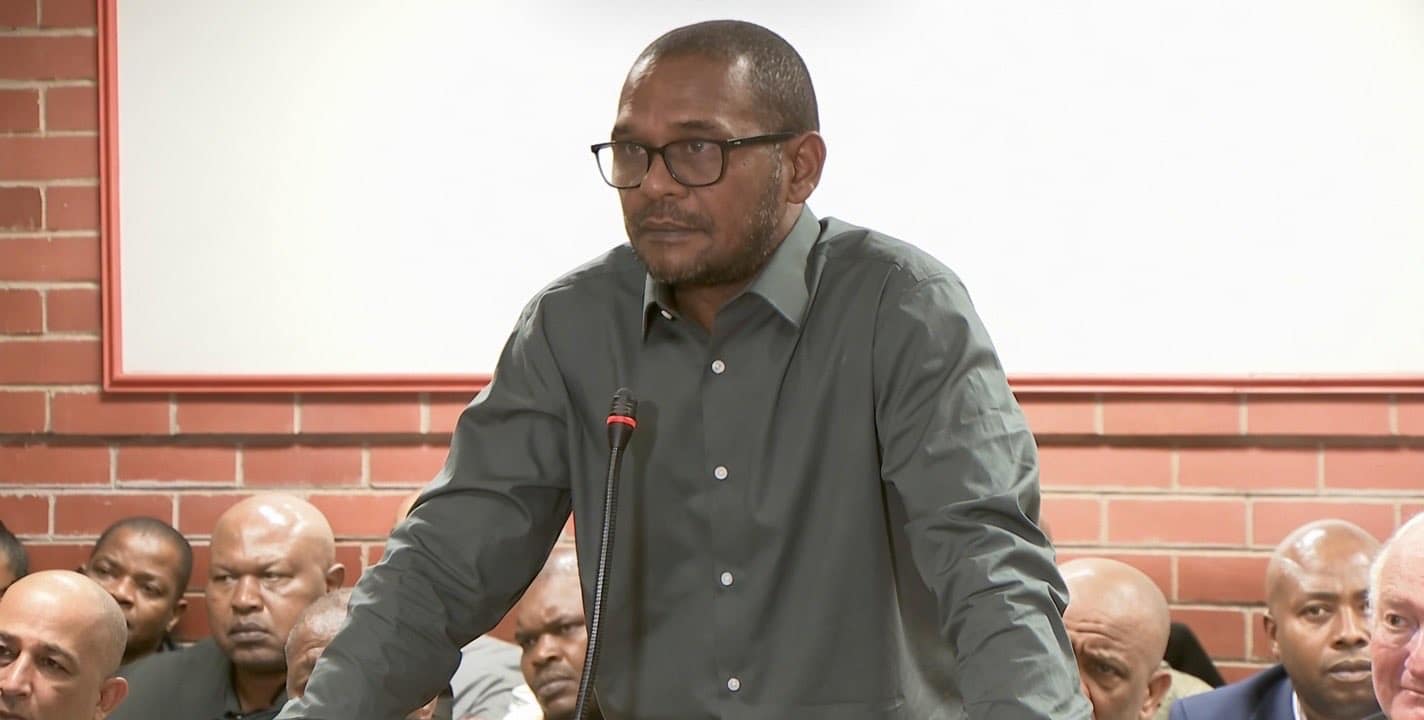
In a move that escalates political tensions and casts a spotlight on the South African Police Service (SAPS), Fadiel Adams, the outspoken leader of the National Coloured Congress (NCC), has formally laid criminal charges against former Police Minister Bheki Cele and current SAPS Deputy National Commissioner, Lieutenant-General Nhlanhla Mkhwanazi. The charges, laid at a Cape Town police station, allege a litany of offenses, including fraud, corruption, and a dereliction of duty that Adams claims has severely compromised public safety.
The Accusations: From Tendermon to “State Capture” of Policing
Adams, who has built a political profile on grassroots activism and vocal criticism of the government’s policing strategies, did not mince words during a press conference outside the station. He presented a dossier of allegations that frame the charges around two central pillars:
- The “Tendermon” Affair and Financial Impropriety: Adams alleges that a company linked to Mkhwanazi, “Tendermon,” was irregularly awarded a multi-million rand contract for the supply of surveillance equipment to the SAPS. He claims the tender process was manipulated to favor the company and that Mkhwanazi failed to declare his conflict of interest. “This is a classic case of using a position of power for personal enrichment, at the direct expense of equipping our police stations and protecting our communities,” Adams stated.
- Systemic Failure and Political Cover-Ups: Going beyond a single tender, Adams accused both Cele and Mkhwanazi of overseeing a period of catastrophic collapse within the SAPS. He pointed to the rampant proliferation of illegal firearms, the infiltration of criminal syndicates into police ranks, and the consistent failure to combat gangsterism in the Western Cape and elsewhere. Adams framed this not merely as incompetence, but as a form of “state capture” within the police, alleging that high-level corruption has actively protected certain criminal elements. He holds Cele, as the former political head, and Mkhwanazi, as a senior operational commander, directly responsible for this “orchestrated failure.”
A Political Gambit with High Stakes
The laying of charges is a significant political gambit for Adams and the NCC. By taking direct aim at two of the most prominent figures in South African law enforcement, Adams is positioning his party as the only one willing to confront powerful incumbents head-on. The move is calculated to resonate with communities that feel abandoned by the state and victimized by both crime and perceived police ineffectiveness.
“This is not a political stunt; this is a citizen’s arrest by affidavit,” Adams declared. “We have watched as our people are slaughtered, as our children live in fear, and as those entrusted with their safety get rich. We are no longer asking; we are demanding that the NPA and the Hawks do their job and investigate these men.”
The Road Ahead: Investigations and Repercussions
The National Prosecuting Authority (NPA) and the Hawks now face immense pressure to acknowledge and act upon the case. The charges guarantee media scrutiny and will force official responses from both the SAPS and the current Police Minister.
For Bheki Cele and Lt-Gen Mkhwanazi, the allegations represent a serious reputational assault. While they have yet to issue formal responses, they are expected to vehemently deny the charges, likely characterizing them as a politically motivated smear campaign designed to undermine the police service ahead of the elections.
The case opens a new front in the ongoing political battles over safety and security in South Africa. It remains to be seen whether the evidence presented by Adams will lead to a formal investigation and prosecution or if the case will falter in the complex arena of political and legal wrangling. Regardless, the act itself has successfully ignited a fierce public debate about accountability at the highest levels of South Africa’s criminal justice system.
About The Author