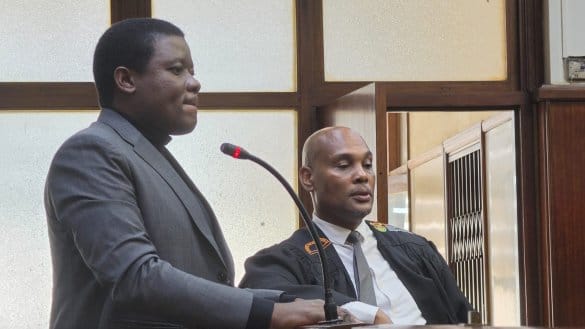
In a courtroom heavy with the weight of long-awaited justice, the Mpumalanga High Court has delivered a resounding message against the scourge of gender-based violence, sentencing 34-year-old Bongani Nkosi to four life imprisonment terms for the systematic rape of four young women. The stern ruling brings to a close a harrowing case that exposed a years-long reign of terror in the community of Jeppes Reef, Nkomazi, and highlighted the profound vulnerabilities faced by women and girls in rural areas.
Nkosi, who ultimately pleaded guilty to all charges, stood before the court on Tuesday, 25 November 2025, as the details of his crimes were laid bare. His guilty plea, while sparing the victims the trauma of reliving their ordeals in vivid detail during a trial, did little to mitigate the court’s condemnation of his actions.
A Pattern of Predation: Crimes That Shattered a Community
The court heard how Nkosi’s offences were not random acts of opportunity but part of a calculated pattern of predation that spanned from February 2016 to July 2019. His victims, aged 16, 19, 24, and 28 at the times of the attacks, were targeted in and around Jeppes Reef. The youngest victim was just 16, a schoolgirl whose sense of safety was shattered.
The investigations revealed that Nkosi often operated by ambushing his victims as they walked home alone, often after dusk, exploiting isolated pathways and a pervasive environment of fear. For over three years, his actions cast a shadow over the community, with women and families living in a state of heightened anxiety, unaware that a serial predator was in their midst.
The Long Road to Justice and a Guilty Plea
The case, which took several years to reach its conclusion, is a testament to the dogged work of the SAPS Family Violence, Child Protection and Sexual Offences (FCS) unit in Mpumalanga. Despite the challenges often associated with prosecuting sexual offences, including the trauma experienced by survivors, investigators painstakingly built a solid forensic and circumstantial case against Nkosi.
His decision to enter a guilty plea just as the trial was set to begin is understood to be a strategic one, likely influenced by the overwhelming evidence compiled by the state. In his plea explanation, Nkosi offered a bare admission of the facts, but showed little insight into the profound and lasting devastation he inflicted upon his victims.
The Sentence: A Reflection of Societal Outrage
In handing down the four consecutive life sentences, Judge President Legodi Phatudi emphasised the severity of the crimes and the need for the sentence to reflect societal outrage and protect the most vulnerable.
“The crimes committed by the accused are of the most serious nature,” Judge Phatudi stated from the bench. “He waged a private war on the dignity, the bodily autonomy, and the fundamental rights of these women. He stole from them their sense of security and peace, replacing it with a lifetime of trauma. The court has a duty not only to punish but to send an unambiguous message that such calculated and repeated acts of sexual violence will be met with the fullest might of the law.”
The National Prosecuting Authority (NPA) has welcomed the sentence, hailing it as a victory for the victims and a significant step in the fight against gender-based violence. Advocacy groups have also praised the outcome, while reiterating the call for more robust preventative measures and support systems for survivors, particularly in rural communities where resources can be scarce.
For the victims and the community of Jeppes Reef, the life sentences mark the end of a painful chapter and the beginning of a long journey toward healing, finally secure in the knowledge that the man who terrorized them will spend the rest of his life behind bars.
About The Author