For years, the rhythm of Gauteng’s economic calendar has followed a familiar beat: grand announcements, glossy brochures, handshakes across podiums, and promises whispered into forest of microphones. But according to Vuyiswa Ramokgopa, the province’s MEC for Economic Development, Agriculture and Rural Development, the era of the empty pledge is officially over.
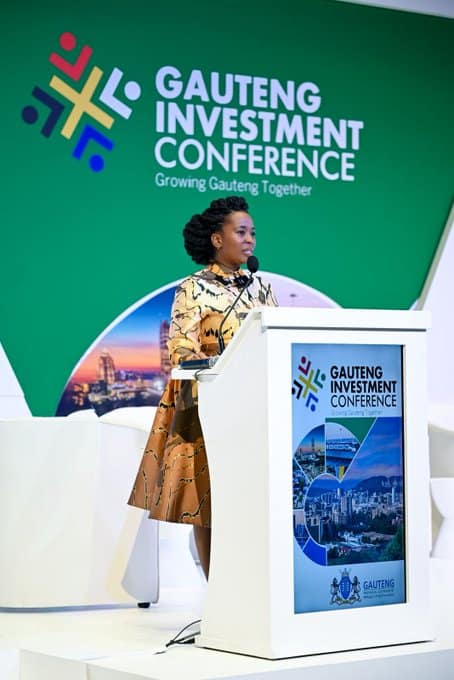
Speaking with a tone of measured urgency at the annual Gauteng Investment Conference, held this week at the Gallagher Convention Centre, Ramokgopa delivered a sharp pivot in the province’s economic strategy. Flanked by investors, industrialists, and international delegates, she argued that the time for aspirational talk has expired. The new mandate, she declared, is “delivery with a decimal point.”
“We have spent a decade mastering the art of the announcement,” Ramokgopa told a packed auditorium. “We have cut ribbons on empty factories and launched strategies that gathered dust on shelves. Today, Gauteng is shifting from the grammar of promises to the language of logistics, jobs, and kilowatt-hours.”
The MEC’s remarks served as both a self-critique and a challenge to the private sector. She acknowledged that while previous investment conferences had successfully generated memoranda of understanding and foreign direct investment pledges, the translation into operational factories, filled warehouses, and employed youth had been frustratingly slow.
“An investment is not a press release,” she said, tapping the podium for emphasis. “An investment is a foundation being poured. It is a payroll being met on the 25th of the month. It is a smallholder farmer in the West Rand getting her produce to a Tembisa spaza shop before sunrise.”
Ramokgopa unveiled a new “Delivery Tracker” dashboard—a public-facing digital tool that will monitor every pledge made at the conference, updating citizens on whether a promised factory has broken ground, whether a logistics hub has received its operating license, and exactly how many permanent jobs have been created.
The shift in tone was welcomed by business leaders who have grown weary of bureaucratic inertia. “For too long, we’ve been in a cycle of ‘next year’,” said Thabo Mngomezulu, a renewable energy investor. “Hearing an MEC say ‘show me the welds, not the words’ is the reset we’ve been waiting for.”
Ramokgopa also used the platform to highlight specific, measurable wins from the past six months: the licensing of 47 new agro-processing units in the Sedibeng district, the completion of a automotive components hub in Tshwane that is now running at 82% capacity, and a 12% reduction in red tape for small-scale manufacturers in Ekurhuleni.
“Those are not promises,” she said, showing a slide of satellite images comparing empty plots from 2023 to active construction sites in 2025. “That is the difference between a declaration and a delivery.”
The conference, which runs through Friday, will see further sector-specific breakout sessions on energy, logistics, and digital infrastructure. But the underlying theme, hammered home by Ramokgopa, is unforgivingly simple: in Gauteng, the economy of tomorrow will not be built on pledges—it will be welded, planted, and coded into existence, one measurable outcome at a time.
“Come back in twelve months,” she challenged the room. “Don’t ask me what we promised. Ask me what we built.”
About The Author