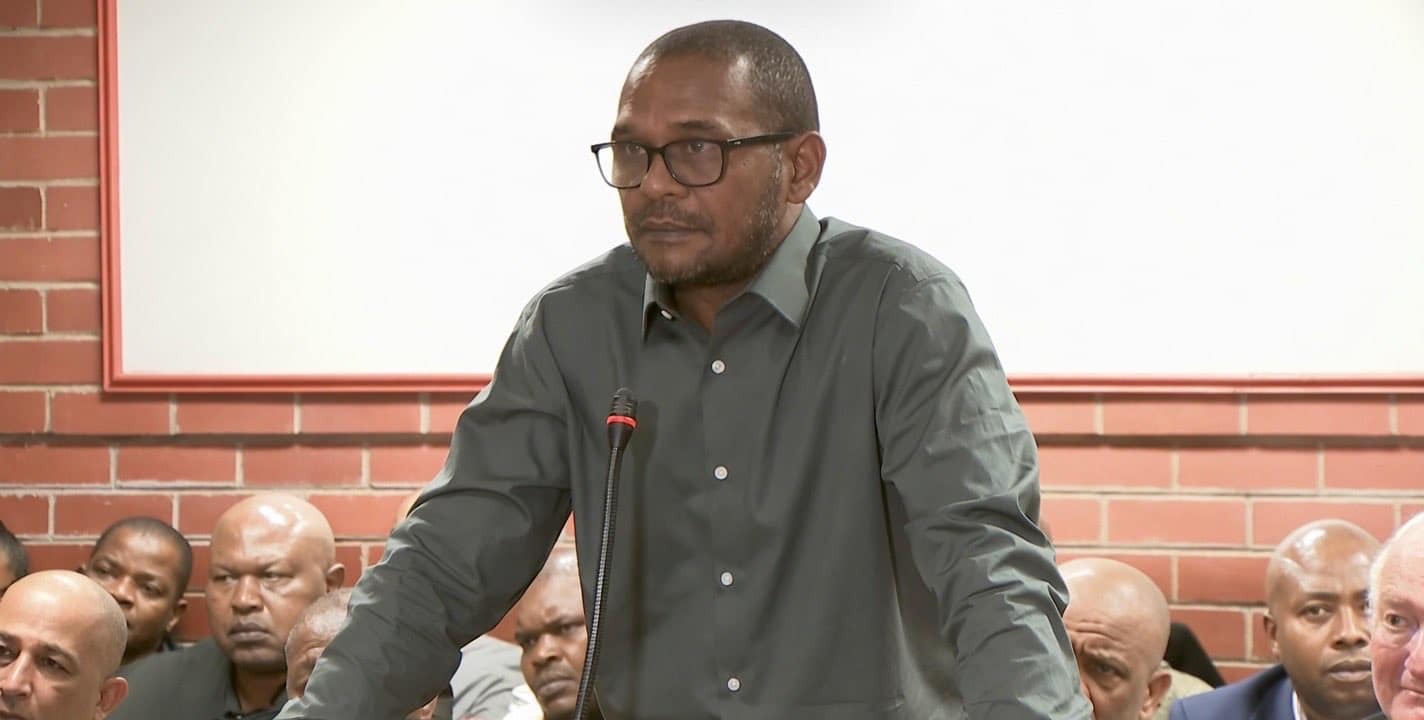
In a day of seismic testimony that laid bare the alleged corruption at the heart of South Africa’s law enforcement, a protected police investigator, known only as Witness A, detailed a brazen plot to pervert the course of justice—from a bribe offered by a top general to evidence tampering and death threats—in the murder case of engineer Armand Swart.
Testifying remotely before the Madlanga Commission on Monday, the witness, a member of the Gauteng Organised Crime Unit, painted a chilling picture of a police service where senior officials allegedly work in concert with criminal syndicates. The case centers on the April 2024 murder of Swart in Vereeniging, a killing the witness confirmed was a case of mistaken identity, linked to a corruption report at his company, Q Tech, related to Transnet contracts.
A Web of Cartels and a “Mistaken Identity” Killing
The investigation quickly revealed a sinister network. Witness A detailed cellphone communications linking the alleged triggerman, former warrant officer Michael Pule Tau, to Sandton businessman Katiso “KT” Molefe, whom he identified as the plot’s mastermind. Molefe, who KZN Commissioner Mkhwanazi has named as one of the “Big Five” cartels that have infiltrated law enforcement, is also a charged suspect in the 2022 murder of DJ Sumbody.
The “Missing” Ballistics and a Suspicious Omission
The first sign of an internal cover-up, according to the witness, was the mysterious handling of ballistic evidence. Despite recovering 15 rifle cartridges at the scene, the official forensic report from the Silverton Ballistic Centre contained no data on them. “I believed there was tampering,” Witness A stated, explaining that this “omission” seemed designed “not to link the suspects to the case.” The team was forced to seek a second ballistic analysis in KwaZulu-Natal.
Intimidation, Car Chases, and “Three Envelopes”
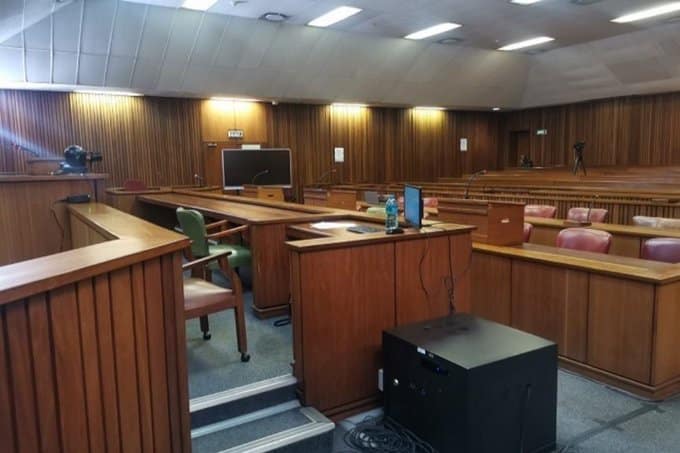
The alleged obstruction escalated from evidence tampering to direct intimidation. Witness A described how, during Tau’s first court appearance, the courtroom was packed with his alleged supporters, some of whom were suspected to be police colleagues. After the hearing, the investigation team was followed and cars attempted to run them off the road.
Most explosively, Witness A testified that Major General Richard Shibiri, a top-ranking officer in the National Organised Crime Unit, told the investigation team in a meeting that “three envelopes” were available—one for the magistrate, one for the prosecutor, and one for the investigators. The witness stated this was a clear attempt to bribe those involved in the case.
A Plan to “Pay, Escape, or Kill”
The pressure intensified around Tau’s bail hearing. A police colleague, Vusi Ndlala, allegedly warned Witness A that Tau planned to “pay his way out,” escape, or, if those failed, “kill the investigating officers.” The next day, against the initial ruling, Tau was granted bail. When Witness A asked how Ndlala knew this so quickly, the response was that Major General Shibiri had told him.
Fearing for their lives, the team requested security. The immense pressure caused three of the five original investigators to withdraw from the case entirely.
This testimony before the Madlanga Commission provides the most granular evidence to date of the mechanics of alleged state capture within the SAPS, revealing a system where, according to the witness, evidence is hidden, generals offer bribes, and investigators’ lives are threatened for pursuing justice.
About The Author