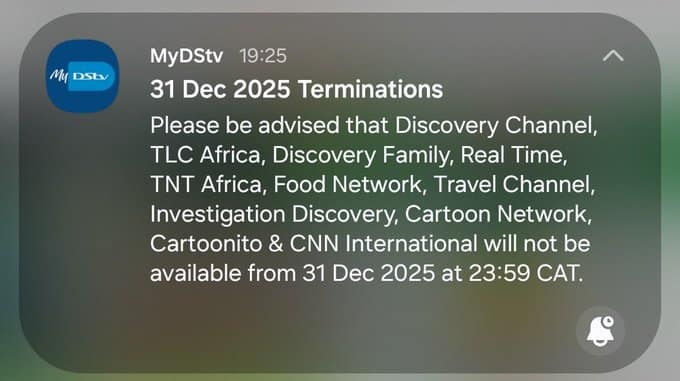
In a move that could dramatically reshape the South African television landscape, MultiChoice has issued a stark warning to DStv subscribers that a significant portion of their viewing could vanish on 1 January 2026. Negotiations between the pay-TV giant, now under the controlling influence of French media conglomerate Canal+, and Warner Bros. Discovery (WBD) have yet to yield a new carriage agreement, putting 12 popular channels at risk of being pulled from the satellite bouquet.
The Channels in Jeopardy
The channels potentially disappearing from the DStv grid are a cornerstone of its entertainment, factual, and news offerings. They include:
- Factual & Lifestyle: Discovery Channel, TLC Africa, HGTV, Food Network, Discovery Family, and Investigation Discovery (ID).
- Kids & Family: Cartoon Network, Boomerang, and Cartoonito.
- News: CNN International and Eurosport News.
- Entertainment: Warner TV.
The Corporate Stalemate and the Canal+ Factor
The notice from MultiChoice highlights the complex commercial negotiations that occur behind the scenes. These carriage agreements, which dictate the fees DStv pays to broadcast channels, are typically renegotiated every few years. The current impasse comes at a pivotal moment for MultiChoice, following Canal+’s acquisition of a controlling stake. The French giant is known for its aggressive cost-management and strategic realignment, which may be influencing the hardline stance in these talks.
“MultiChoice is currently in negotiations with Warner Bros. Discovery to continue carrying these channels. However, an agreement has not yet been reached,” the company stated. They assured customers they were “working hard to find a resolution,” but urged subscribers to “prepare for the possibility that these channels may no longer be available.”
Subscriber Angst and the Streaming Question
The announcement has sparked widespread anxiety among loyal DStv viewers. Social media and online forums are filled with concerns from fans of specific programming.
“What about Air Crash Investigation and How It’s Made? The Discovery Channel is the main reason I keep my Premium subscription,” lamented one subscriber. Parents expressed worry over losing Cartoon Network’s stable of cartoons for children, while news junkies voiced concern about access to CNN International’s global perspective.
However, the potential loss has also accelerated a broader conversation about the value proposition of traditional pay-TV. “With DStv prices so high and so many streaming services available, maybe it’s time to finally cut the cord,” commented another user, reflecting a sentiment shared by many. The threat of channel losses amplifies existing pressure from streaming alternatives like Netflix, Disney+, and Showmax (also owned by MultiChoice), which offer vast libraries of on-demand content, often at a lower monthly cost.
MultiChoice’s Counter-Pitch: Local Content and Sports
Anticipating the backlash, MultiChoice is already framing its 2026 strategy to soften the blow. The company has promised a renewed focus on local content and an enhanced sports offering to fill any potential gaps.
“Our 2026 content slate includes an exciting line-up of local productions and premium sports that we believe will continue to offer great value to our customers,” a MultiChoice spokesperson noted. This pivot underscores a strategic shift towards content that is harder for global streamers to replicate and that holds strong appeal in the South African market.
As the 31 December deadline approaches, subscribers are left in limbo. The potential exodus of these 12 channels represents more than just a programming change; it is a critical test for the new Canal+ leadership and a potential tipping point that could drive more South African viewers to permanently embrace a streaming-first future. The outcome of these high-stakes corporate negotiations will directly determine what South Africans see on their screens in the new year.
About The Author