In a move that has drawn international scrutiny, the government of Captain Ibrahim Traoré has abruptly canceled a major fitness event featuring the controversial social media influencer known as “King of Squats,” declaring the planned “Mega Fitness Expo” a threat to national security and public morality.
The event, which was scheduled to take place in the capital next month, was officially prohibited by a decree from the Ministry of Territorial Administration. The decree stated that the gathering, headlined by the South African fitness personality Makhosi Dlamini, “risks provoking serious disturbances to public order and contradicts the moral and social values defended by the Burkinabè nation.”
Security or Morality? The Government’s Justification
At a press briefing, a government spokesman elaborated on the decision, framing it within the context of Burkina Faso’s ongoing fight against terrorism and internal instability.
“In the current security context, where our nation is united in a fight for its very survival, we cannot allow events which have the potential to be exploited by elements seeking to destabilize the country,” the spokesman stated. “The inflammatory nature of this individual’s public persona creates an unacceptable risk.”
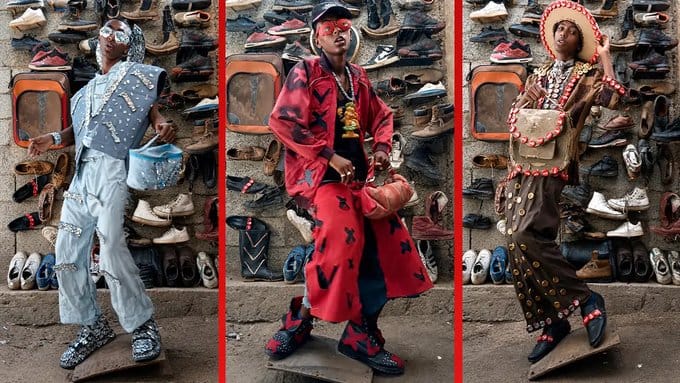
While the government’s statement emphasized security, it is widely understood that the primary objection lies with Dlamini’s public image and content. The “King of Squats” has built a massive online following by pushing the boundaries of conventional fitness content, often featuring sexually suggestive poses, flamboyant costumes, and choreographed dances that many in Burkina Faso’s conservative society view as indecent and a promotion of homosexuality.
This action is consistent with the hardline stance of the Traoré regime, which has actively promoted a narrative of traditional Burkinabè and African values since coming to power. Earlier this year, the junta passed a stringent law explicitly criminalizing homosexual acts, a move it stated was necessary to protect the nation’s cultural integrity from “degenerate foreign influences.”
The “King of Squats” and the Clash of Values
Makhosi Dlamini is no stranger to controversy. His rise to fame is built on a persona that deliberately blurs lines and challenges gender norms within the hyper-masculine world of bodybuilding. His videos, which have garnered millions of views, often feature him in thong-style posing briefs, high heels, and heavy makeup while displaying his heavily muscular physique.
To his supporters, Dlamini is a symbol of body positivity and personal freedom. However, in a nation like Burkina Faso, where societal norms are more rigid and the government is championing a conservative revolution, his act is seen as a direct provocation.
“This is not about fitness. This is about an individual whose entire public brand is based on acts that our laws and our people reject,” a commentator on state television argued. “To allow this would be to spit in the face of our soldiers dying in the north to protect our way of life.”
Reactions and Ramifications
The cancellation has sparked a polarized response. Within Burkina Faso, many citizens supportive of the Traoré regime have applauded the decision on social media, praising the government for “protecting our children” and “upholding our dignity.”
Internationally, however, the move has been criticized by human rights and LGBTQ+ advocacy groups. The director of Global Pride Advocacy released a statement calling it “a blatant act of state-sponsored homophobia disguised as a security measure,” and warned that it further isolates Burkina Faso from the international community.
Dlamini himself has yet to make a full statement, but posted a cryptic message on his Instagram story: “They fear the light because they live in darkness. The squats will continue.”
The incident underscores the Traoré government’s commitment to its ideological path, even at the cost of international condemnation. It also highlights how, in an increasingly interconnected world, the digital persona of a South African fitness influencer can become a flashpoint in a West African nation’s struggle to define its own identity, security, and values in a time of crisis.
About The Author