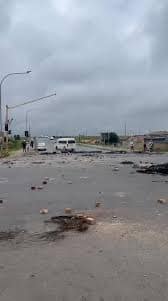
The sky over Tembisa turned black on Friday, February 20, 2026, not from storm clouds, but from the thick, acrid smoke of burning tyres. One of Gauteng’s largest and most historically significant townships was once again a battleground, as furious residents took to the streets to protest against a new electricity billing system they say is designed to bleed them dry.
Major routes through the township, including the busy Pretoria Road and parts of the R21, were blocked by barricades of rocks, burning debris, and upturned rubbish bins. Commuters were stranded, businesses shuttered their doors, and the sound of sirens mixed with the chanting of protesters. The target of their anger: the City of Ekurhuleni and its new, aggressive approach to electricity billing and disconnections.
The protests, which began in the early morning hours and escalated throughout the day, are the latest explosion of rage in a community that feels abandoned, exploited, and pushed to the brink. At the heart of the conflict is a new prepaid electricity metering system and a crackdown on illegal connections, which residents argue is unfairly punishing the poor while the municipality fails to provide basic services.
The Spark: A New Bill, A New Burden
For years, electricity in Tembisa, like in many townships across South Africa, has been a complex and often chaotic mix of formal and informal arrangements. Some residents have legal, metered connections and pay monthly bills. Others rely on illegal connections, a symptom of poverty and a dysfunctional system that has left many unable to afford the rising cost of power.
The City of Ekurhuleni, facing its own financial crisis and massive debts to Eskom, decided to take action. It rolled out a new billing system and a campaign to disconnect illegal connections and recover debts. But residents say the new system is riddled with errors, unfair charges, and a complete lack of communication. Many have received bills that are several times higher than their actual consumption. Others, who have been paying for years, have been suddenly disconnected for debts they do not owe.
“They want us to pay, pay, pay, but what do we get?” shouted a protester, his face streaked with dust and sweat, as he stood behind a barricade of burning tyres. “There is no water. The streets are full of potholes. The lights go out for days. And now they send us these huge bills? We are not paying! We will die here before we pay!”
The protest quickly escalated beyond the billing issue. It became a referendum on the entire state of the municipality. Residents chanted about unemployment, crime, and the collapse of basic services. The electricity billing system was simply the match that lit the fuse.
The City Responds
As the fires burned and the roads remained blocked, the City of Ekurhuleni issued a statement appealing for calm and promising to investigate the complaints. Spokespersons acknowledged that there might be “technical glitches” in the new billing system and urged affected residents to visit customer care centers to have their accounts reviewed.
But for the protesters, the City’s response was too little, too late. Visiting a customer care center means taking a day off work, paying transport, and standing in queues for hours, only to be told that the matter will be investigated. They have heard these promises before.
“We have been to the offices,” said a community leader, trying to mediate between the protesters and the police. “We have submitted documents. We have complained. Nothing happens. The bills keep coming. The disconnections keep happening. So what are we supposed to do? Just accept it? Just die quietly? No. We fight.”
The Police and the Standoff
The South African Police Service (SAPS) was deployed in large numbers to monitor the protests and attempt to clear the blocked roads. There were reports of stone-throwing at police vehicles and officers using rubber bullets and stun grenades to disperse crowds in some areas. No serious injuries were reported, but the tension was palpable.
By mid-afternoon, some roads had been partially cleared, but the protesters remained in control of several key intersections. They vowed to continue the shutdown until the City agreed to meet their demands, which include a full review of the new billing system, an amnesty on disconnections, and a moratorium on cutting off power to poor households.
The Context: A History of Struggle
Tembisa is no stranger to protest. The township, established in the 1950s, has a long history of resistance against apartheid and, more recently, against the failures of the democratic government. It is a community with a deep sense of identity and a fierce pride, but it is also a community under immense strain.
Unemployment is staggeringly high. Crime is a daily reality. Service delivery is erratic at best. The electricity protest is the latest in a long line of uprisings against a system that residents feel has forgotten them. The new billing system is not the cause of the anger; it is simply the latest symptom of a much deeper disease.
The Economic Impact
The protests also had a significant economic impact. Businesses in and around Tembisa reported lost revenue as customers stayed home and employees could not get to work. Taxi drivers, who rely on the roads to make a living, were particularly hard hit, unable to operate their usual routes. The blockade of major arteries also affected commuters traveling through the area to other parts of Gauteng, causing hours of delays.
What Comes Next?
As night fell on Friday, the fires died down, but the anger did not. Community leaders planned mass meetings for the weekend to discuss the way forward. Some called for calm and dialogue. Others demanded more radical action, including a total shutdown of the township until the City capitulates.
The City of Ekurhuleni faces a difficult choice. It can negotiate with the protesters, potentially setting a precedent that encourages further disruptions. Or it can hold firm, risking an escalation of violence and a deepening of the divide between the municipality and its most vulnerable residents.
For the people of Tembisa, the protest is not just about electricity bills. It is about dignity. It is about being heard. It is about living in a country where the government, whether local or national, seems incapable of delivering the basics of a decent life. The tyres may have stopped burning, but the embers are still hot. And they could ignite again at any moment.
About The Author