In a dramatic and unprecedented development that has sent shockwaves through the highest echelons of South Africa’s law enforcement, South African Police Service (SAPS) National Commissioner General Fannie Masemola has been served with a summons to appear before the Pretoria Magistrate’s Court on 13 May 2026. The summons, delivered to his office this morning, places the country’s most senior police officer directly in the crosshairs of the sprawling R360 million Medicare24 health services tender fraud investigation—a case that has already ensnared twelve high-ranking SAPS officers and exposed deep-seated corruption within the very institution tasked with upholding the law.
The serving of the summons marks a seismic escalation in one of the most damaging corruption scandals to hit the SAPS in democratic South Africa’s history. General Masemola, who was appointed as National Commissioner in 2022 with a mandate to restore integrity and professionalism to a police service battered by years of scandal, now finds himself facing the prospect of standing in the dock, accused of involvement in the very kind of malfeasance he was appointed to eradicate.
Sources close to the investigation have confirmed that the summons relates directly to the Medicare24 matter—a tender worth R360 million that was fraudulently awarded in 2024 for employee wellness screenings within the SAPS Tshwane District. The contract, which was intended to provide essential health services to thousands of police officers, was instead allegedly manipulated to benefit a company that was wholly unqualified for the work. The tender was later canceled following an investigative exposé by News24, which revealed a web of kickbacks, cash payments, and lavish gifts—including the diabetes drug Ozempic—exchanged between SAPS officials and businessman Vusimusi “Cat” Matlala, who has since been linked to the scheme.
The twelve SAPS officers arrested earlier this year in connection with the scandal are currently awaiting trial. Their arrests were hailed by the National Prosecuting Authority’s (NPA) Investigating Directorate Against Corruption (IDAC) as a decisive blow against criminal syndicates operating within the police service. Now, with the summons of the National Commissioner, the investigation has reached a new and extraordinary threshold.
The specific charges General Masemola will face have not yet been publicly disclosed by the NPA. However, legal sources indicate that the summons is likely to include charges related to corruption, fraud, and violations of the Public Finance Management Act (PFMA). Investigators are believed to have gathered evidence suggesting that Masemola, in his capacity as National Commissioner, either had direct knowledge of the irregularities surrounding the Medicare24 tender or failed in his duty to prevent the awarding of the contract to an unqualified bidder.
The timing of the summons is particularly striking. General Masemola has been one of the most visible faces of the SAPS in recent years, frequently appearing at crime prevention campaigns, community engagement forums, and high-profile press briefings. He has cultivated an image of no-nonsense leadership, often speaking forcefully about the need to root out corruption within the service. His sudden legal jeopardy represents a stunning reversal of fortune and raises profound questions about the integrity of the police service’s top leadership.
Reaction to the news has been swift and deeply polarized. Civil society organizations, including the Helen Suzman Foundation and Corruption Watch, have welcomed the development as a sign that accountability is finally reaching the highest levels of state institutions. “No one is above the law,” said a statement issued by Corruption Watch. “If the allegations against the National Commissioner are substantiated, it will demonstrate that the Investigating Directorate is capable of pursuing corruption wherever it exists, regardless of the rank or status of those involved.”
Within the SAPS, the mood is said to be one of shock and uncertainty. Senior officers, many of whom have served under Masemola’s command, are grappling with the implications of a sitting National Commissioner being summonsed to appear in a criminal court. Some have expressed concern about the potential for disruption to ongoing police operations and the morale of rank-and-file members who look to the leadership for stability.
“The news has hit the service like a thunderbolt,” said a senior police official who spoke on condition of anonymity. “Commissioner Masemola has been the face of reform. To see him summoned in connection with a corruption case—and not just any corruption case, but the Medicare24 scandal—it shakes the foundation of everything we’ve been trying to build. Officers are asking themselves: if the National Commissioner can be implicated, what does that say about the institution?”
The Medicare24 case has become a defining test for the NPA’s Investigating Directorate Against Corruption, which was established to handle complex, high-profile corruption matters that cut across multiple state institutions. The IDAC has faced intense scrutiny over its capacity to deliver convictions in cases involving powerful individuals, and the summons of General Masemola will be viewed as a critical measure of its independence and effectiveness.
Legal analysts note that the decision to summons a sitting National Commissioner is extraordinary and carries significant political and legal weight. The case will likely involve complex questions about the limits of executive authority, the separation of powers, and the ability of prosecuting authorities to pursue criminal charges against heads of state entities. The proceedings in the Pretoria Magistrate’s Court, when they commence on 13 May, are expected to draw intense public and media attention.
General Masemola is entitled to challenge the summons and could seek to have the charges reviewed or set aside. Legal experts anticipate that his legal team will mount a vigorous defense, likely arguing that the National Commissioner was not directly involved in the procurement process and that any failures were administrative rather than criminal in nature. The State, for its part, will be expected to present evidence that Masemola either participated in or had knowledge of the fraudulent scheme and failed to act.
The broader implications of the summons extend far beyond the fate of one individual. The Medicare24 scandal has already exposed deep vulnerabilities in the SAPS’s procurement systems, revealing how contracts intended to support the health and well-being of police officers were instead looted by those entrusted to protect them. The case has also highlighted the role of investigative journalism in exposing corruption, with News24’s reporting providing the initial roadmap that investigators have since followed.
For the citizens of South Africa, the spectacle of the country’s top police officer being summonsed to face criminal charges is a jarring reminder of the deep-seated corruption that continues to plague state institutions. It comes at a time when public confidence in the SAPS is already fragile, with crime rates remaining stubbornly high and communities across the country demanding more effective policing.
The Police and Prisons Civil Rights Union (POPCRU), the largest trade union representing police officers, issued a measured response, calling for due process to take its course. “We must allow the law to follow its course without interference,” a union spokesperson said. “The presumption of innocence applies to everyone, including the National Commissioner. At the same time, we cannot ignore the seriousness of these allegations. The integrity of the SAPS is at stake, and we expect all members—from the highest ranks to the lowest—to be held accountable for their actions.”
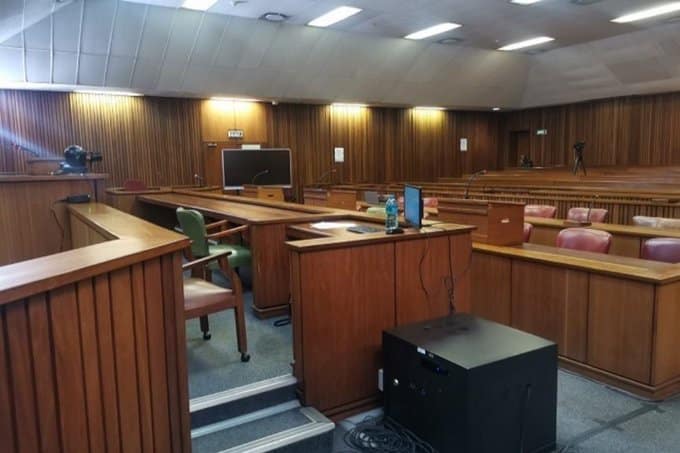
As the date of 13 May approaches, the focus will shift to the Pretoria Magistrate’s Court, where General Masemola is expected to make his first appearance. The case will test not only the strength of the evidence gathered by investigators but also the resilience of South Africa’s criminal justice system in holding the powerful to account.
In a brief statement issued through his legal representatives, General Masemola acknowledged receipt of the summons and stated his intention to cooperate with the judicial process. “The National Commissioner respects the rule of law and will address the charges against him in the appropriate forum,” the statement read. “He maintains his innocence and looks forward to the opportunity to clear his name.”
For now, the R360 million Medicare24 case—already one of the most significant corruption scandals in SAPS history—has entered a new and even more consequential chapter. With the National Commissioner himself now summoned to appear, the case has become a defining moment for South Africa’s fight against corruption, a test of whether the institutions of accountability can reach the very highest levels of power.
The 13 May court appearance is expected to be met with a throng of media, civil society observers, and members of the public, all watching to see whether justice will finally be served in a case that has laid bare the rot within the ranks of those sworn to protect and serve.
About The Author