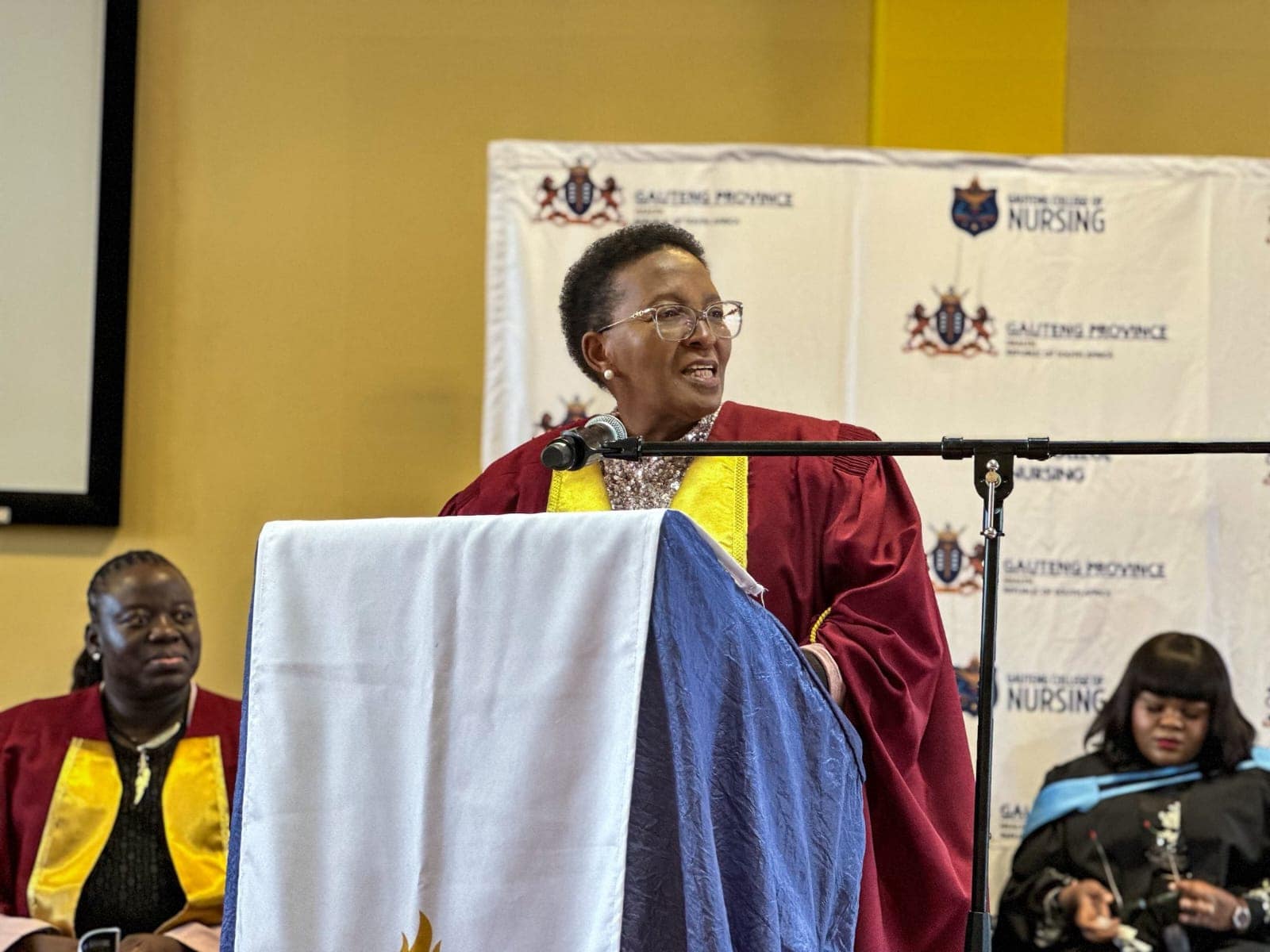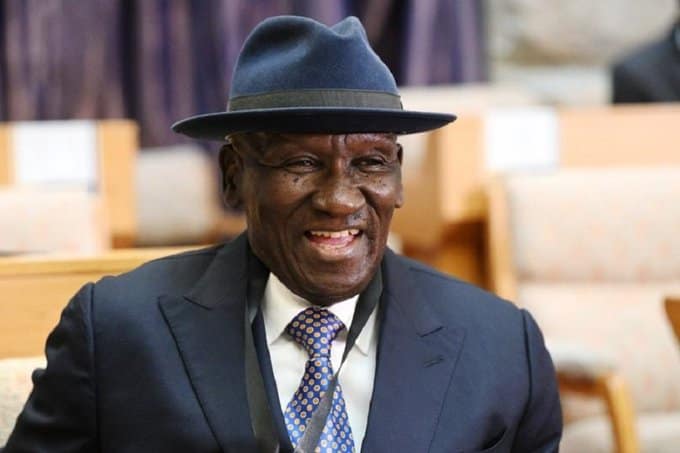
Former Police Minister Bheki Cele has been accused of systematically interfering in sensitive police investigations and attempting to weaponize state resources for political gain, according to explosive claims made by suspended Mpumalanga Police Commissioner Lieutenant-General Daphney Manamela. The allegations, contained in a sworn affidavit submitted to the Independent Police Investigative Directorate (IPID) and the Civilian Secretariat for Police Service, paint a damning picture of political meddling at the highest levels of South African law enforcement.
Manamela, a 32-year veteran of the South African Police Service (SAPS) who rose through the ranks from constable to provincial commissioner, alleges that Cele’s interference was not occasional or subtle—but a sustained pattern of abuse of power that compromised multiple high-stakes investigations between 2018 and early 2024.
“The former minister treated the South African Police Service as his personal political tool,” Manamela states in the 34-page affidavit. “He instructed me to halt arrests, to reassign sensitive dockets to loyalists, and to shield individuals with political connections—all while demanding loyalty oaths and threatening transfers for those who refused.”
The Pattern of Interference
According to Manamela, Cele’s alleged interference fell into three distinct categories: obstruction of politically sensitive corruption probes, manipulation of tender processes, and the use of police intelligence for factional battles within the African National Congress (ANC).
In one detailed instance, Manamela claims that in 2021, her Hawks unit was investigating a R78 million tender fraud case involving a Mpumalanga-based company with alleged ties to a senior ANC provincial official. When investigators prepared to execute search-and-seizure warrants, she says Cele personally phoned her and demanded the operation be cancelled.
“He said, and I quote directly: ‘You are stepping on big toes. These people are not criminals; they are comrades. Stand down,'” Manamela testified. “When I refused, he told me: ‘I will have you removed before the week ends.’ Within 48 hours, I received a formal letter questioning my ‘leadership style’ and threatening disciplinary action.”
The investigation was eventually handed over to a newly appointed Brigadier—someone Manamela describes as “a political appointee with no forensic experience”—and the case went cold. The company in question continues to operate and has since won additional government tenders.
The ‘Ghost Intelligence’ Incident
Perhaps the most startling allegation involves the alleged misuse of SAPS intelligence resources. Manamela claims that in the run-up to the ANC’s 2022 national conference, Cele requested that she provide him with “background profiles” on several delegates who were seen as opposed to his preferred leadership slate.
“I told him that using state intelligence for internal party politics is illegal and unconstitutional,” she said. “He responded: ‘Everything is politics. You will give me what I ask for, or you will find yourself cleaning a desk in Limpopo.'”
Manamela says she again refused. Weeks later, her office was audited by a team from national headquarters, her budget was cut by 15 percent, and a trusted deputy was suddenly transferred to a rural station. She believes these were retaliatory actions, though she cannot prove direct orders from Cele.
The Retaliation and Suspension
Manamela was formally suspended from her position as Mpumalanga Police Commissioner on 2 March 2026. The official grounds cited “loss of confidence in her ability to lead” and “allegations of misconduct relating to unauthorized media leaks.” However, Manamela argues that the real reason is her refusal to comply with Cele’s interference and her decision to file a whistle-blower complaint with IPID in December 2025.
“The timing is no coincidence,” her lawyer, advocate Thabo Nkosi, said during a press briefing in Mbombela. “General Manamela filed her complaint against Mr. Cele in December. By February, she was notified of an internal investigation. By March, she was suspended. This is textbook retaliation.”
Nkosi added that his client has evidence, including phone records, WhatsApp messages, and the testimony of three senior officers who witnessed some of the alleged phone calls on speakerphone. “We are not making wild accusations. We have receipts.”
Cele’s Fierce Denial
Reached for comment, Bheki Cele dismissed the allegations as “desperate lies” from a suspended official attempting to avoid accountability for her own alleged failures. Through his spokesperson, Vuyo Mkhize, Cele stated: “General Manamela is facing legitimate disciplinary proceedings for insubordination, poor leadership, and unauthorized disclosure of sensitive police information. These false claims are a transparent attempt to deflect attention and smear the name of a man who dedicated his tenure to fighting crime.”
Cele added: “I have never, in my entire career as minister, instructed any officer to shield a criminal or to abuse intelligence for political purposes. Let her take me to court. Let IPID investigate. I welcome any inquiry because the truth will set me free.”
Political Fallout and Calls for Inquiry
The allegations have sent shockwaves through the police hierarchy and political circles. The Democratic Alliance (DA) has called for an urgent parliamentary inquiry, while the Economic Freedom Fighters (EFF) demanded that Cele be subpoenaed to testify before the Joint Standing Committee on Police.
“These are among the most serious allegations ever made against a sitting police minister,” said DA Shadow Minister of Police Andrew Whitfield. “If true, they represent a wholesale capture of law enforcement for political purposes. Cele must answer under oath.”
The ANC has remained largely silent, though a party spokesperson said: “We trust the relevant law enforcement agencies to investigate these matters without fear or favor.”
IPID Confirms Investigation
IPID spokesperson Lizzy Suping confirmed that the directorate has received Manamela’s complaint and has opened a preliminary inquiry. “We can confirm that a file has been registered and that preliminary assessment is underway. IPID will investigate any allegation of criminal conduct by a police official or former minister within our mandate. We cannot comment further at this stage.”
If IPID finds prima facie evidence, the matter could be referred to the National Prosecuting Authority for possible charges of obstruction of justice, defeating the ends of justice, or corruption.
A Divided Police Service
Behind the headlines, the allegations have exposed deep fractures within SAPS. Several senior officers, speaking anonymously for fear of reprisal, told this publication that Manamela’s claims “ring true” and that political interference has become “endemic” under multiple administrations.
“Cele was not the first and won’t be the last,” said a brigadier with 25 years of service. “The problem is that ministers come and go, but the culture of fear remains. When a general like Manamela speaks out, she gets suspended. That tells you everything about how broken the system is.”
Others, however, have rallied to Cele’s defense. A retired senior official who served closely with Cele called Manamela “a disgruntled officer with a history of insubordination” and said her claims are “incredible and unsubstantiated.”
What Happens Next?
Manamela is currently challenging her suspension in the Mbombela High Court, seeking an urgent interdict to be reinstated. A hearing is scheduled for 12 May 2026. Separately, her legal team has indicated they will file a criminal complaint against Cele if IPID does not act within 60 days.
For her part, Lieutenant-General Daphney Manamela remains at home on suspension, waiting. In her first and only television interview, she told eNCA: “I am not a hero. I am a police officer who took an oath to serve the Constitution, not politicians. If they break me for that, so be it. But I will not be silent.”
Outside the Bhisho High Court, where her legal team filed papers earlier this week, a small group of uniformed officers stood in quiet support, holding no signs, speaking no words. They simply stood, arms crossed, watching. In the shadowy world of South African policing, that silence may speak louder than any affidavit.
About The Author