The polished granite floors of the Gauteng High Court in Pretoria usually echo with the mundane shuffle of bail hearings and civil disputes. But on this crisp winter morning, the building felt more like a Roman amphitheater. The air was thick enough to slice with a gavel. Inside Courtroom 6D, under the stern gaze of a three-judge panel, a legal civil war was reaching its fever pitch—a showdown that could redefine the concept of economic freedom in South Africa, thirty years into democracy.
At the heart of the firestorm is a simple, devastating legal question: Does the Broad-Based Black Economic Empowerment (B-BBEE) Act, specifically as it applies to the legal profession, constitute unfair discrimination?
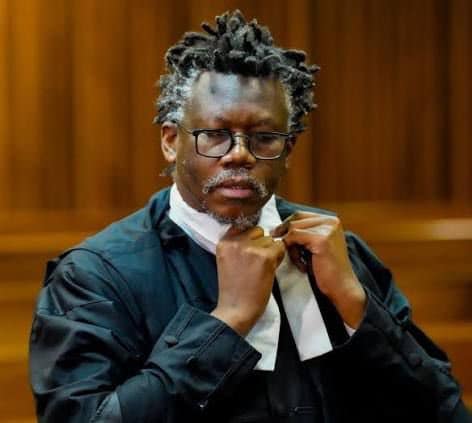
Leading the charge to strike down the policy is a man who needs no introduction to the legal elite, Advocate Tembeka Ngcukaitobi SC. Dressed in a dark, sharply tailored suit, his posture is that of a surgeon preparing for a delicate, high-stakes operation. Ngcukaitobi, the author of The Land Is Ours and a pivotal figure in the legal battles to hold the powerful accountable, is now using his considerable intellect to argue against the very machinery of transformation that vaulted him to prominence.
“This is not about the end of transformation,” Ngcukaitobi told the court, his voice calm yet carrying a barely suppressed intensity. “It is about the means. The B-BBEE scores, as applied to our profession, create a closed shop. They prioritize the demographic checklist over merit, contractual freedom, and the constitutional promise that the law shall not be a respecter of persons. We are arguing that the current implementation violates Section 9—the right to equality—because it uses a blunt instrument where a scalpel is required.”
His argument, meticulously constructed, paints a picture of a profession where law firms scramble for “points” through ownership deals that often leave true economic control unchanged, while simultaneously penalizing firms based on the racial composition of their partners, regardless of their individual history or disadvantage.
On the other side of the polished oak bar, tasked with defending the legislative heart of BEE, stands a triumvirate of senior counsel as formidable as any courtroom dream team: Muzi Sikhakhane SC, Advocate Sello SC, and Norman Arendse SC.
Sikhakhane, a legendary silk known for his razor-sharp interventions and deep constitutionalist roots, rose first. He did not shout. He leaned forward, hands resting on the lectern, and spoke as if addressing a nation on the brink of forgetting its past.
“Section 9 is not a suicide pact,” Sikhakhane said quietly. “It does not demand that we remain blind to the legacy of 1913, of 1948, of 1976. The B-BBEE Act is not a penalty. It is a remedy. To strike it down because it makes white-owned firms uncomfortable is to declare that we are done with transformation before we have even begun. My learned friend, Ngcukaitobi, is correct that the tools must be refined. But he is dangerously wrong to suggest we should throw the toolbox away.”
Advocate Sello SC, a master of evidence and precedent, followed. He methodically unfurled reams of statistical data showing the glacial pace of transformation at the senior bar and in partnership ranks. “The policy is not the problem,” Sello asserted, pointing a steady finger at a chart showing that less than 15% of senior legal leaders were Black in 1994, a figure that had only climbed to just over 40% today. “The resistance to implementation is the problem. The applicant asks the court to declare the engine illegal because the car is not moving fast enough. That logic is flawed.”
Norman Arendse SC, the quiet anchor of the defense, then delivered the closing salvo. With the gravitas of an elder statesman, he warned of the “dangerous judicial overreach” inherent in scrapping a policy crafted by a democratically elected Parliament. “If this court grants the order sought,” Arendse concluded, “you will not be ending unfair discrimination. You will be constitutionalizing a freeze on progress. You will tell the generations that came after 1994 that the law can no longer be used to widen the circle of opportunity.”
The judges, occasionally interrupting with pointed questions—testing Ngcukaitobi’s standing, probing Sikhakhane’s limits, asking Arendse to define “proportional equality”—kept their cards close to their chests. But the gallery was not silent. Behind the glass partition, young legal practitioners, some Black, some white, sat side-by-side. In their eyes, you could see the weight of the argument. For some, Ngcukaitobi represents a necessary evolution: a move from race-based to class-based redress. For others, Sikhakhane and his team are the last line of defense against a rolling back of the hard-won gains of the democratic era.
As the final submissions echoed off the high ceilings, and Justice Modibedi announced that judgment was reserved, the two legal armies gathered their leather-bound files and heavy robes. There were no handshakes across the aisle—only respectful nods. Tembeka Ngcukaitobi walked out one door, while Muzi Sikhakhane, Sello, and Arendse exited another.
The battle is over—for now. But the war for the definition of justice, and who gets to wield the sword of economic empowerment, has only just begun. The High Court’s eventual ruling will not just be a footnote in law reports. It will be heard in every boardroom, every law library, and every street corner where South Africans still debate the meaning of freedom.
About The Author