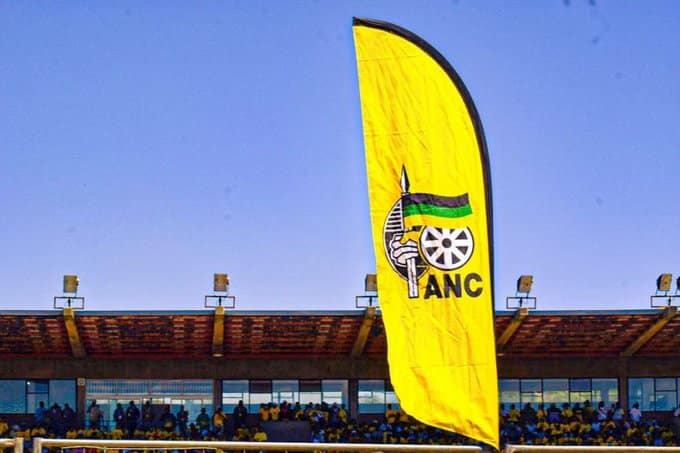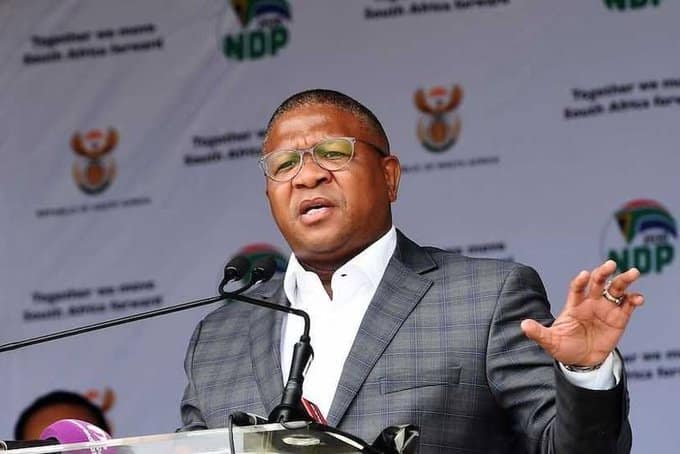
In a decisive move aimed at calming mounting political speculation, African National Congress (ANC) Secretary-General Fikile Mbalula has publicly and firmly rejected claims that the party’s upcoming National General Council (NGC) will be used as a staging ground to challenge President Cyril Ramaphosa’s leadership. Speaking to journalists on the sidelines of a special National Executive Committee (NEC) meeting in Boksburg on Monday, Mbalula sought to redirect the party’s narrative back toward policy and unity, amid what observers describe as one of the most volatile pre-conference climates in recent years.
The NGC, a major mid-term policy and review gathering scheduled for the coming months, has been the subject of intense media and political gossip, with unnamed sources repeatedly suggesting that disgruntled senior members and alliance partners would use the platform to force an early leadership contest. These rumors have been fueled by public tensions over government performance, internal factional realignments, and recent cabinet reshuffles that left some veteran leaders feeling sidelined.
“Let me be clear: the NGC is not, and will not be, a conference for removing the President of the ANC,” Mbalula stated emphatically. “It is a structured, constitutional meeting for one purpose: to assess the progress we have made in implementing the resolutions taken at our 55th National Conference in 2022.” He underscored that the gathering would focus on critical policy areas such as economic reconstruction, service delivery, and organizational renewal, rather than leadership contests.
Mbalula’s comments come against a backdrop of heightened political anxiety within the party. Just days earlier, Deputy Health Minister Dr. Joe Phaahla was forced to publicly deny involvement in an alleged plot against Ramaphosa, highlighting the sensitivity and suspicion currently characterizing internal ANC dynamics. In addressing the rumors head-on, the Secretary-General sought to project an image of stability and discipline.
“The ANC has closed ranks around its leadership and its mission,” Mbalula asserted. “Our focus is on unifying the organization, driving renewal, and preparing to contest and win the upcoming national elections. Any suggestion of division or covert plotting is not only inaccurate but actively harmful to our project.”
Political analysts note that Mbalula’s forceful dismissal of leadership challenges serves two purposes: first, to reassure the public and markets of stability within the ruling party, and second, to impose discipline on internal factions that might be testing the waters for a revolt.
“This is classic party management ahead of a major meeting,” said political analyst Thandiwe Nkosi. “By publicly ruling out a leadership challenge, the SG is attempting to set the boundaries of debate before delegates even arrive. It’s a preemptive strike against any faction that might want to turn the NGC into a proxy battle for 2027.”
Nevertheless, skeptics argue that the very need for such a public rebuttal indicates that underlying discontent is real and potent. The ANC continues to grapple with declining electoral support, persistent economic challenges, and fallout from the State Capture era, all of which put pressure on Ramaphosa’s “renewal” agenda.
As the NEC meeting continues in Boksburg, the leadership is expected to finalize the agenda and tone for the NGC, emphasizing unity, review, and forward planning. Whether all factions within the party’s broad church will adhere to this official line remains to be seen, but for now, the Secretary-General has drawn a clear boundary: the NGC will be a forum for policy, not a coup.
About The Author