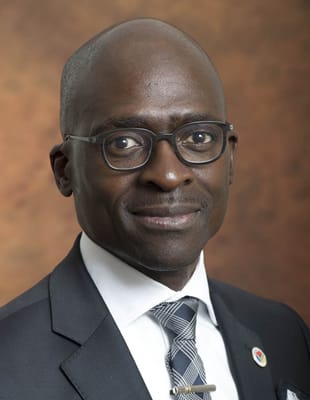
In a significant escalation of South Africa’s ongoing reckoning with the State Capture era, former Minister of Public Enterprises Malusi Gigaba is set to appear in the Pretoria Specialised Commercial Crimes Court this Friday. His summons, issued by the National Prosecuting Authority (NPA), marks a pivotal moment in the pursuit of accountability for one of the country’s most notorious corruption scandals.
The charges against Gigaba are tied to his tenure as Minister of Public Enterprises between 2010 and 2014, specifically focusing on his alleged role in the controversial procurement of 1,064 locomotives for Transnet, a deal with a staggering final price tag of $4.7 billion (approximately R54 billion at the time).
The Anatomy of a Corrupt Deal
According to evidence led before the Zondo Commission of Inquiry into State Capture, the Transnet locomotive deal became a vehicle for systematic looting. The NPA’s case is expected to allege that Gigaba, wielding his ministerial authority, played a key role in manipulating the tender process to favour a consortium aligned with the infamous Gupta family.
The allegations suggest a two-pronged approach: firstly, the improper influence in the appointment of board members and executives at Transnet who were deemed “friendly” to the Gupta network. Secondly, and more directly, Gigaba is accused of interfering in the tender specifications and evaluation process to ensure the winning bidders—China South Rail (CSR) and General Electric—were partnered with Gupta-linked companies as their Broad-Based Black Economic Empowerment (B-BBEE) partners. These partners, in turn, are alleged to have served as conduits for the siphoning of billions of Rands in “commission” fees from the state-owned enterprise.
The final cost of the locomotives ballooned far beyond initial projections, a direct result, investigators claim, of these corrupt arrangements that have left Transnet with a crippling debt burden and contributed significantly to the collapse of South Africa’s freight rail system.
Gigaba’s Response: A Confident Denial
Through his legal representative, Gigaba has publicly acknowledged the summons and maintains his innocence. “My client has at all times co-operated with the authorities and will continue to do so,” his lawyer stated. “He categorically denies any wrongdoing and is confident that the court process will fully exonerate him of these baseless allegations.”
This stance of confidence, however, is set against a backdrop of mounting evidence presented at the Zondo Commission, where other witnesses placed him at the centre of the Gupta patronage network.
Political Ramifications: The ANC’s Step-Aside Rule in Play
The court appearance triggers immediate political consequences for Gigaba, a long-standing and prominent member of the African National Congress (ANC). In accordance with the party’s much-debated “step-aside rule,” which mandates that members facing serious criminal charges must vacate their positions, Gigaba will be required to suspend all his duties within the party pending the outcome of the case.
This development places further pressure on the ANC leadership, which has been criticized for its slow and inconsistent application of the rule. Gigaba’s prosecution is a high-profile test of the party’s commitment to self-cleansing and a major victory for the NPA’s Investigating Directorate, which was established specifically to tackle State Capture cases.
A Symbol of a Broader Battle
Legal experts view this prosecution as a bellwether for the state’s capacity to hold high-level politicians accountable. “The Gigaba summons is more than just a single case; it’s a signal that the NPA is building cases that go beyond the corporate enablers and directly target the political architects of State Capture,” noted a senior legal analyst. “The success or failure of this prosecution will be seen as a referendum on our entire post-State Capture justice project.”
As the nation watches, Friday’s court appearance will be a procedural first step in what promises to be a long and closely-watched legal battle. For many South Africans, it represents a fragile hope that even the most powerful figures alleged to have plundered state coffers may finally be brought to book.
About The Author