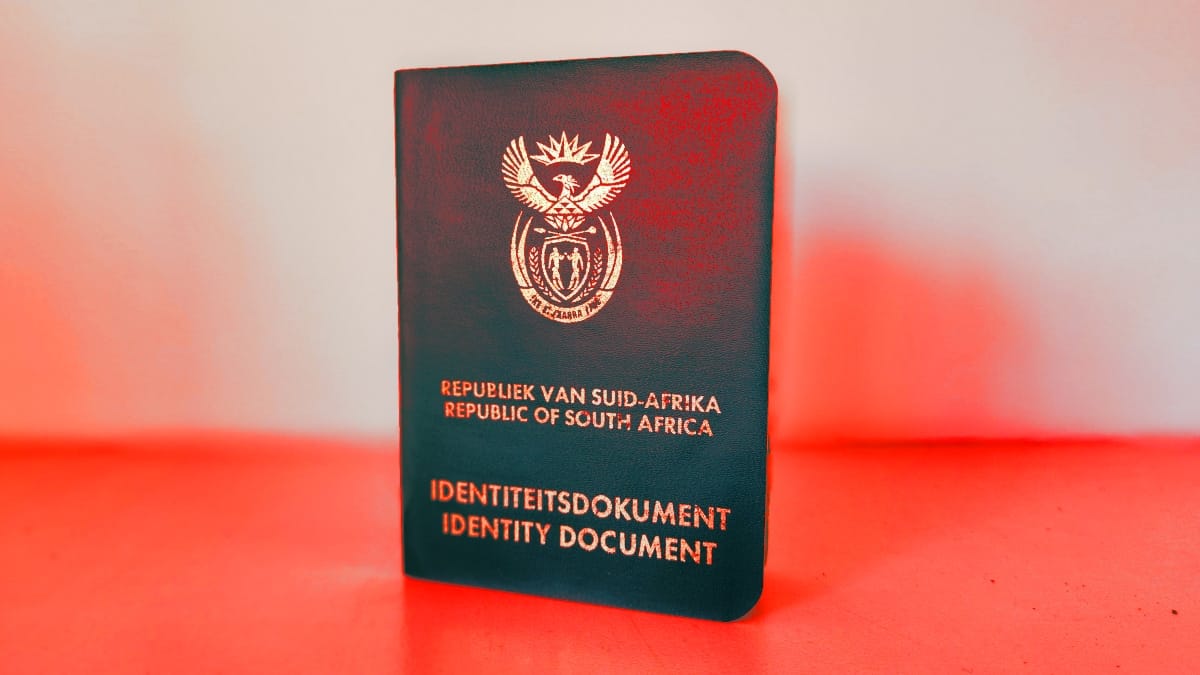
In a significant update for millions of South Africans, the iconic but increasingly vulnerable green bar-coded ID book has been granted a stay of execution, with the Department of Home Affairs confirming it will remain a valid form of identification for at least another three to four years. This grace period is part of a carefully managed, large-scale national transition to the more secure smart ID card, a process being accelerated by an ambitious public-private partnership.
The department has recently intensified its campaign to retire the decades-old green ID book by dramatically expanding application points for the new smart ID card. A key driver of this expansion is a digital partnership with major South African banks. This collaboration is set to increase the number of bank branches supporting smart ID and passport applications from just 30 to over 180 by early 2026. The banks have even more ambitious long-term plans, aiming to have over 800 branches equipped to offer these services by the end of next year.
When combined with the existing network of Home Affairs offices, this expansion promises to create a vast and accessible system. By late 2026, there could be more than 1,000 points across the country where citizens can conveniently apply for their smart ID card, making the process significantly easier and moving the nation closer to its goal of eliminating the fraud-prone green book.
Production Capacity: The Bottleneck Defining the Timeline
Despite this rapid expansion of application channels, the final phase-out date is ultimately dictated by production capacity. The department has revealed that the Government Printing Works (GPW) has a practical annual production capacity of three million smart ID cards, with an expected capacity of four million. While the GPW managed to produce 3.6 million cards in the previous financial year by pushing its systems, its absolute maximum capacity is capped at five million cards per year.
This creates a clear mathematical timeline for the transition. Even if boosted output reaches the maximum of five million cards per year starting now, there will still be approximately 13 million green ID books left to replace by March 2026. Continuing at that maximum rate for the 2026 and 2027 financial years would see the last remaining green ID books finally replaced in 2028.
Furthermore, the department has acknowledged it would be “irresponsible” to discontinue the green ID book by the end of 2025 as initially planned, as roughly a third of its own offices can still only produce the old document. A reasonable advance notice period will also be required before any invalidation, a lesson learned from a previous court ruling that slammed the department for blocking millions of IDs without due process.
The Urgent Need for a More Secure Identity Document
The push for the smart ID card is driven by an urgent need to combat fraud. According to research by Smile ID, the paper-based green ID book has become the most exploited identification document by fraudsters and identity thieves on the entire African continent.
In contrast, the smart ID card offers a multitude of benefits. It is more compact, durable, and far less susceptible to fraud and tampering thanks to its advanced physical security features and the “live capture” biometric system used during application. This enhanced security is why many institutions, including banks, are already refusing to accept damaged green ID books, viewing them as a potential red flag for identity manipulation.
Therefore, while the green ID book remains valid for now, the message from Home Affairs is clear: the future is digital, secure, and card-shaped. Citizens are encouraged to make the switch at their earliest convenience, not just to comply with the eventual phase-out, but to proactively protect their identity in an increasingly digital world.
About The Author