A video, now flickering across news sites and WhatsApp groups across the nation, begins with a shaky frame. Four men in casual clothes stand at the security gate of the shop, their postures rigid with authority. One, holding a sheaf of papers that flutter slightly in his hand, points a finger at the shopkeeper behind the counter. “Where is your permit?” his voice cuts through the grainy audio, sharp and insistent. “Show me. Now.”
The shopkeeper, a slight man with a weathered face, gestures toward a drawer behind the till, his movements slow, laced with a confusion that borders on fear. Before he can retrieve anything, another man in the group steps forward, grabbing the metal gate. A violent rattle echoes as he shoves it against its frame, the sound a percussive punctuation to the escalating argument. Voices overlap—Zulu, English, Shona—a cacophony of accusation and defense. A child’s cry can be heard from inside the shop, a sound that seems to momentarily still the chaos before it swells again.
Within hours, the clip is no longer just a confrontation; it is a political artifact. On one side of the fracture, supporters of the opposition party ActionSA, led by the fiery former mayor Herman Mashaba, seize upon it. To them, the men are not vigilantes but concerned citizens, or perhaps even informal enforcers of a long-ignored status quo. They see the video as a raw, unfiltered look at the “crisis” they have long campaigned on: undocumented immigrants operating unregulated businesses, undercutting locals, and, as they claim, contributing to a shadow economy where tragedy is only a step away. They point to the recent, heartbreaking spate of child poisonings linked to counterfeit snacks sold from some foreign-run spaza shops—incidents that have ignited a primal, parental fury across townships. For these supporters, the men in the video are merely conducting a necessary, if unorthodox, audit of a system that has failed to protect its most vulnerable.
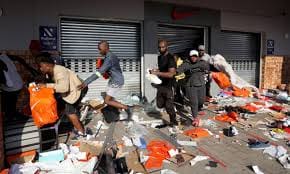
But for critics, the footage is a chillingly familiar harbinger of violence. They label it Afrophobia—a targeted campaign of xenophobia against fellow Africans, predominantly from Zimbabwe, Malawi, and Mozambique, who have for decades formed the backbone of the township retail economy. They point to the papers in the man’s hand, questioning their legitimacy. Are they official documents or merely a prop for intimidation? They note that several shopkeepers with valid permits have been swept up in similar confrontations, their livelihoods destroyed not by the law, but by mob “justice” or political grandstanding. The shoving of the gate, they argue, is not enforcement; it is the prelude to a looting, a deportation, or worse—a scene plucked from the deadly xenophobic attacks of 2008 and 2019 that left dozens dead and thousands displaced.
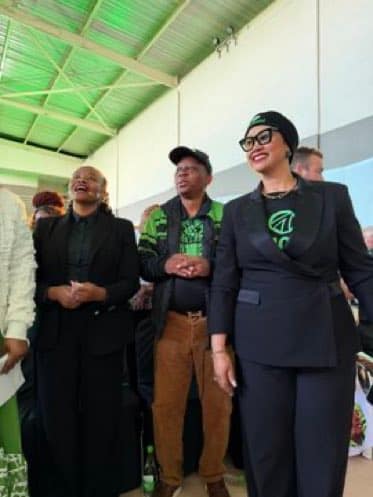
The video’s release is no accident. It lands in the public square with the precision of a political grenade, just as Mashaba delivers a raucous rally speech in a community hall a few kilometers away. His voice, amplified by a crackling speaker, echoes the sentiment of the men on the tape. “We cannot have a country within a country!” he thunders, his fist pounding a wooden lectern. “Our borders are a sieve. Illegal immigrants are running criminal enterprises from our townships, and when our children die, they vanish into the night. The time for talk is over. We need mass deportations. We need to close the borders. We need to take back our economy!”
The crowd roars its approval, waving placards that read “Our Children First” and “Tighten the Border.” The energy is raw, a cocktail of economic desperation, genuine grief over the poisoned children, and a nationalist fervor that has found a potent voice.
But across the street, a small group of counter-protesters, representing migrant rights organizations, holds a silent vigil. Their banners are simple: “Immigrants Are Not Crime” and “We Are All Africans.” A young woman with a Zimbabwean flag draped over her shoulders speaks into a phone, her voice trembling. “My cousin has been running his shop for seven years,” she says. “He pays taxes, he buys from local distributors. And now his neighbors are afraid to walk past his door. This video… it’s a hunting call. It tells people it’s okay to come for us.”
The confrontation at the spaza shop, now frozen in a digital loop, is more than a single incident. It has become a mirror reflecting South Africa’s deepest anxieties: a stagnant economy with a 42% youth unemployment rate, a government often perceived as corrupt and ineffective, and the enduring scars of apartheid’s spatial and economic segregation. In the townships, where the informal economy is not a choice but a lifeline, the competition between local shopkeepers and foreign nationals is fierce and often fraught. The foreign shopkeepers are accused of driving down prices with smuggled goods, while locals accuse them of being clannish and unwilling to integrate.
Yet, as the sun sets on the day the video went viral, the spaza shop in Soweto sits quiet. The security gate is pulled shut, a padlock now secured where there wasn’t one before. A small cluster of neighbors gather across the street, whispering. Some shake their heads, recalling the fear in the shopkeeper’s eyes. Others avoid looking at the shop altogether, a silent agreement that things have shifted. The men with the papers are long gone, their identities unknown, their mission—whether civic duty or vigilantism—unresolved.
The video continues to spread, a digital fire feeding on the dry tinder of South Africa’s unresolved tensions. It is a story without an ending, a single frame in a long-running, bloody national drama where the lines between protector and aggressor, citizen and foreigner, legal and illegal, blur until they disappear entirely. The only certainty is the empty shop, the padlocked gate, and the simmering question of who, and what, will be demanded to leave next.
About The Author