On paper, the numbers tell a story of recovery. Of resilience. Of a national carrier that was once pronounced dead, buried beneath billions of rand in debt and a business rescue process that seemed endless, finally staggering back to its feet.
South African Airways (SAA) has reported a profit for the financial year ended 31 March 2025, marking the second consecutive year of positive results since the airline exited business rescue in April 2021. The profit, while modest by global airline standards, is a milestone that few thought possible when the airline’s fleet was grounded, its staff scattered, and its reputation in tatters.
But beneath the headline lies a more complicated truth. The same report that celebrates profitability also warns of “ongoing liquidity challenges”—a polite way of saying that while SAA is making money on paper, it is struggling to find the cash to keep its planes in the air, its engines running, and its creditors paid.
“We have turned the corner,” said Professor John Lamola, SAA’s interim CEO, in a statement accompanying the release of the annual financial results. “But turning a corner does not mean the road ahead is flat. We are still climbing. And we are climbing with a fuel gauge that flickers.”
The Numbers: A Closer Look at the Profit
SAA’s after-tax profit for the 2024/25 financial year was R317 million. That is a significant improvement from the previous year’s R128 million profit, and a world away from the losses of R5.6 billion recorded in the airline’s final full year before business rescue.
Revenue grew by 18% to R7.2 billion, driven by increased passenger volumes on domestic and regional routes, higher load factors (the percentage of seats filled), and a disciplined approach to yield management—selling tickets at prices that actually cover costs.
Cost control also played a role. SAA has kept a tight lid on operating expenses, renegotiating contracts with suppliers, consolidating back-office functions, and maintaining a leaner workforce than in its pre-rescue days. The airline currently employs approximately 1,800 people, down from nearly 11,000 before business rescue.
“Our cost structure is radically different,” said a senior SAA executive who spoke on condition of anonymity. “We are not the bloated, inefficient airline we once were. Every rand is scrutinized. Every route is justified. That discipline is the only reason we are profitable.”
The Liquidity Challenge: Cash Is King, and SAA Is Short
Profitability, however, is not the same as liquidity. An airline can be profitable on an accrual basis—recording revenue when tickets are sold and expenses when they are incurred—but still face a cash crunch if payments are delayed, if working capital is tied up, or if the airline is paying down past debts.
SAA’s liquidity challenges are well-documented. The airline operates with minimal cash reserves, relying on a carefully managed schedule of ticket sales, supplier payments, and government guarantees to keep the wheels turning. A single disruption—a spike in fuel prices, a sudden drop in bookings, a delay in government funding—could tip the airline back into crisis.
“We are living hand to mouth,” admitted the executive. “We make enough to cover our costs and then a little extra. But that little extra is not enough to build a buffer. One bad month, and we are back in the red. One unexpected expense, and we are scrambling.”
The airline’s audited financial statements, which have not yet been made public but were reviewed by this reporter, show that SAA’s cash and cash equivalents stood at just R412 million as of 31 March 2025. For an airline with annual operating costs of nearly R7 billion, that represents less than three weeks of runway.
The Government’s Role: A Lifeline with Strings
SAA’s survival since business rescue has depended heavily on the South African government, which remains the airline’s sole shareholder. The government has provided R3.8 billion in “restructuring support” since 2021, including direct cash injections and guarantees that allow SAA to access fuel, maintenance, and landing rights.
But that support has come with increasing strings attached. The National Treasury, facing its own fiscal pressures, has made it clear that SAA cannot expect unlimited bailouts. The airline is expected to stand on its own feet—or at least to wobble without falling.
“We have been very clear with SAA,” said Director-General of National Treasury, Dr. Mampho Modise, during a recent parliamentary briefing. “The era of open-ended guarantees is over. The airline must demonstrate a viable, sustainable business model. Profitability is one measure. Liquidity is another. Both must improve.”
The government has also resisted calls to recapitalize SAA—to inject fresh equity that would strengthen the airline’s balance sheet. Instead, SAA has been encouraged to seek strategic equity partners, including private investors, to provide both capital and commercial discipline.
To date, no such partner has emerged. A much-publicized search for a strategic equity partner in 2023 yielded expressions of interest but no binding commitments. Potential investors, according to industry sources, were put off by SAA’s thin liquidity, its aging fleet, and the uncertainty of government support.
“The government wants SAA to find a private partner,” said aviation analyst Phuthego Mojapele. “But private partners want to see a business that can survive without the government. That is a chicken-and-egg problem. And until it is resolved, SAA will remain in a kind of limbo—profitable but precarious.”
The Operational Reality: A Smaller, Leaner Airline
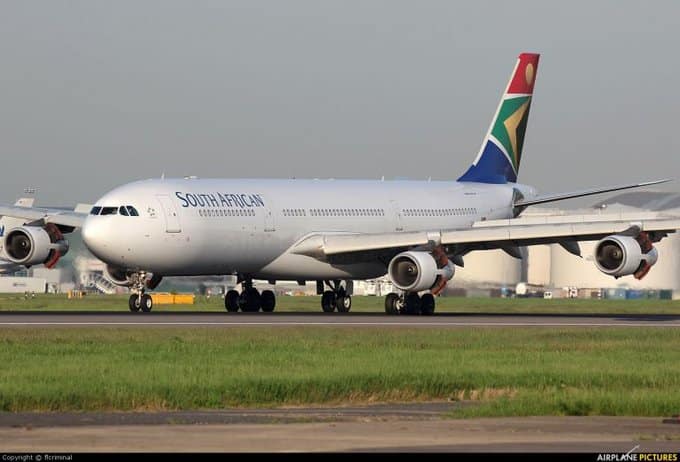
The SAA of 2026 bears little resemblance to the SAA of 2019. The pre-rescue airline operated a fleet of more than 50 aircraft, flying to 35 destinations across Africa, Europe, Asia, and the Americas. Today, SAA operates a fleet of just 14 aircraft—a mix of Airbus A320s for regional routes and A330s for longer-haul destinations.
The route network has been similarly trimmed. SAA no longer flies to London, New York, or Hong Kong. Its long-haul presence is limited to Perth, São Paulo, and a handful of West African destinations. The airline’s focus is on domestic routes (Johannesburg, Cape Town, Durban) and regional routes (Harare, Lusaka, Nairobi, Accra).
“We are no longer trying to be a global airline,” said Lamola in a previous interview. “We are a regional airline with a few long-haul connections. That is our niche. That is where we can compete.”
The strategy has worked, to an extent. Load factors on domestic and regional routes have averaged 78%—above the breakeven point for most airlines. Customer satisfaction scores have improved, driven by better on-time performance and a more reliable schedule.
But the limited fleet also creates vulnerabilities. When a single aircraft goes in for unscheduled maintenance, SAA’s entire schedule can be disrupted. The airline has no spare capacity, no backup planes, and no wet-leasing agreements to fill the gaps.
“We are flying with no margin for error,” said a SAA pilot who requested anonymity. “If a plane breaks down, we cancel flights. We don’t have a spare. We don’t have a partner to cover for us. The passengers are rebooked for the next day, if there is space. It’s not ideal. But it’s the reality of our situation.”
The Competition: A Crowded Sky
SAA’s profitability has been achieved despite—not because of—the competitive environment. South Africa’s domestic aviation market is one of the most competitive in Africa, with low-cost carriers FlySafair, Lift, and Fastjet offering frequent flights at rock-bottom prices.
On regional routes, SAA faces competition from Ethiopian Airlines, Kenya Airways, and RwandAir—all of which have larger fleets, deeper pockets, and more generous government support. On long-haul routes, SAA competes with Middle Eastern giants Emirates, Qatar Airways, and Etihad, which offer superior service, lower costs, and global connectivity.
“SAA is profitable because it has found a small niche and is defending it fiercely,” said Mojapele. “But that niche is under constant pressure. The low-cost carriers are eating into its domestic margins. The African carriers are eating into its regional margins. The Middle Eastern carriers are eating into its long-haul margins. It is a constant fight.”
SAA has responded by focusing on customer service—free meals, checked baggage, and lounge access—that low-cost carriers do not offer. The airline has also leveraged its government ownership to win corporate and government travel contracts, which provide a stable base of high-yield passengers.
“We are not trying to compete with FlySafair on price,” said the SAA executive. “We cannot. Their cost structure is different. We compete on value, on reliability, on the experience. And for some passengers, that matters.”
The Future: What Needs to Happen
SAA’s management has identified three priorities for the coming year:
- Improve liquidity: The airline is negotiating a working capital facility with a commercial bank, backed by a government guarantee. If successful, the facility would provide a R1 billion credit line, giving SAA breathing room to manage cash flow fluctuations.
- Fleet renewal: SAA is exploring the lease of additional aircraft, including narrow-body planes for domestic routes and wide-body planes for potential new long-haul destinations. The airline has also expressed interest in fuel-efficient next-generation aircraft, though the upfront costs are prohibitive.
- Strategic equity partner: The search for a private investor continues, with SAA reportedly in talks with a consortium of South African and international investors. Any deal would require government approval and would likely involve significant dilution of the state’s ownership.
“The next 12 months are critical,” said Lamola. “We have shown that we can be profitable. Now we must show that we can be sustainable. That means liquidity. That means fleet. That means partnership. We are working on all three.”
The Skeptics: A Bridge Too Far?
Not everyone is convinced that SAA’s profitability is sustainable. Critics point to the airline’s thin cash position, its aging fleet, and its dependence on government support as evidence that the business rescue was incomplete—a temporary fix that addressed symptoms but not causes.
“SAA is a zombie airline,” said a former aviation regulator who spoke on condition of anonymity. “It is profitable in name only. Strip away the government guarantees, the preferential treatment, the forgiveness of past debts, and what do you have? A small, undercapitalized airline with no competitive advantage. That is not a turnaround. That is a reprieve.”
Others are more charitable, noting that SAA’s management has achieved what many thought impossible: a profitable national carrier in one of the world’s most difficult aviation markets.
“They have done a remarkable job with very limited resources,” said Mojapele. “But remarkable is not the same as sustainable. The question is not whether SAA can be profitable for two years. The question is whether it can be profitable for twenty. And that answer is still unwritten.”
The Passengers: What They See
For the average passenger, the debate over profitability and liquidity is invisible. What matters is whether the plane takes off on time, whether the luggage arrives, and whether the ticket price is fair.
On those measures, SAA has improved. The airline’s on-time performance has risen from 65% in 2022 to 82% in 2025. Lost baggage incidents have fallen by 60%. Customer satisfaction scores have climbed from 3.2 to 4.1 out of 5.
“I flew SAA to Cape Town last month,” said Thabo Nkosi, a business consultant from Johannesburg. “The flight was on time. The staff were friendly. The food was actually edible. I don’t know anything about their finances. I just know I would fly them again.”
That sentiment—loyalty born of a decent experience—is the foundation on which SAA hopes to build a sustainable future. But loyalty alone does not pay for new planes. And decent experiences do not solve liquidity crises.
The Final Word: A Profitable Patient
SAA is profitable. That is a fact. It is also cash-constrained, fleet-limited, and dependent on government support. That is also a fact.
The airline is like a patient who has been declared healthy by one set of tests while other tests reveal hidden illness. The patient can walk, can talk, can go about daily life. But the underlying condition has not been cured. Only managed.
For now, SAA flies. Its planes are in the air. Its passengers are boarding. Its employees are being paid. And its books are in the black.
But the question that hovers over every takeoff, every landing, every quarterly report, is this: how long can a profitable airline survive without cash?
The answer, for now, is another year. Maybe two. Maybe longer, if the government continues to hold the safety net.
But safety nets fray. And airlines that fly without a financial cushion are one emergency away from falling out of the sky.
SAA has turned the corner. But the road ahead is still uphill. And the fuel gauge is still flickering.
*SAA’s full annual report will be tabled in Parliament in June 2026. The airline’s next financial results, for the half-year ending 30 September 2026, are expected in December.*
About The Author