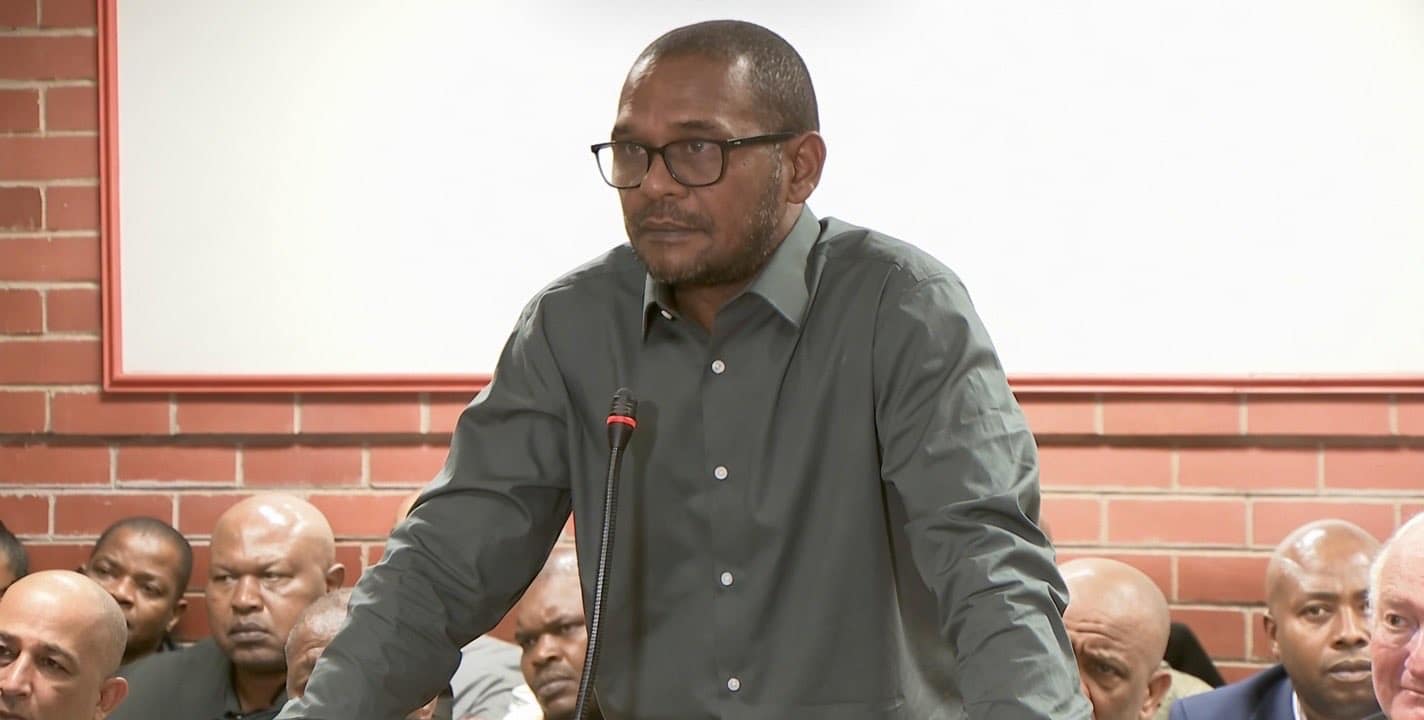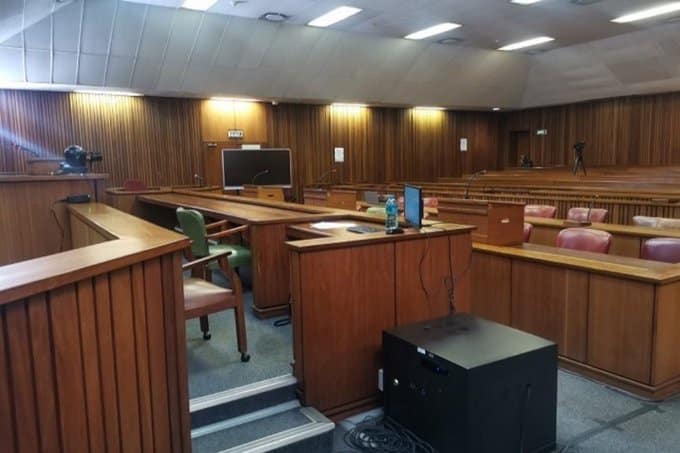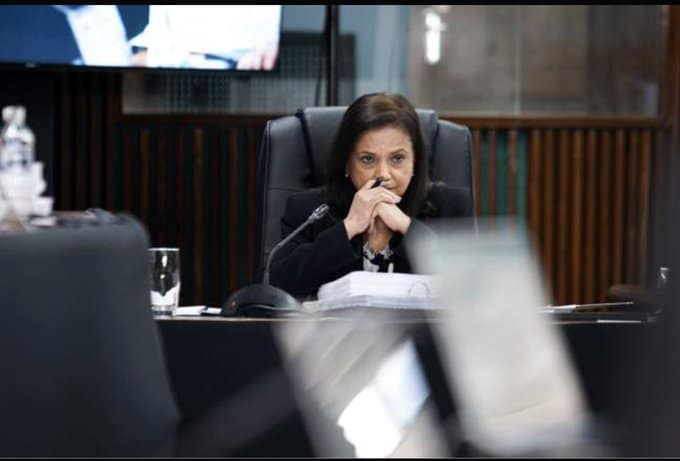
The Nkabinde Enquiry, established to investigate allegations of corruption and maladministration within the National Prosecuting Authority (NPA) and the broader justice department, has already seen its share of drama. There have been tearful confessions, angry denials, and the slow, grinding testimony of witnesses who spoke in circles to avoid incriminating themselves or their superiors. But nothing prepared the commission for the letter that arrived on Thursday morning.
Former National Director of Public Prosecutions (NDPP) Advocate Shamila Batohi, who resigned from the NPA in 2025 after a tumultuous five-year tenure, has formally informed the enquiry that she will not be returning to testify. In a letter addressed to Chairperson Justice Yvonne Nkabinde, Batohi cited a single, non-negotiable reason: proper legal representation.
“I am willing to cooperate with the enquiry to the fullest extent possible,” Batohi wrote. “However, I cannot do so without adequate legal representation. The matters under investigation are complex, span many years, and involve serious allegations. I require counsel to assist me in navigating the cross-examination that I am likely to face. To date, the enquiry has not provided any assurance regarding legal representation for witnesses. I therefore decline to return to the stand until this matter is resolved.”
The letter, which was immediately leaked to the media, sent shockwaves through the legal community. Batohi, a former International Criminal Court (ICC) prosecutor who was hailed as a “clean skin” when she was appointed to clean up the NPA, has now positioned herself as a witness in need of protection. Her refusal to testify without legal counsel raises uncomfortable questions: Is she hiding something? Is she a target of the enquiry? Or is she simply a former public official who cannot afford the tens of thousands of rands required to retain senior counsel?
The answers may determine not only Batohi’s fate but the credibility of the enquiry itself.
The Nkabinde Enquiry: A Brief Refresher
The Nkabinde Enquiry, named after its chairperson, retired Constitutional Court Justice Yvonne Nkabinde, was established by President Cyril Ramaphosa in late 2025. Its mandate is broad: to investigate allegations of corruption, maladministration, and political interference within the NPA and the Department of Justice and Constitutional Development.
The enquiry was prompted by a series of whistleblower complaints and media reports alleging that senior NPA officials were involved in irregular procurement, the manipulation of high-profile cases, and the protection of politically connected individuals.
Specifically, the enquiry is looking into:
- The “SARS Rogues” affair: Allegations that the NPA colluded with the South African Revenue Service (SARS) to target specific taxpayers for political reasons.
- The Zuma prosecution debacle: The decision to drop charges against former President Jacob Zuma, and the subsequent legal battles that ensnared the NPA for years.
- Irregular appointments: Claims that senior NPA positions were filled based on political loyalty rather than merit.
- Procurement irregularities: Allegations that the NPA’s procurement processes were manipulated to benefit certain companies.
Batohi was NDPP during much of the period under investigation. She was appointed in 2019 to clean up the NPA after the Zuma-era “capture.” Her tenure was marked by successes—the resumption of the Zuma prosecution, the establishment of the Investigative Directorate (ID) to handle state capture cases—and failures, including a series of high-profile resignations and a persistent lack of funding.
When she resigned in 2025, citing “personal reasons,” many assumed she had simply had enough. But the Nkabinde Enquiry has since raised the possibility that her departure was linked to the very issues the commission is investigating.
“Advocate Batohi has nothing to hide,” said a former colleague. “But she is also not a fool. She knows that cross-examination by skilled counsel can be a minefield. Without a lawyer to guide her, she could be ambushed, misquoted, or forced into admissions that are factually incorrect but legally damaging. She is right to demand representation.”
Batohi’s Testimony: What She Has Said So Far
Batohi has already testified before the enquiry once, in February 2026. Her testimony was wide-ranging and, at times, defensive. She denied any personal wrongdoing but acknowledged that “mistakes were made” during her tenure.
Key excerpts from her February testimony:
- On the Zuma prosecution: “I inherited a mess. The decision to drop charges against Mr. Zuma was made before my time. My job was to fix it. I believe we did fix it. But the process was not perfect. I accept that.”
- On the Investigative Directorate: “The ID was underfunded and understaffed from day one. I raised this repeatedly with the Minister and with National Treasury. I was ignored. If the ID failed to deliver, that failure rests with the government, not with me.”
- On her resignation: “I resigned because I was tired. Tired of fighting for resources. Tired of political interference. Tired of being blamed for things I did not do. I do not regret my decision. But I also do not want to relive it. That is why I need a lawyer.”
During cross-examination by counsel for the enquiry, Batohi became visibly frustrated. She was asked about specific emails, specific meetings, specific decisions. She could not recall many of the details, a fact that the counsel seized upon.
“You claim to have run the NPA, but you cannot remember a meeting with the Minister about the ID budget?” the counsel asked.
“Mr. Chair, I had hundreds of meetings,” Batohi replied. “I cannot remember every detail of every meeting. That is not a failure of memory. It is a recognition of the volume of work. If the enquiry expects me to recall every conversation from five years ago, it will be disappointed.”
The exchange was widely seen as a victory for the enquiry and a defeat for Batohi. Shortly after, she requested a postponement to “prepare further.” The commission granted the request, scheduling her return for May 2026. Now, that return has been indefinitely postponed.
The Legal Representation Question: Who Pays?
The core of Batohi’s refusal is financial. Senior counsel in South Africa charge between R30,000 and R100,000 per day. A multi-day cross-examination could cost Batohi R500,000 or more. As a former public official, now retired, she does not have that kind of money.
“The NPA does not provide legal representation for former employees who are called to testify before commissions,” a legal expert explains. “There is no budget for it. There is no policy. If you are a current employee, the State may represent you. If you are a former employee, you are on your own.”
Batohi has asked the enquiry to either provide legal representation or to reimburse her for the cost of hiring her own counsel. The enquiry has not yet ruled on the request. In her letter, Batohi notes that the commission has provided legal representation to other witnesses—including current NPA officials—but has refused to do so for former officials.
“I am not asking for special treatment,” Batohi wrote. “I am asking for equal treatment. If the commission can afford lawyers for current employees, it can afford lawyers for former employees. Or it can allow me to use the commission’s legal team. The specifics are negotiable. The principle is not.”
Justice Nkabinde has not yet responded publicly to Batohi’s letter. However, sources close to the enquiry suggest that the chairperson is “deeply frustrated” by the delay.
“The commission has a job to do,” said a source. “Every day that Batohi refuses to testify is a day that the commission is not finishing its work. The public deserves answers. Justice Nkabinde is determined to provide them. But she cannot force Batohi to testify without a lawyer. The law is clear: witnesses have rights. One of those rights is to legal representation, especially when they are at risk of self-incrimination.”
The Political Dimension: An Attempt to Stonewall?
Unsurprisingly, the political reaction to Batohi’s refusal has been sharply divided.
The ANC’s Loyalists: Supporters of the President argue that Batohi is simply exercising her legal rights. “Advocate Batohi is a respected legal professional,” said an ANC spokesperson. “She has every right to ensure that she is properly represented. The enquiry should accommodate her. This is not a political issue.”
The Opposition: The Democratic Alliance (DA) and Economic Freedom Fighters (EFF) are less charitable. “Batohi is stonewalling,” said DA shadow justice minister Glynnis Breytenbach. “She knows that her testimony could expose the ANC’s efforts to undermine the NPA. She is using legal technicalities to avoid answering difficult questions. The enquiry should compel her to testify, with or without a lawyer.”
Civil Society: The Helen Suzman Foundation, which has been closely following the enquiry, expressed concern. “Advocate Batohi’s refusal is troubling,” said a spokesperson. “But the commission’s refusal to provide legal representation is also troubling. Witnesses should not be forced to choose between impoverishing themselves and cooperating with justice. This is a failure of the system.”
Batohi herself has rejected accusations of stonewalling. “I am not running from anything,” she said in a brief telephonic interview. “I have already testified. I am willing to testify again. But I will not do so without a lawyer. That is not stonewalling. That is common sense.”
The Precedent: Other Witnesses, Other Lawyers
Batohi’s situation is not unique. Several other witnesses before the Nkabinde Enquiry have sought legal representation. But the commission’s response has been inconsistent.
- Current NPA officials: The commission has provided legal representation through the State Attorney’s office. These witnesses have testified without complaint.
- Former NPA officials: The commission has taken a case-by-case approach. Some have been allowed to use commission lawyers. Others have been told to find their own.
- Third-party witnesses (journalists, academics, activists): These witnesses have generally been left to fend for themselves, though some have received pro bono assistance from legal aid clinics.
“It is a patchwork,” said a legal observer. “There is no clear policy. That is the problem. If the commission had a rule—’We provide lawyers for all witnesses’ or ‘We provide lawyers for no witnesses’—Batohi would have no complaint. But the inconsistency creates the perception of unfairness. And Batohi is exploiting that perception.”
The Enquiry’s Options: How to Proceed
Justice Nkabinde now faces several options:
- Grant Batohi’s request: Provide legal representation, either through the State Attorney or by reimbursing her for private counsel. This would be the simplest solution but could set a precedent for other witnesses, increasing the commission’s costs.
- Deny Batohi’s request and compel her to testify: The commission has the power to subpoena witnesses. If Batohi refuses, she could be held in contempt, fined, or even imprisoned. This would be a dramatic escalation and could damage the commission’s reputation.
- Negotiate a middle ground: The commission could offer to cover a portion of Batohi’s legal fees, or to provide a junior counsel while allowing her to pay for a senior counsel. This would acknowledge her concerns while limiting the financial burden on the commission.
- Adjourn the enquiry indefinitely: The least likely option. The commission is under pressure to complete its work. An indefinite adjournment would be seen as a failure.
Insiders suggest that option three is the most likely. “Justice Nkabinde is a pragmatist,” said a source. “She does not want to be seen as unfair. But she also does not want to be seen as weak. A negotiated solution—some help from the commission, some contribution from Batohi—is the path of least resistance.”
Batohi’s Legacy: Tarnished or Intact?
Regardless of how the standoff is resolved, Batohi’s legacy is already being re-litigated. When she was appointed in 2019, she was hailed as a hero. She would clean up the NPA. She would prosecute the corrupt. She would restore the rule of law.
Five years later, the verdict is mixed. She did restore the Zuma prosecution. She did establish the Investigative Directorate. But she also presided over an institution that remained underfunded, overworked, and politically vulnerable. She was a steady hand, but not a transformative one.
“The NPA under Batohi was better than it was under her predecessors,” said a legal analyst. “But that is a low bar. She was not the saviour that many hoped for. She was a competent manager in an impossible system. That is not a criticism. It is a reality.”
Now, her refusal to testify without legal representation could be seen as a final act of self-preservation—or as a principled stand for witness rights. The public will decide.
“Shamila Batohi is no longer NDPP,” said a former colleague. “She is a private citizen. She has the same rights as any other private citizen. One of those rights is not to be forced to testify without a lawyer. She is exercising that right. Good for her.”
But others are less forgiving. “She was the top prosecutor in the country,” said a journalist who has covered the NPA for years. “She knows the law. She knows that witnesses often testify without lawyers. She is using her status to get special treatment. That is not principled. That is privileged.”
The Public’s View: Cynicism and Fatigue
Outside the commission’s hearing room, the public has largely tuned out. The Nkabinde Enquiry has been running for months, generating headlines but little action. The details are dense. The stakes are high. But for ordinary South Africans, the jargon of legal representation and cross-examination is a foreign language.
“I do not know who Shamila Batohi is,” said a taxi driver in Pretoria. “I do not care if she has a lawyer. I just want someone to go to jail. Anyone. For anything. Then I will believe that the system works.”
A university student was more engaged. “Advocate Batohi is a symbol,” she said. “If she can be treated badly by the system, anyone can. She is right to demand a lawyer. The commission should pay for it. That is the least they can do for someone who dedicated her life to public service.”
A retired civil servant was cynical. “This is all theatre,” he said. “Batohi will get her lawyer. She will testify. Nothing will happen. No one will go to jail. The commission will issue a report. The report will gather dust. And we will have wasted more millions of rands. That is South Africa. That is how it works.”
The Road Ahead: A Decision This Week?
Justice Nkabinde is expected to issue a ruling on Batohi’s request by the end of the week. The ruling will be closely watched by legal scholars, political commentators, and the small but dedicated group of citizens who follow the enquiry’s work.
If the ruling goes against Batohi, she may choose to testify without a lawyer—or she may take the matter to court, seeking an interdict against the commission. A court battle could delay the enquiry for months.
If the ruling goes in her favour, other witnesses may make similar requests, potentially overwhelming the commission’s budget and prolonging the proceedings.
Either way, the Nkabinde Enquiry has entered a new, uncertain phase. And Shamila Batohi, the former top prosecutor who once commanded the courtroom, is now a witness who refuses to enter it.
The Final Word: Justice Delayed?
The Nkabinde Enquiry was established to uncover the truth about corruption and maladministration in the NPA. The truth, it turns out, is complicated. It involves legal technicalities, witness rights, and the eternal struggle between the need for accountability and the right to due process.
Shamila Batohi is not a villain. She is not a hero. She is a former public official who wants to protect herself. That is human. That is understandable. But it is also frustrating for those who hoped that the enquiry would cut through the noise and deliver clarity.
“The truth does not come easily,” said Justice Nkabinde in a rare public comment. “It requires patience. It requires persistence. It requires a willingness to follow the facts wherever they lead. We are not there yet. But we will get there. I hope. I believe.”
The red light on the recording device blinked off. The journalists packed up their notebooks. The lawyers shuffled out. And Shamila Batohi remained at home, waiting for a ruling that would determine whether she would speak—and whether anyone would listen.
About The Author