The warehouse sat in an unassuming industrial park on the outskirts of a quiet Eastern Cape town. From the outside, it looked like any other storage facility: corrugated iron roof, roll-up door, a faded sign advertising “M&B Logistics.” There were no guards. no cameras. No dogs. Just the low hum of industrial machinery and the occasional clink of glass bottles.
But when police broke down the door in a pre-dawn raid on Wednesday, they did not find pallets of legitimate goods. They found a counterfeit alcohol factory—a sprawling, sophisticated operation capable of churning out thousands of bottles of fake whisky, brandy, gin, and vodka every week.
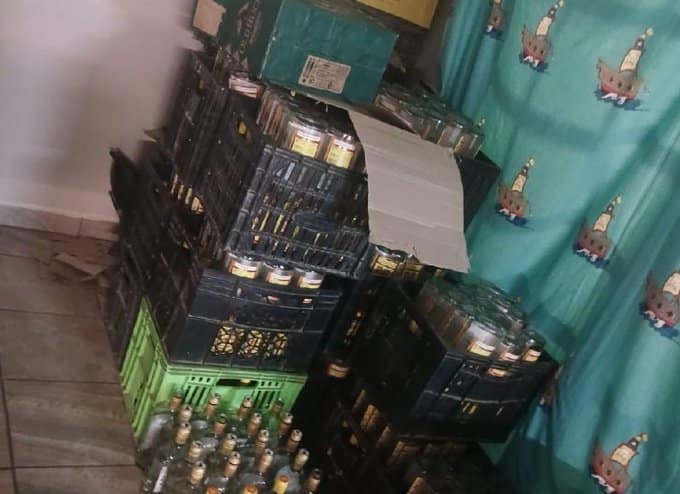
Six men, aged between 28 and 55, were arrested at the scene. Police seized counterfeit alcoholic beverages worth more than R500,000, as well as bottling equipment, labels, caps, and large quantities of industrial alcohol. The bust, described by officials as one of the largest of its kind in the province this year, has exposed a shadow industry that poses serious risks to public health and undermines legitimate businesses.
“This was not a backyard operation,” said Brigadier Tembinkosi Kinana, the provincial police spokesperson. “This was a well-organised, well-funded criminal enterprise. They had supply chains. They had distribution networks. They had customers. They were not amateurs. They were professionals.”
The Raid: A Coordinated Strike
The raid was the culmination of a three-month investigation by the Hawks’ Serious Commercial Crime Unit, working in collaboration with the South African Revenue Service (SARS), the National Consumer Commission (NCC), and brand protection investigators from major alcohol companies.
According to sources, the investigation began after a tip-off from a concerned citizen who had purchased a bottle of what he believed to be premium whisky from a local spaza shop. The bottle looked genuine—the label was convincing, the cap was sealed, the colour was right. But the taste was off. “It was like drinking paint thinner,” the man later told investigators. “I knew immediately something was wrong.”
The man reported his suspicions to the National Consumer Commission, which conducted a laboratory analysis. The results were alarming: the bottle contained methanol (industrial alcohol) and high levels of toxic impurities. It was not whisky. It was poison.
The commission alerted the Hawks, and the investigation began. Undercover operatives traced the bottle back to a distributor, then to a wholesaler, then to the warehouse in the industrial park. Surveillance was established. Phone records were subpoenaed. Witnesses were interviewed.
“We built a comprehensive case,” said a Hawks investigator who spoke on condition of anonymity. “We knew the location. We knew the key players. We knew the schedule. The only thing left was to pounce.”
The pounce came at 4 AM on Wednesday. Armed with a search warrant, a team of 20 Hawks officers, supported by local police, surrounded the warehouse. They used an angle grinder to cut through the lock on the roll-up door. Inside, they found six men hard at work.
“They were in the middle of a bottling run,” the investigator said. “Bottles were lined up on a conveyor belt. Labels were being applied. Caps were being sealed. It was a full-scale production line. They were so engrossed in their work that they did not hear us coming.”
The six men were arrested without resistance. They have been charged with fraud, manufacturing counterfeit goods, contravening the Liquor Products Act, and money laundering. They are expected to appear in court on Monday.
The Operation: How It Worked
The counterfeit operation was surprisingly sophisticated. According to investigators, the suspects had acquired industrial-scale bottling equipment, including a semi-automatic filler, a capping machine, and a labelling machine. They had also developed a network of suppliers for raw materials.
- Industrial alcohol: The suspects purchased large quantities of industrial-grade ethanol from a legitimate chemical supplier, claiming it was for “cleaning purposes.” In reality, they were using it as the base spirit for their counterfeit products.
- Flavouring and colouring: The suspects added caramel colouring to the ethanol to mimic the appearance of whisky and brandy. For gin, they added juniper flavouring. For vodka, they filtered the ethanol through activated charcoal to remove impurities and then added nothing—the alcohol itself was the product.
- Bottles and labels: The suspects obtained empty bottles from recycling centres and bottle depots. They cleaned them, removed old labels, and applied new ones that had been professionally printed by a commercial printer. The labels were convincing replicas of major brands, complete with barcodes, batch numbers, and even anti-counterfeit holograms.
- Caps and seals: The suspects used a heat-shrink machine to apply plastic seals to the bottle caps, making the bottles appear unopened. For premium products, they used corks and wax seals.
- Packaging: The finished bottles were packed into cardboard boxes that looked identical to genuine brand packaging. The boxes were then shrink-wrapped on a pallet and loaded onto trucks for distribution.
“The attention to detail was remarkable,” said a brand protection investigator from a major alcohol company. “If you did not know what to look for, you would be fooled. The labels were slightly off—the font was wrong, the colour was a shade lighter—but you would need a magnifying glass to see the difference. The average consumer would never notice.”
The suspects distributed their counterfeit products through informal channels: spaza shops, shebeens, taverns, and street vendors. They also supplied to “cash-only” wholesalers who did not ask questions about the provenance of the goods.
“We found delivery records going back two years,” said the Hawks investigator. “They were moving thousands of bottles a week. At R100-R200 per bottle, that is a significant income. We estimate that this operation has generated millions of rands in illegal revenue.”
The Health Risks: A Deadly Cocktail
The counterfeit alcohol seized in the raid was not just illegal; it was dangerous. Laboratory analysis revealed that the industrial alcohol used as a base contained high levels of methanol, a toxic substance that can cause blindness, organ failure, and death.
“Methanol is not meant for human consumption,” said Dr. Thabo Mokoena, a toxicologist at a provincial hospital. “Even small amounts can cause severe poisoning. Symptoms include headache, dizziness, nausea, vomiting, and abdominal pain. In higher doses, it can cause blindness, seizures, coma, and death. There is no safe level of methanol in drinking alcohol. None.”
Dr. Mokoena noted that the counterfeit alcohol also contained traces of heavy metals, likely leached from the industrial equipment used in the bottling process. “Lead, cadmium, chromium—these are not things you want in your body,” he said. “Chronic exposure can cause cancer, kidney damage, and neurological disorders.”
Fortunately, no deaths or serious illnesses have been linked to this specific operation. But investigators are concerned that some of the counterfeit product may already have been consumed.
“We have issued a public warning,” said Brigadier Kinana. “If you have purchased alcohol from an informal source—a spaza shop, a shebeen, a street vendor—in the past six months, do not drink it. Return it to the point of purchase or dispose of it safely. Your life is worth more than the cost of a bottle.”
The National Consumer Commission has established a hotline for consumers who believe they may have purchased counterfeit alcohol. The commission is also working with major alcohol brands to identify additional distribution points.
The Suspects: Who Are They?
The six arrested men have been identified as:
- Jacob “Jake” van der Merwe (55): Alleged ringleader. A former logistics manager at a legitimate alcohol bottling plant. He is believed to have provided the technical expertise for the operation.
- Sipho Dlamini (42): Alleged financial manager. Responsible for laundering the proceeds of the operation through a network of bank accounts and cash businesses.
- Michael “Mike” Petersen (38): Alleged production manager. Oversaw the day-to-day bottling operations.
- Thabo Nkosi (35): Alleged distribution manager. Managed the network of wholesalers and retailers.
- Ahmed “Alie” Patel (31): Alleged supplier. Responsible for procuring industrial alcohol, bottles, labels, and other raw materials.
- Bongani Khumalo (28): Alleged driver. Transported finished products from the warehouse to distribution points.
All six have criminal records ranging from fraud to assault. Van der Merwe was previously convicted of manufacturing counterfeit goods in 2015 and served three years in prison. Dlamini is a known associate of organised crime syndicates in Gauteng.
“This is not their first offence,” said the Hawks investigator. “They are career criminals. They knew exactly what they were doing. And they knew the risks. They just did not care.”
The suspects’ legal aid lawyers have indicated that they will plead not guilty. Van der Merwe’s lawyer argued that his client was “merely an employee” and “did not know that the alcohol was counterfeit.” The court was not impressed.
The Industry Impact: Billions Lost to Counterfeiters
The legitimate alcohol industry in South Africa is worth billions of rands and supports thousands of jobs. But counterfeiters are eating into that revenue, costing the industry an estimated R2 billion annually, according to the South African Liquor Brandowners Association (SALBA).
“Counterfeit alcohol is not just a problem for big brands,” said SALBA spokesperson Vuyo Ntoi. “It is a problem for the entire economy. Every counterfeit bottle sold is a legitimate bottle not sold. Every legitimate bottle not sold is a job not created, a tax not paid, a small business not supported.”
Ntoi noted that counterfeiters often target premium brands—whisky, brandy, gin, vodka—because they offer the highest profit margins. A bottle of counterfeit Johnnie Walker Black Label that costs R50 to produce can be sold for R300-R400, generating a profit margin of 500-700%.
“These are not small-time criminals,” Ntoi said. “These are organised crime syndicates. They have resources, connections, and a willingness to use violence. They are not going away. The only way to stop them is through enforcement, education, and cooperation between industry and government.”
SALBA has launched a public awareness campaign, “Buy Real, Drink Safe,” which encourages consumers to purchase alcohol only from licensed retailers and to look for signs of tampering or poor quality.
The Government Response: A Call for Stiffer Penalties
The Eastern Cape bust has renewed calls for stiffer penalties for counterfeiters. Currently, manufacturing counterfeit goods carries a maximum sentence of six years in prison, though few offenders receive more than a suspended sentence or a fine.
“Six years is a joke,” said a senior police official. “These criminals make millions. They risk a few months in prison. The deterrent effect is zero. We need sentences of 15, 20, even 25 years. We need to confiscate their assets. We need to make crime unprofitable.”
The Department of Trade, Industry and Competition (DTIC) has indicated that it is considering amendments to the Counterfeit Goods Act, including higher fines, longer prison sentences, and the creation of a dedicated counterfeit goods court.
“We are taking this seriously,” said a DTIC spokesperson. “Counterfeit goods harm consumers, harm businesses, and harm the economy. We will not tolerate it. The law must be strengthened.”
But legal experts note that even stiffer penalties will have limited impact without adequate enforcement. “The police are understaffed and underfunded,” said a criminal defence attorney. “The Hawks are overwhelmed. The courts are clogged. Passing more laws will not help if no one is around to enforce them.”
The Community: Shock and Anger
In the small Eastern Cape town where the warehouse was located, news of the bust has been met with shock and anger. Residents had noticed the activity at the industrial park—the trucks coming and going at odd hours, the hum of machinery late at night—but had assumed it was a legitimate business.
“I used to wave to the drivers,” said a woman who lives across the street. “They seemed like nice men. Now I find out they were making poison. Poison that could have killed my grandchildren. I feel sick. I feel betrayed.”
A local shopkeeper, who had unknowingly sold counterfeit alcohol from the operation, expressed relief that no one had been seriously harmed. “I bought the bottles from a wholesaler I trusted,” he said. “I did not know they were fake. I am not a criminal. I am a victim. I hope the police go after the real criminals, not the small guys like me.”
The shopkeeper has since removed all suspect products from his shelves and has cooperated with investigators. He has not been charged.
The Investigation Continues: More Arrests Expected
While six men are in custody, the investigation is far from over. The Hawks believe that the counterfeit operation was part of a larger network spanning multiple provinces, possibly even crossing international borders.
“We have seized records that suggest connections to suppliers in China (labels and caps), India (industrial alcohol), and Mozambique (distribution),” said the Hawks investigator. “We are working with international law enforcement to trace these links. This is not a local problem. This is a global problem.”
Investigators are also looking into the possibility that the counterfeit operation was linked to organised crime syndicates involved in drug trafficking, human smuggling, and other illicit activities.
“Counterfeit goods are often a gateway crime,” said a crime intelligence analyst. “The same networks that produce fake alcohol also produce fake pharmaceuticals, fake electronics, fake clothing. They are versatile. They adapt. Taking down one operation is a victory, but it is not a knockout. There will be others.”
The six arrested men have been denied bail pending their court appearance. The state argued that they are flight risks and that they may intimidate witnesses or destroy evidence. The court agreed.
The Public Health Warning: What Consumers Should Look For
The National Consumer Commission has issued guidelines for consumers to help them identify counterfeit alcohol:
- Check the label: Look for misspellings, blurry printing, or inconsistent colours. Genuine labels are sharp, clear, and colour-fast.
- Check the cap: Genuine caps are tightly sealed and have a tamper-evident ring. If the ring is broken or missing, the bottle may have been opened and refilled.
- Check the batch number: Genuine products have batch numbers that match the label and the box. If the numbers do not match, the product is likely counterfeit.
- Check the price: If the price is too good to be true, it probably is. Genuine alcohol has a minimum price set by the manufacturer. Anything significantly cheaper is suspect.
- Check the taste: Genuine alcohol has a smooth, consistent flavour. If it tastes like chemicals, paint thinner, or has a burning aftertaste, do not drink it.
“If you are unsure, do not buy it,” said the commission’s spokesperson. “And if you have already bought it, do not drink it. Return it to the point of purchase or dispose of it safely. Your health is not worth the risk.”
The Final Word: A Drop in the Ocean
The bust of the R500,000 counterfeit alcohol ring in the Eastern Cape is a significant victory for law enforcement. But it is a drop in the ocean. The counterfeit alcohol trade in South Africa is worth billions. It is operated by sophisticated, well-funded criminal networks. And it is growing.
“The demand for cheap alcohol is insatiable,” said an industry analyst. “As long as there are consumers who want to save a few rands, there will be criminals willing to supply them. The only way to stop the trade is to reduce the demand—through education, through enforcement, and through making legitimate alcohol more affordable. That is a long-term project. We are not there yet.”
In the meantime, the six men arrested in the Eastern Cape will face justice. Their counterfeit bottles will be destroyed. Their equipment will be confiscated. Their network will be disrupted.
But somewhere else, in another warehouse in another town, another counterfeit operation is likely already up and running.
The fake booze bust is a victory. But the war is far from over.
The six accused will appear in the local magistrate’s court on Monday, 27 April 2026. The Hawks have urged anyone with information about counterfeit alcohol operations to contact Crime Stop at 08600 10111. The National Consumer Commission’s hotline for consumers who may have purchased counterfeit alcohol is 0800 123 456.
About The Author