The quiet of a Thursday afternoon in this sprawling, working-class suburb north of Johannesburg was shattered not by the usual sounds of children playing or taxi horns blaring, but by the sharp, staccato crack of gunfire. Residents ducked for cover. Mothers called their children inside. Shopkeepers pulled down their metal shutters.
By the time the echoes faded, one suspect was dead. Another was wounded, lying in a pool of blood on the asphalt. Two police officers had narrowly escaped with their lives. And a community that had long complained about crime was once again left to pick up the pieces of a violent confrontation that bore the hallmarks of a city on edge.
The incident, which unfolded over approximately 90 minutes on Thursday afternoon, began as a domestic dispute in a residential street in Rabie Ridge. It ended in a high-speed chase and a dramatic shootout on a busy thoroughfare, leaving one suspect dead, another wounded, and a trail of bullet-riddled vehicles and shattered glass.
“This was a dynamic and dangerous situation,” said Brigadier Brenda Muridili, the Gauteng police spokesperson. “Our officers were forced to defend themselves and the public against armed suspects who showed no regard for human life. The outcome is tragic, but it could have been much worse.”
The Incident: From Domestic Dispute to Deadly Confrontation
According to police reports, the incident began at approximately 2:30 PM at a house in Extension 4 of Rabie Ridge. Officers from the Rabie Ridge SAPS station were called to the scene by a neighbour who reported hearing a woman screaming and sounds of a physical altercation.
“When the first officers arrived, they found a woman outside the house, visibly injured and in distress,” said Brigadier Muridili. “She told them that her boyfriend had assaulted her and was still inside the house, armed with a firearm.”
The officers approached the house cautiously. As they did, a man emerged from the front door, brandishing a pistol. According to witnesses, he fired at the officers without warning. The officers returned fire, but the suspect fled back inside the house.
A standoff ensued. The suspect, later identified as 32-year-old Sibusiso Ndlovu (not his real name, as he has not yet been formally charged), refused to surrender. He reportedly called a friend, who arrived at the scene in a silver Toyota Corolla. The friend, identified only as “Accused 2,” allegedly entered the house and emerged moments later with Ndlovu. The two men jumped into the Corolla and sped away.
“The officers gave chase,” said Muridili. “The suspects were armed and dangerous. They posed a threat not only to the officers but to the public. We had to stop them.”
The High-Speed Chase: A Reckless Flight
The chase took the suspects through the winding streets of Rabie Ridge, past schools, shops, and homes. Witnesses described the silver Corolla speeding through intersections, running red lights, and driving on the wrong side of the road.
“They were driving like maniacs,” said a shopkeeper who watched the chase unfold from his doorway. “I saw the police cars behind them, sirens blaring. The taxi was weaving in and out of traffic. I thought for sure they would hit someone.”
At one point, the suspects allegedly fired at the pursuing police vehicles. No officers were hit, but a bullet struck the radiator of a police car, forcing it to pull over. The remaining police vehicles continued the chase.
The chase ended about 10 minutes later on the corner of Olievenhoutbosch Drive and Molefe Makinta Highway, a busy intersection near the Rabie Ridge shopping centre. Witnesses say the suspects’ vehicle was boxed in by police cars, leaving it no room to manoeuvre.
The Shootout: A Hail of Bullets
What happened next is the subject of an ongoing investigation by the Independent Police Investigative Directorate (IPID). According to initial police reports, the suspects refused to surrender and opened fire on the officers.
“We gave them every opportunity to give themselves up,” said a senior officer at the scene. “We announced ourselves. We told them to put down their weapons. They responded with gunfire. Our officers had no choice but to defend themselves.”
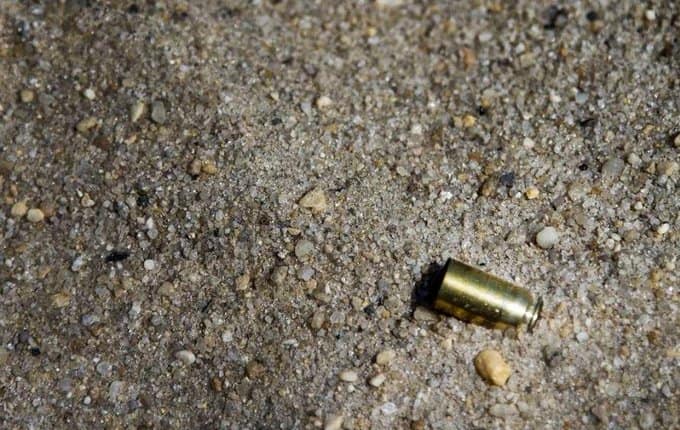
The shootout lasted less than a minute but involved dozens of rounds. Witnesses described a “hail of bullets” that left nearby vehicles with bullet holes and shattered windows.
“I was standing at the taxi rank when I heard the shots,” said a commuter. “I hit the ground. Everyone was screaming. I saw a man fall out of the car. He was not moving. Another man was crawling on the ground. He was bleeding. It was chaos.”
When the shooting stopped, Sibusiso Ndlovu was dead, shot multiple times. His accomplice, whose name has not been released, was wounded in the leg and arm. He was arrested at the scene and taken to a nearby hospital under police guard. His condition is described as stable.
Two police officers suffered minor injuries—one from shattered glass, another from a bullet graze on his arm. Both are expected to recover.
The Victims: The Woman at the Centre of the Storm
The incident began as a domestic dispute, and at its centre is a woman whose name has not been released. She was taken to a local hospital with bruises, a fractured wrist, and signs of strangulation. She is in stable condition and is receiving counselling.
“She is a victim of domestic violence,” said a social worker at the hospital. “She came to the police for help. She trusted the system. And now her boyfriend is dead. She is in shock. She is not celebrating. She is not relieved. She is traumatised. We are doing everything we can to support her.”
The woman’s family has appealed for privacy. “She is a good person,” said her mother in a brief statement. “She did not ask for this. She did not want anyone to die. She just wanted the violence to stop. Please respect her privacy. Let her heal.”
The Suspects: Who Were They?
Sibusiso Ndlovu, 32, was known to police. He had previous convictions for assault, robbery, and illegal possession of a firearm. He was out on parole at the time of the incident.
“He was a violent man with a long criminal record,” said a police source. “He should not have been on the streets. The justice system failed. And now a man is dead and a woman is traumatised. It is a tragedy all around.”
The second suspect, who is in hospital under police guard, is also known to police. He has previous convictions for theft and drug possession. He will be charged with attempted murder, assault, and illegal possession of a firearm. He is expected to appear in court once he is discharged from hospital.
The Police Response: A Mixed Reaction
The police response has been praised by some and criticised by others.
The Praise: “Our officers acted bravely,” said Gauteng Police Commissioner Lieutenant General Elias Mawela. “They were faced with an armed suspect who had already shown a willingness to use deadly force. They neutralised the threat. They protected the public. That is their job. They did it well.”
The Criticism: “Shooting to kill should always be a last resort,” said a human rights lawyer. “We do not know if the suspects were given adequate warning. We do not know if there were other options. IPID must investigate thoroughly. If the officers used excessive force, they must be held accountable.”
IPID has confirmed that it is investigating the incident. “Our investigators are on the scene,” said IPID spokesperson Nomsa Mkhwanazi. “We are interviewing witnesses, collecting evidence, and reviewing police procedures. We will issue a report in due course.”
The Community Reaction: Fear, Anger, and Exhaustion
In Rabie Ridge, the reaction to the shootout was mixed. Some residents expressed relief that the suspects had been stopped.
“Those men were dangerous,” said a resident who watched the chase. “They were shooting at police. They could have shot anyone. I am glad they are off the streets. One is dead. One is in hospital. Good riddance.”
Others expressed concern about police tactics. “They killed a man,” said another resident. “Yes, he was a criminal. Yes, he was violent. But he was also a human being. Did they have to kill him? Could they not have shot him in the leg? I do not know. It is troubling.”
The woman at the centre of the domestic dispute has also been the subject of mixed reactions. Some have expressed sympathy. Others have blamed her for the outcome.
“She called the police,” said a neighbour. “She knew her boyfriend was violent. She knew he had a gun. She should have left him months ago. Now a man is dead. She has to live with that.”
Domestic violence activists have condemned such victim-blaming. “She is a victim, not a perpetrator,” said an advocate. “She did not pull the trigger. She did not fire a gun. She asked for help. That is all. Blaming her is cruel and ignorant.”
The Broader Context: Policing in South Africa’s Townships
The Rabie Ridge shootout is the latest in a long line of violent confrontations between police and suspects in South Africa’s townships. The country has one of the highest rates of police-involved shootings in the world, according to data from the Institute for Security Studies (ISS).
In 2025, there were 1,200 incidents of police-involved shootings, resulting in 400 deaths. The majority of these incidents occurred in Gauteng, KwaZulu-Natal, and the Western Cape.
“The police are under immense pressure,” said an ISS researcher. “They are understaffed, under-resourced, and operating in communities where crime is endemic. They are often forced to make split-second decisions that can mean the difference between life and death. That is not an excuse for excessive force. But it is a reality.”
The researcher noted that the rate of police-involved shootings is significantly higher in predominantly Black townships than in predominantly White suburbs. “There is a racial dimension to this,” she said. “Police are more likely to use deadly force against Black suspects. That is a pattern that cannot be ignored.”
The Domestic Violence Link: A National Crisis
The Rabie Ridge incident began as a domestic dispute, highlighting the link between domestic violence and violent crime more broadly. South Africa has one of the highest rates of domestic violence in the world, with an estimated one in three women experiencing abuse at the hands of an intimate partner.
“Domestic violence is a precursor to so many other forms of violence,” said a domestic violence expert. “Abusers often have access to firearms. They often have criminal records. They often escalate. The Rabie Ridge incident is a textbook example: a violent man, a terrified woman, and a tragic outcome.”
The expert called for more resources for domestic violence prevention, including: more shelters for victims, more training for police on how to handle domestic violence calls, and more funding for programmes that work with perpetrators to change their behaviour.
“We need to intervene before the violence escalates,” she said. “We need to take domestic violence seriously. Because too often, it does not end with a broken bone. It ends with a bullet.”
The Firearm Problem: Illegal Guns Everywhere
The Rabie Ridge shootout also highlights the proliferation of illegal firearms in South Africa. According to the South African Police Service, there are an estimated 3 million illegal firearms in circulation—a number that has increased in recent years.
“The suspects in this case were in possession of illegal firearms,” said a police source. “They had no license. They had no training. They had no regard for the law. They were criminals. And they were armed.”
The source called for stricter enforcement of firearm laws, including harsher penalties for illegal possession and more resources for the SAPS’s firearm task force.
“We are fighting an uphill battle,” he said. “There are too many guns on the streets. And the criminals know that the chances of being caught are low. We need to change that. But it will take time. It will take resources. And it will take political will.”
The Aftermath: What Happens Next?
The Rabie Ridge shootout will be followed by a series of processes:
- Criminal investigation: The second suspect, who is in hospital, will be charged. He will appear in court once he is discharged. He faces charges of attempted murder, assault, and illegal possession of a firearm.
- IPID investigation: IPID will investigate the shooting to determine whether the officers acted within the law. If the investigation finds that the officers used excessive force, they could face criminal charges.
- Civil litigation: The family of the deceased suspect may sue the state for wrongful death. Such lawsuits are common in police-involved shootings, though they rarely succeed.
- Community engagement: The Rabie Ridge SAPS will hold a community meeting to discuss the incident and to answer questions from residents. The meeting is expected to take place next week.
- Domestic violence follow-up: The woman at the centre of the incident will continue to receive counselling and support. Social workers will assess her living situation and determine whether she needs to be relocated for her safety.
The Final Word: A Community Asks Why
As the sun set over Rabie Ridge, the bullet holes in the walls of the shops near the intersection served as a grim reminder of the violence that had unfolded just hours earlier. Residents gathered in small groups, talking in hushed voices, shaking their heads.
“Why did it have to come to this?” asked an elderly woman, tears in her eyes. “Why could they not just surrender? Why did the police have to kill him? Why is there so much violence in our community?”
There are no easy answers. The suspects were armed. The officers were under fire. The woman was terrified. The system is broken.
And in the quiet of the evening, the only sound was the wind blowing through the shattered glass.
The case continues. The investigation continues. The healing has not yet begun.
The Independent Police Investigative Directorate (IPID) has appealed to anyone with information about the Rabie Ridge shootout to contact their hotline at 0800 123 456. The South African Police Service (SAPS) has urged anyone experiencing domestic violence to contact the National Domestic Violence Helpline at 0800 012 345.
About The Author