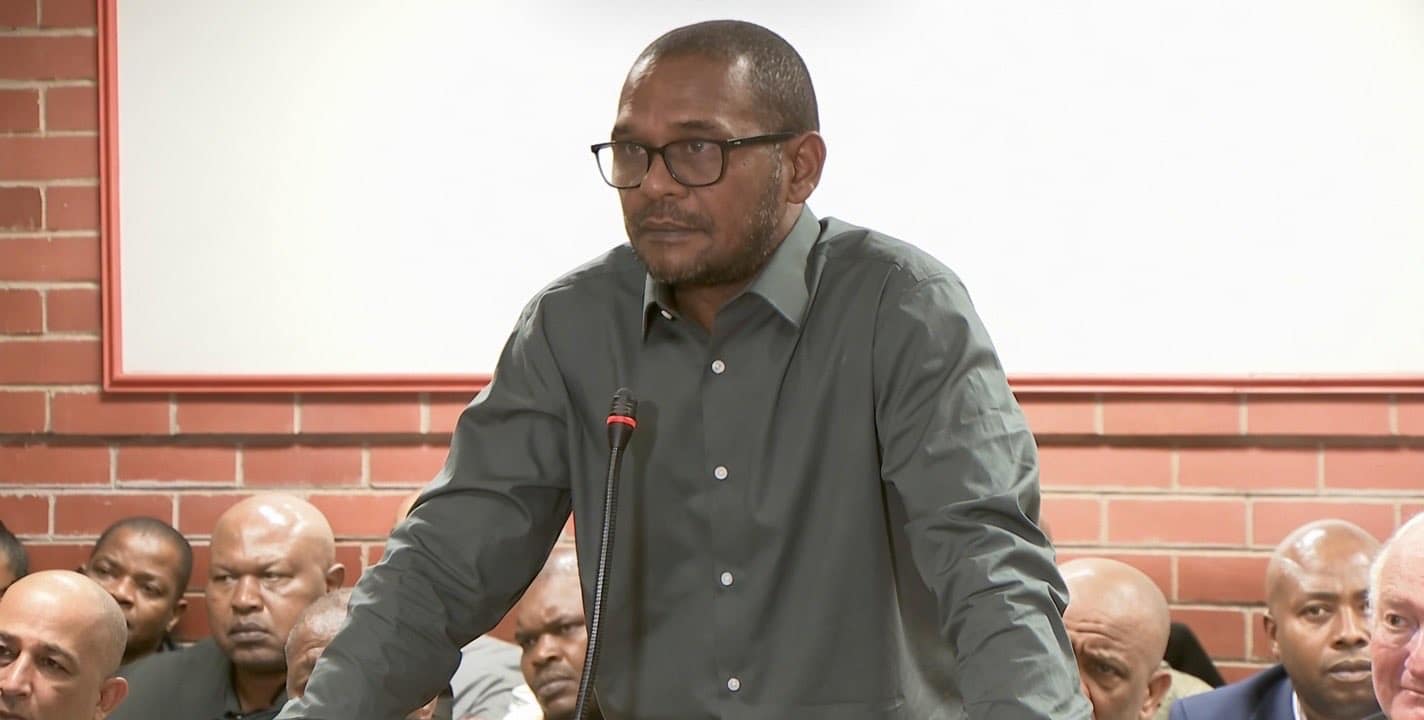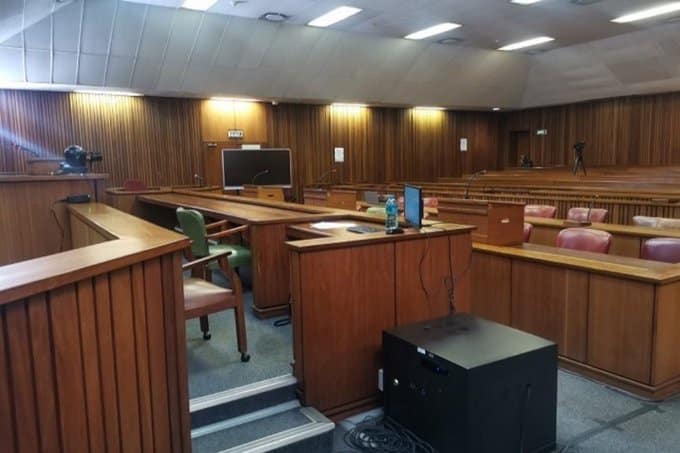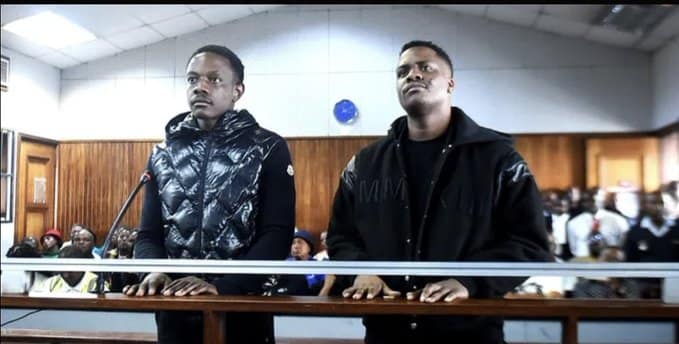
The Alexandra Magistrates Court, a modest brick building in one of Johannesburg’s oldest and most crowded townships, has seen its share of high-profile cases. But nothing prepared the court for the day that the sons of a dynasty walked through its doors.
On Friday morning, Bellarmine Chatunga Mugabe, the youngest son of former Zimbabwean President Robert Mugabe, and his co-accused Tobias Matonhodze Mugabe (a nephew of the late strongman), returned to the dock for sentencing. The pair had entered partial guilty pleas last week in a shooting case that has captivated both South Africa and Zimbabwe—a case that symbolizes the end of impunity for a family that once ruled with an iron fist.
The courtroom was packed. Journalists from both sides of the Limpopo jostled for space. Zimbabwean exiles, many of whom had fled Mugabe’s brutal regime, watched from the public gallery, their faces a mix of grim satisfaction and quiet sorrow. Security was tight. Police officers lined the walls. The magistrate, a woman known for her no-nonsense approach, adjusted her glasses and called the court to order.
“Bring in the accused,” she said.
The door at the back of the courtroom opened. Bellarmine Chatunga Mugabe, 32, walked in first. He wore a dark suit, no tie, and his face was expressionless. He did not look at the journalists. He did not look at the exiles. He looked straight ahead, at the magistrate, at the judge who would decide his fate.
Behind him walked Tobias Matonhodze Mugabe, 29, the nephew. He was also dressed in a dark suit, but his face betrayed more emotion—fear, perhaps, or resignation. His hands trembled slightly as he took his place in the dock.
The two men, once among the most privileged in Zimbabwe, now stood before a South African court, accused of crimes that could send them to prison for years. The dynasty had fallen. And these were its last princes.
The Charges: What They Did
The charges against the two Mugabes stem from an incident that occurred in the early hours of a Sunday morning in August 2025 at a nightclub in Sandton, Johannesburg’s wealthy northern suburb.
According to the state’s summary of facts, Bellarmine Chatunga Mugabe and Tobias Matonhodze Mugabe were at the club with a group of friends when an argument broke out with another patron, a 28-year-old man identified as Mr. X (his name is protected for safety reasons). The argument escalated. Words were exchanged. Threats were made.
Then, the state alleges, Bellarmine Chatunga Mugabe pulled out a firearm and fired multiple shots. One bullet struck Mr. X in the leg. Another hit a security guard in the arm. A third shattered a glass window, sending shrapnel into a crowd of bystanders. Miraculously, no one was killed.
The two men fled the scene but were arrested the following day at a luxury apartment in Sandton. A firearm, later determined to be the weapon used in the shooting, was found in the apartment, along with a magazine containing live rounds.
Bellarmine Chatunga Mugabe was charged with:
- Attempted murder (two counts)
- Assault with intent to do grievous bodily harm
- Discharging a firearm in a public place
- Illegal possession of a firearm and ammunition
Tobias Matonhodze Mugabe was charged with:
- Assault with intent to do grievous bodily harm
- Being an accessory after the fact to attempted murder
Both men initially pleaded not guilty to all charges. But last week, in a dramatic turnaround, they entered partial guilty pleas.
The Partial Guilty Pleas: What They Admitted, What They Denied
The partial guilty pleas were carefully crafted by the defence team to minimize legal exposure while acknowledging some responsibility.
Bellarmine Chatunga Mugabe pleaded guilty to:
- Assault with intent to do grievous bodily harm (for the shooting of Mr. X)
- Discharging a firearm in a public place
- Illegal possession of a firearm and ammunition
He pleaded not guilty to:
- Attempted murder (both counts)
- The shooting of the security guard (instead, he claimed the guard was struck by shrapnel from the glass, not a direct bullet)
Tobias Matonhodze Mugabe pleaded guilty to:
- Being an accessory after the fact to assault (for helping Bellarmine flee the scene)
He pleaded not guilty to:
- Assault with intent to do grievous bodily harm (claiming he did not participate in the fight)
“It was a calculated legal strategy,” said a legal analyst who has followed the case. “They admitted enough to show remorse and cooperation, but denied the most serious charges—attempted murder. That allows them to argue for a lighter sentence while avoiding a full trial where the state could call witnesses and present evidence.”
The state accepted the partial pleas on the charges admitted but proceeded to trial on the disputed charges. However, after hearing the evidence—including testimony from the victims and witnesses—the magistrate ruled that the state had not proven attempted murder beyond a reasonable doubt. The charges were reduced to assault.
“Based on the evidence, I cannot find that the accused intended to kill the victims,” the magistrate said in her ruling. “He fired shots, but not at close range. He aimed at the ground, not at the victims’ bodies. This is reckless and dangerous conduct, but it does not meet the legal threshold for attempted murder.”
The ruling was a victory for the defence and a disappointment for the state. But the accused were not off the hook. They still faced significant charges—and significant prison time.
The Sentencing Hearing: The State’s Arguments
On Friday, the state presented its arguments for sentencing. Prosecutor Advocate Naledi Mokoena was firm and uncompromising.
“Your worship, these accused are not ordinary criminals,” Mokoena said. “They are not desperate men driven to crime by poverty or circumstance. They are wealthy, privileged, and well-educated. They had every advantage in life. And they chose to use violence.”
Mokoena outlined the aggravating factors that she argued warranted a lengthy prison sentence:
- The use of a firearm: “A firearm is not a toy. When you fire a gun in a crowded nightclub, you are not just endangering the person you are aiming at. You are endangering everyone. The accused showed a callous disregard for human life.”
- The victims’ suffering: Mr. X, the man shot in the leg, has undergone three surgeries and still walks with a limp. He suffers from nightmares and has been diagnosed with post-traumatic stress disorder (PTSD). The security guard, though physically recovered, has been unable to return to work due to psychological trauma.
- The accused’s conduct after the shooting: “They fled. They hid. They did not call an ambulance. They did not turn themselves in. They only cooperated after they were caught.”
- The need for deterrence: “Wealthy, powerful individuals must not be allowed to believe that they are above the law. A message must be sent: no matter who you are, no matter who your father was, violence carries consequences.”
Mokoena asked the magistrate to sentence Bellarmine Chatunga Mugabe to 10 years in prison, with 3 years suspended, and Tobias Matonhodze Mugabe to 5 years, with 2 years suspended.
“The accused must feel the weight of the law,” she said. “Only then will they—and others like them—understand that impunity is over.”
The Sentencing Hearing: The Defence’s Arguments
The defence team, led by senior advocate Johan Kruger, argued for a much lighter sentence: community service, a fine, and a suspended prison sentence.
“Your worship, my clients have already suffered greatly,” Kruger said. “Their names have been dragged through the mud. Their reputations are destroyed. They have lost jobs, friends, and opportunities. They have been publicly humiliated. Is that not punishment enough?”
Kruger outlined the mitigating factors:
- No prior convictions: “Both accused have clean records. They have never been in trouble with the law before. They are not career criminals.”
- Remorse: “My clients have expressed genuine remorse. They have apologized to the victims. They have offered to pay for the victims’ medical expenses and therapy. They have taken responsibility for their actions.”
- Partial pleas: “By pleading guilty to the charges they admitted, my clients saved the court the time and expense of a full trial. That must be taken into account.”
- Character references: Kruger submitted letters from family members, friends, and community leaders attesting to the accused’s good character. “They are not monsters. They are young men who made a terrible mistake. They deserve a second chance.”
- The burden of their name: “My clients are the sons of a controversial and divisive figure. They have been targeted by the media and by activists. They have received death threats. They have lived in fear. A prison sentence would be a death sentence, not just for them but for their families, who would be vulnerable to retaliation.”
Kruger asked the magistrate to sentence Bellarmine Chatunga Mugabe to a fine of R100,000 and 500 hours of community service, and Tobias Matonhodze Mugabe to a fine of R50,000 and 250 hours of community service.
“Send them to prison, and you will create martyrs,” Kruger said. “Show mercy, and you will demonstrate that South African justice is not vengeful but restorative.”
The Victims: Their Voices Heard
Before the arguments concluded, the magistrate allowed the two victims to address the court. Their statements were brief but powerful.
Mr. X, the man shot in the leg, spoke from a wheelchair. He had been a soccer player before the shooting, hoping to turn professional. Now, he would never play again.
“I wake up every night screaming,” he said, his voice cracking. “I see the gun. I see the flash. I feel the pain. And then I remember that I cannot run anymore. I cannot play soccer with my son. I cannot chase after him in the park. That piece of paper, that who’s-who of football? They called my name on that paper. But then I got shot. By a man who thought he was above the law. I hope he goes to prison. I hope he thinks about me every night, the way I think about him.”
The security guard, a 35-year-old man who asked not to be named, spoke briefly. “I was just doing my job,” he said. “I did not know who they were. I did not care. I just wanted to keep people safe. And then I was shot. For what? For nothing. I have forgiven them. That is what my faith teaches me. But forgiveness does not mean no consequences. They must face justice.”
The Mugabe Legacy: A Shadow Over the Courtroom
The name Mugabe hangs heavy over the proceedings. Robert Mugabe, who died in 2019 at the age of 95, ruled Zimbabwe for 37 years, from independence in 1980 until he was ousted by a military coup in 2017. His rule was marked by brutal repression, economic collapse, and the systematic looting of the nation’s wealth.
His children—Bona, Robert Jr., and Bellarmine Chatunga—grew up in luxury while their countrymen starved. They were educated at the best schools, traveled on private jets, and lived in mansions while Zimbabweans queued for bread.
Bellarmine Chatunga Mugabe, in particular, became a symbol of excess. He was known for his lavish parties, his expensive cars, and his flamboyant lifestyle on social media. He was despised by many Zimbabweans, who saw him as the embodiment of everything wrong with the Mugabe dynasty.
“These are not innocent young men,” said a Zimbabwean exile who attended the sentencing. “They are the sons of a dictator. They benefited from his crimes. They lived off the blood of our people. Now they are facing justice—not for what their father did, but for what they did. It is not enough. But it is something.”
The defence team has tried to separate the accused from their father’s legacy. “My clients are not responsible for their father’s actions,” said Kruger. “They were children when Zimbabwe collapsed. They did not make the decisions. They did not steal the money. They are guilty only of being born into a family they did not choose.”
But the state has subtly referenced the Mugabe legacy in its arguments. “The accused have never known consequences,” said Mokoena. “Throughout their lives, they have been protected. They have been shielded. They have been told that they are special. It is time for that to end. It is time for them to learn that no one is above the law.”
The Zimbabwean Reaction: Divided and Emotional
In Zimbabwe, the case has been followed with intense interest. The government-controlled media has largely ignored it, but independent news sites and social media have been ablaze with commentary.
“This is justice,” wrote one user on X (formerly Twitter). “Robert Mugabe died without facing justice for his crimes. But his son is facing justice for his. It is not the same. It is not enough. But it is something.”
Others have expressed sympathy for the accused. “Yes, their father was a dictator,” wrote another user. “But they did not choose their father. They are young men who made a mistake. They have apologized. They have offered to pay. Let them go. Zimbabwe has suffered enough. We do not need more suffering.”
The Zimbabwean government has not officially commented on the case. But sources indicate that officials are watching closely, concerned about the precedent a conviction could set.
“If a Mugabe can be convicted in a South African court, what does that mean for other Zimbabwean exiles?” asked a political analyst. “It opens the door for prosecutions of ZANU-PF officials who fled to South Africa. That is a can of worms the government would prefer remain closed.”
The South African Reaction: Justice for All?
In South Africa, the case has been a test of the criminal justice system. Can a wealthy, well-connected foreigner receive a fair trial? Can the children of a dictator be held accountable?
“Thus far, the system has worked,” said a legal observer. “The accused were arrested. They were charged. They were tried. They pleaded guilty to some charges. The state has presented its case. The defence has presented its case. Now the magistrate will decide. That is how justice is supposed to work.”
But some have criticized the state for accepting the partial guilty pleas. “They got off lightly,” said a victim’s rights activist. “They should be in prison for attempted murder. Instead, they are facing a fine and community service. That is not justice. That is a slap on the wrist.”
Others have noted that the accused have already spent eight months in custody—a form of pre-sentence detention that will be taken into account.
“They have been in prison since August 2025,” said a legal analyst. “That is not nothing. Eight months is a long time, especially for wealthy men accustomed to luxury. The court will likely consider that when determining the sentence.”
The Magistrate’s Decision: Awaited
As the court adjourned for lunch, the magistrate announced that she would deliver her sentencing ruling at 2 PM. She needed time to consider the arguments, to weigh the aggravating and mitigating factors, and to craft a sentence that would be fair, just, and proportionate.
The courtroom emptied. The journalists rushed to file their stories. The exiles gathered in small groups, praying, hoping. The defence team huddled in a corner, whispering, strategizing. And the two accused were led back to the holding cells, where they would wait, alone with their thoughts, for the decision that would determine the rest of their lives.
“Whatever the sentence, this case is a milestone,” said the legal analyst. “The sons of Robert Mugabe have been held accountable in a court of law. That has never happened before. It may never happen again. But it happened today. And that is worth something.”
The Final Word: A Dynasty’s Reckoning
The sun streamed through the windows of the Alexandra Magistrates Court as the magistrate returned to the bench. The courtroom fell silent. The accused were brought back in. The victims took their seats. The journalists poised their pens.
“The court has considered the arguments presented,” the magistrate began. “The court has weighed the aggravating and mitigating factors. The court has taken into account the accused’s time already served. The court has considered the impact on the victims. And the court has considered the broader implications for society.”
She paused.
“Bellarmine Chatunga Mugabe, please rise.”
He rose.
“For the charges of assault with intent to do grievous bodily harm, discharging a firearm in a public place, and illegal possession of a firearm and ammunition, the court sentences you to 8 years of imprisonment.”
Gasps from the public gallery. The exiles exchanged glances. The victims held their breath.
“However, the court suspends 4 years of that sentence on condition that you are not convicted of a similar offence during the suspension period. The remaining 4 years are to be served immediately, with credit for time already served.”
Bellarmine Chatunga Mugabe’s face remained impassive. But his hands, gripping the edge of the dock, were white with tension.
“Tobias Matonhodze Mugabe, please rise.”
He rose.
“For the charge of being an accessory after the fact to assault, the court sentences you to 4 years of imprisonment, with 2 years suspended. The remaining 2 years are to be served immediately, with credit for time already served.”
The magistrate looked up from her notes.
“The accused are to be taken into custody immediately. They have the right to appeal. This court is adjourned.”
The gavel fell.
Bellarmine Chatunga Mugabe and Tobias Matonhodze Mugabe, the sons of a dynasty, were led away in handcuffs.
In the public gallery, a Zimbabwean exile wept.
“Justice,” she whispered. “Finally.”
The dynasty had fallen. And its sons would pay the price.
Bellarmine Chatunga Mugabe and Tobias Matonhodze Mugabe have been sentenced to 4 years and 2 years in prison, respectively. They have indicated that they will appeal the sentence. The victims have expressed satisfaction with the outcome. The Mugabe family has not yet issued a statement.
About The Author