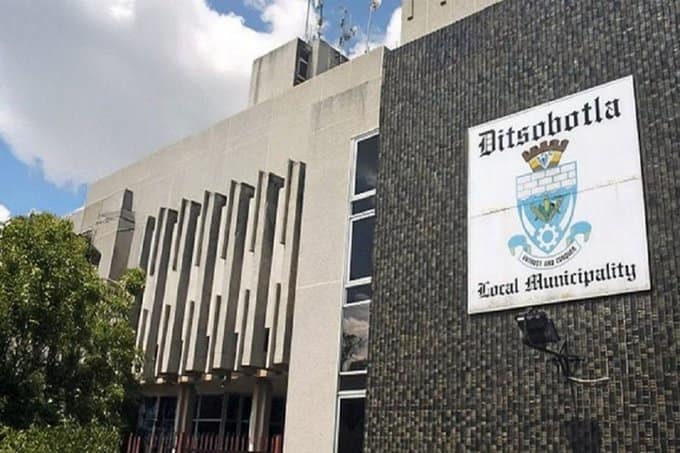
The small courthouse in KwaDukuza, a historic town on KwaZulu-Natal’s north coast, is used to routine matters. Bail applications. Domestic disputes. petty theft. But on Friday morning, the building was surrounded by a heavy police presence, the air thick with tension and grief. Inside, the public gallery was packed to overflowing with family members, community leaders, journalists, and ordinary citizens who had come to witness the first chapter of justice for a family that no longer exists.
Three suspects are expected to appear before Magistrate Thandi Ndlovu today, charged with the brutal kidnapping and murder of seven members of the same family in Newark, a quiet rural settlement north of Durban. The killings, which took place on the night of 12 April 2026, have been described by police as “one of the most shocking crimes to hit KwaZulu-Natal in recent times.”
Seven bodies. Seven souls. Seven members of one family—ranging in age from a 2-year-old toddler to a 67-year-old grandmother—were taken from their home, driven to a sugar cane field, and executed. The motive remains unclear. But the message was unmistakable: in this part of KwaZulu-Natal, no one is safe.
“This is a tragedy beyond words,” said KwaZulu-Natal Police Commissioner Lieutenant General Nhlanhla Mkhwanazi, speaking outside the courthouse. “A family has been destroyed. A community is in mourning. We will not rest until justice is done. Today is the first step.”
The Crime: A Night of Terror
The events of 12 April 2026 began like any other evening in Newark. The Mkhize family—a close-knit clan of farmers and labourers—had gathered for supper at the home of the matriarch, 67-year-old Gogo (Grandmother) Nomusa Mkhize. Children played in the yard. Adults shared stories and jokes. The sun set. The stars came out.
Then, around 9 PM, the terror began.
According to police statements, a group of armed men forced their way into the home. They wore balaclavas and gloves. They carried rifles and pistols. They shouted orders. They struck anyone who resisted.
“We heard screaming,” said a neighbour, who asked not to be named for fear of reprisals. “Then we heard gunshots. Then silence. We were too scared to go outside. We called the police. But by the time they arrived, the family was gone.”
The suspects allegedly herded the seven family members into a vehicle—a white bakkie that had been stolen earlier that day—and drove them to a sugar cane field about 5 kilometres away. There, in the darkness, under the stars, the victims were forced to kneel. Then they were shot. One by one.
“They were executed,” said a police source. “No hesitation. No mercy. This was not a crime of passion. This was a planned, cold-blooded massacre.”
The bodies were discovered the following morning by a farmworker who noticed blood on the cane leaves. He followed the trail and found the victims, lying in a row, their hands bound behind their backs.
“The scene was horrific,” said the source. “The bodies were still warm. The flies were already gathering. It was one of the worst things I have ever seen in 20 years of policing.”
The Victims: Seven Names, Seven Stories
The seven victims have been identified as:
- Nomusa Mkhize (67): The matriarch. A widow. A grandmother to 15. She was known for her gardens, her cooking, and her fierce love for her family.
- Sipho Mkhize (45): Her eldest son. A father of four. A tractor driver who worked the cane fields.
- Thandiwe Mkhize (42): Her daughter-in-law (Sipho’s wife). A seamstress who made school uniforms for children in the village.
- Mandla Mkhize (23): Her grandson. A final-year engineering student at the Durban University of Technology. He was home for the holidays.
- Nosipho Mkhize (18): Her granddaughter. A recent matriculant who had just been accepted to study nursing.
- Amahle Mkhize (7): Her great-granddaughter. A Grade 2 learner who loved to sing.
- Lethabo Mkhize (2): Her great-grandson. A toddler who was just learning to speak.
“The youngest was two years old,” said a family spokesperson, struggling to maintain composure. “Two years old. What kind of monster kills a two-year-old? What kind of monster kills a grandmother? A student? A nurse? A child? They were not criminals. They were not gangsters. They were a family. They were our family.”
The Investigation: Cracking the Case
The investigation into the Mkhize massacre was one of the largest in KwaZulu-Natal’s recent history. A team of 50 detectives, drawn from the SAPS’s elite Serious and Violent Crimes unit, the Hawks, and the local police, worked around the clock.
The breakthrough came when a witness came forward. The witness, who cannot be identified for safety reasons, provided a description of the vehicle used in the kidnapping—a white bakkie with a distinctive dent in the rear bumper.
“That was the key,” said a detective. “We traced the bakkie to a rental company in Durban. The rental company had records of who had hired it. That led us to our first suspect.”
Over the following days, three suspects were arrested. Two were found hiding at a relative’s home in a township outside Durban. A third was apprehended at a roadblock while trying to flee to eSwatini.
The suspects have been identified as:
- Bhekisisa Ndlovu (34): Alleged ringleader. A known criminal with previous convictions for armed robbery and carjacking. He was released on parole in 2024 after serving 8 years of a 15-year sentence.
- Sibusiso Dlamini (28): Alleged accomplice. A former security guard who lost his job in 2025. Neighbours describe him as “quiet” and “unremarkable.”
- Thabo Mkhabela (31): Alleged driver. A taxi driver who was reportedly hired to drive the getaway vehicle. He claims he did not know what he was getting into.
All three have been charged with seven counts of murder, seven counts of kidnapping, and one count of illegal possession of a firearm and ammunition. They have not yet entered a plea.
The Motive: Why Were They Killed?
The motive for the massacre remains unclear. Police have not ruled out any possibilities, including:
- A robbery gone wrong: The suspects may have intended to rob the family but panicked when they were recognised. However, nothing was taken from the home.
- A revenge killing: The Mkhize family had no known enemies. But some family members have suggested that Sipho Mkhize (the eldest son) may have witnessed a crime he was not supposed to see.
- A contract killing: The sheer brutality of the crime—seven people executed—suggests a professional hit. But who would want to kill an entire family? And why?
- A case of mistaken identity: The suspects may have targeted the wrong house. But if so, they have not come forward to correct the mistake.
“We are exploring all possibilities,” said Lieutenant General Mkhwanazi. “We are interviewing witnesses. We are reviewing cellphone records. We are following every lead. We will find out why this happened. And we will bring everyone involved to justice.”
The Community’s Reaction: Grief and Anger
In Newark, the Mkhize massacre has devastated a close-knit community that had never experienced violence of this scale.
“We are not rich people,” said a neighbour. “We are farmers. We are workers. We are ordinary people. We do not lock our doors. We do not live in fear. But now? Now we are afraid. Now we lock our doors. Now we sleep with one eye open. This has changed us. Forever.”
A traditional leader in the area called for calm. “We must not let anger consume us,” he said. “We must let the law take its course. We must not take revenge into our own hands. That is not who we are. That is not what Gogo Nomusa would have wanted.”
But others are less patient. “The law is too slow,” said a young man in the village. “The suspects will get lawyers. The case will be postponed. They will apply for bail. They will be released. And we will be left here, afraid, angry, grieving. No. That is not enough. We need justice. Now.”
The community has organised a vigil for the victims, to be held on Sunday evening at the home where the family was taken. Candles. Flowers. Prayers. And a demand for answers.
The Three Suspects: A Closer Look
As the three men await their court appearance, details of their backgrounds are emerging.
Bhekisisa Ndlovu (34): The alleged ringleader is no stranger to violence. He was convicted of armed robbery in 2016 and sentenced to 15 years in prison. He was released on parole in 2024 after serving 8 years. His parole conditions included regular check-ins with a parole officer, a ban on alcohol, and a prohibition on leaving the province without permission.
“He should not have been on the streets,” said a neighbour of Ndlovu’s. “He was a violent man. Everyone knew it. But the parole board let him out. And now seven people are dead. The system failed.”
Sibusiso Dlamini (28): The alleged accomplice has a clean record—no previous convictions, no arrests, not even a traffic fine. Neighbours describe him as “quiet,” “polite,” and “a good boy.” He was a security guard until he lost his job in 2025. He was reportedly struggling financially.
“I cannot believe Sibusiso would do something like this,” said a friend. “He is not a violent person. He loved his mother. He went to church. Maybe he was in the wrong place at the wrong time. Maybe he was forced. I do not know. But I will not judge him until I know the truth.”
Thabo Mkhabela (31): The alleged driver is a taxi driver who operates on the Durban-Nkandla route. According to his family, he was approached by a man who offered him R10,000 to drive a bakkie to Newark and wait.
“He thought it was a legitimate job,” said his mother. “He thought he was transporting goods. He did not know it was a kidnapping. He did not know anyone would be killed. He is not a murderer. He is a taxi driver. He was just trying to feed his family.”
The state is expected to argue that all three suspects are equally culpable, regardless of their roles. “They were all part of a conspiracy,” said a prosecutor. “They all knew what they were doing. They all bear responsibility. And they will all face the consequences.”
The Court Appearance: What to Expect
The three suspects are expected to appear in the KwaDukuza Magistrate’s Court at 9 AM. The state will ask for a postponement to allow for further investigation. The defence is expected to apply for bail.
“We will oppose bail,” said the prosecutor. “These are serious charges. The suspects are flight risks. They have access to resources. They have ties to other countries. They must remain in custody.”
The defence is expected to argue that their clients are entitled to bail under the Constitution. “Presumption of innocence,” said a defence attorney. “That is the foundation of our justice system. My client is innocent until proven guilty. He is not a flight risk. He is a father, a son, a member of this community. He will not run.”
The magistrate will decide. If bail is granted, the suspects could be released within days. If bail is denied, they will remain at the Westville Correctional Centre pending trial.
The Role of IPID: Investigating the Police Response
As the criminal case proceeds, the Independent Police Investigative Directorate (IPID) is also investigating the police response to the Mkhize massacre.
“We are looking at whether the police responded appropriately,” said an IPID spokesperson. “The victims were held for hours. Could they have been rescued? Did the police do enough? We will answer those questions.”
The family of the victims has criticised the police response. “We called them at 9 PM,” said a relative. “They arrived at 11 PM. By then, our family was already dead. Two hours. Two hours we waited. Two hours they took. If they had come faster, maybe our loved ones would still be alive.”
Police have defended their response. “We received the call at 9:15 PM,” said a police spokesperson. “We dispatched officers immediately. But Newark is a remote area. The roads are bad. It takes time to get there. We did the best we could. No one wanted this outcome.”
IPID’s investigation is ongoing. A report is expected within 90 days.
The Funeral: A Community in Mourning
The seven victims will be buried on Saturday, 2 May 2026, at a mass funeral to be held at the Newark community hall. The service will be attended by government officials, religious leaders, and thousands of mourners.
“The funerals will be devastating,” said a family spokesperson. “Seven coffins. Seven eulogies. Seven sets of ashes. We will bury our grandmother. Our parents. Our siblings. Our children. It is too much. It is too much for any family to bear.”
The government has offered to cover the cost of the funerals. President Cyril Ramaphosa has expressed his condolences. The KwaZulu-Natal provincial government has declared a period of mourning.
The Call for Justice: A Nation’s Demand
The Mkhize massacre has sent shockwaves across South Africa. Political leaders, civil society organisations, and ordinary citizens have condemned the killings and demanded justice.
“This is barbarism,” said DA leader John Steenhuisen. “Seven innocent people, including a toddler, executed in cold blood. The suspects must face the full might of the law. No mercy. No parole. No early release.”
“We call for the harshest possible sentence,” said EFF leader Julius Malema. “Life imprisonment. Not 25 years. Life. For each murder. The suspects should never see the light of day again.”
“The death penalty is the only answer,” said a family member. “These monsters killed our family. They do not deserve to live. They do not deserve to breathe the same air as us. We want them dead.”
South Africa abolished the death penalty in 1995. There is no political will to reinstate it. But in moments of national horror, the debate resurfaces.
“I understand the anger,” said a legal expert. “But we must not let emotion override reason. The death penalty is not a deterrent. It is not a solution. It is state-sanctioned killing. We are better than that.”
The Final Word: A Family’s Legacy
As the three suspects enter the dock, the Mkhize family—what remains of it—will be watching. Aunts. Uncles. Cousins. Friends. They will sit in the public gallery, their faces etched with grief and anger. They will listen to the charges. They will watch the accused. And they will wait.
“We may never recover,” said a family spokesperson. “The pain will never go away. But we will not let these monsters destroy us. We will remember our family. We will honour their memory. We will fight for justice. And we will win.”
The sun rose over KwaDukuza. The courthouse doors opened. The journalists rushed inside. The family members took their seats. And the three suspects, handcuffed and shackled, were led into the dock.
About The Author