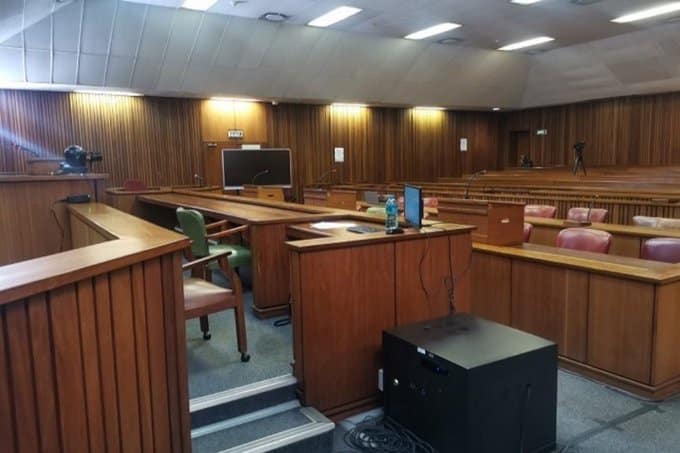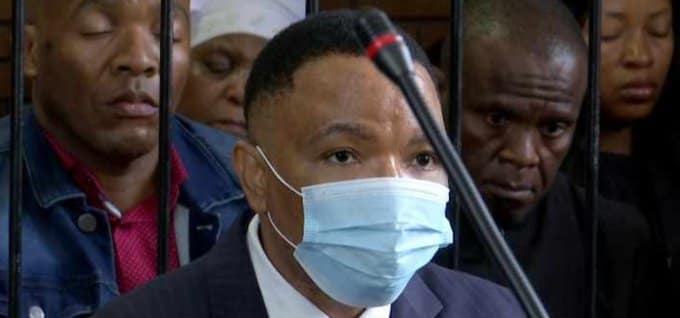
The Boksburg Magistrates Court, a squat, unglamorous building on the east rand of Johannesburg, has seen its share of routine matters. Traffic fines. petty theft. Domestic disputes. But on a crisp autumn morning, the wood-panelled courtroom became the stage for a bombshell that threatens to engulf one of Gauteng’s most powerful municipal officials.
Shocking claims have emerged that large sums of money—amounting to potentially millions of rands—changed hands to help Ekurhuleni City Manager Kagiso Lerutla avoid the consequences of a 2019 speeding arrest. The allegations, made during testimony before the court, paint a picture of a corrupt network operating at the highest levels of local government, involving police officers, prosecutors, and possibly even judicial officials.
“Money was paid. Favours were exchanged. Justice was subverted,” said Advocate Thabo Mkhabela, the lead prosecutor in the case, addressing the court. “We are not talking about a small bribe to make a ticket disappear. We are talking about a systematic effort to shield a powerful man from the consequences of his actions. This is not a traffic offence. This is corruption on an industrial scale.”
The courtroom, packed with journalists, legal observers, and curious members of the public, fell silent. Lerutla, seated in the dock, stared straight ahead, his face betraying no emotion. His legal team shuffled papers nervously. In the public gallery, a woman gasped. A man shook his head.
The story that emerged over several hours of testimony is a labyrinth of handovers, intermediaries, and alleged cover-ups. It is a story that, if true, reveals the rot at the heart of one of South Africa’s largest metropolitan municipalities.
The Arrest: A Speeding Ticket That Snowballed
The original offence was, by itself, unremarkable. In September 2019, Kagiso Lerutla, then a senior official in the Ekurhuleni municipality, was allegedly caught speeding on the R21 highway near OR Tambo International Airport. The exact speed has not been disclosed, but sources indicate it was significantly above the limit—enough to warrant an arrest rather than a simple fine.
According to court documents, Lerutla was pulled over by a traffic officer from the Ekurhuleni Metropolitan Police Department (EMPD). He was asked to produce his driver’s licence, which he allegedly failed to do. He was then arrested and taken to the nearby Boksburg police station.
“He was not treated like an ordinary citizen,” testified a former EMPD officer who spoke under grant of immunity. “He made phone calls. He spoke to people. Within an hour, senior officials were calling the station. Within two hours, he was released. The paperwork said he had paid an admission of guilt fine. But no fine was ever recorded in the system.”
The former officer alleged that Lerutla was released without being charged, without a court appearance, and without any official record of the incident. “It was as if it never happened,” he said. “But it did happen. I was there. I saw it.”
Lerutla has denied any wrongdoing. His legal team has dismissed the allegations as “baseless” and “motivated by a vendetta.” But the court has heard evidence that the incident was not allowed to disappear quietly.
The Payments: Millions of Rands in Cash
The most explosive testimony came from a self-confessed intermediary, a businessman who claimed to have facilitated payments between Lerutla and various officials. The witness, who cannot be named for safety reasons, testified that he was approached by Lerutla’s associates shortly after the arrest.
“I was told that the City Manager needed help,” the witness said. “He was worried that the arrest would come out. He was worried about his job. He was worried about his reputation. He was willing to pay to make it go away.”
According to the witness, the initial payment was R200,000, handed over in a brown envelope to a senior police officer at a restaurant in Bedfordview. The officer, who has since been suspended, allegedly promised to “lose” the paperwork related to the arrest.
But the payments did not stop there. The witness testified that over the following months, additional sums were paid to ensure that the matter remained buried. When a journalist began asking questions in 2020, more money was paid to “discourage” the investigation. When a whistleblower came forward in 2021, still more money was paid to “neutralise” the threat.
“In total, I handed over approximately R3.5 million,” the witness said. “It was not all at once. It was over two years. Sometimes cash. Sometimes electronic transfers. Sometimes through third parties. The money went to police officers, to prosecutors, to people in the municipality. It was a network. And Kagiso Lerutla was at the centre of it.”
The witness claimed that Lerutla himself was present at some of the handovers. “He did not always hand over the money personally,” the witness said. “But he knew. He authorised it. He was in control.”
Lerutla’s legal team has cross-examined the witness aggressively, pointing out inconsistencies in his testimony and highlighting his own criminal record. The witness admitted to having been convicted of fraud in 2015, though he claimed he had “turned his life around.”
“You are a liar and a convicted criminal,” Lerutla’s advocate said to the witness. “You are testifying in exchange for immunity. Your word is worthless.”
The witness did not flinch. “I am a liar who is telling the truth,” he replied. “I am a criminal who is exposing criminals. Judge me if you want. But what I have said is true. And I have the bank records to prove it.”
The Cover-Up: How the System Was Subverted
The testimony painted a picture of a justice system that was systematically subverted. The police officer who allegedly accepted the first bribe is said to have removed the arrest record from the police database. The prosecutor who allegedly accepted a subsequent bribe is said to have declined to open a docket. The magistrate who allegedly accepted a third bribe is said to have signed a false order declaring the matter resolved.
“It was a conspiracy,” said Advocate Mkhabela, the prosecutor. “Not just one corrupt official. Several. Working together. At different levels. For a common purpose: to protect Kagiso Lerutla from the consequences of his actions.”
The alleged conspiracy began to unravel in 2023, when a new EMPD commissioner launched an internal audit. The audit discovered discrepancies in the records from the 2019 arrest. A whistleblower came forward. The Hawks were called in. And the slow, grinding process of investigation began.
Now, three years later, the case is before the Boksburg Magistrates Court. Lerutla faces charges of corruption, fraud, and defeating the ends of justice. Several other individuals—including police officers, prosecutors, and the businessman who acted as intermediary—have also been charged. Some have already pleaded guilty and agreed to testify against Lerutla.
“Let’s not be naive. This will be used politically.”
The Politics: Ekurhuleni’s Long Shadow
The case against Kagiso Lerutla is not happening in a vacuum. It is unfolding against the backdrop of a bitter political struggle for control of the Ekurhuleni municipality, one of South Africa’s largest and most important local governments.
Ekurhuleni, which includes the city of Germiston and the sprawling township of Soweto, has been governed by a fragile coalition between the ANC and the EFF since 2021. Lerutla, a career administrator appointed during the ANC’s tenure, has been a controversial figure. His supporters say he is a competent manager who has been unfairly targeted by political enemies. His detractors say he is a symbol of everything wrong with the ANC’s cadre deployment policy.
“The timing of these allegations is suspicious,” said an ANC councillor who spoke on condition of anonymity. “The local government elections are coming. The EFF wants to break the coalition. They see Lerutla as a weak link. They are using this case to destabilise the municipality. Let’s not be naive. This will be used politically.”
The EFF has denied any involvement. “We did not force Kagiso Lerutla to break the law,” said EFF regional chairperson Nkululeko Dunga. “We did not force him to pay bribes. We did not force him to corrupt police officers. He did that himself. If he goes to jail, it will be because of his own actions, not because of politics.”
The DA, which is the official opposition in Ekurhuleni, has called for Lerutla’s immediate suspension. “How can a man facing allegations of corruption continue to serve as the city manager?” asked DA caucus leader Belinda Kayser-Echeozonjoku. “He should step aside. Immediately. If he does not, the council should suspend him. This is non-negotiable.”
The ANC has resisted calls for Lerutla’s suspension, arguing that he is entitled to the presumption of innocence. But the pressure is mounting. If the court finds credible evidence against him, the ANC may have no choice but to distance itself.
Lerutla’s Defence: A Conspiracy to Destroy Him
Lerutla has not yet taken the stand, but his legal team has laid out the broad strokes of his defence.
“Mr. Lerutla is the victim of a conspiracy,” said his advocate. “A conspiracy involving disgruntled former employees, political opponents, and criminals seeking to escape their own culpability. The allegations are false. The evidence is fabricated. The witnesses are liars. The truth will come out.”
The advocate pointed out that the key witness—the businessman who testified to handing over millions—has a criminal record and is testifying in exchange for immunity. “That is not a witness,” he said. “That is a co-conspirator who is trying to save his own skin.”
Lerutla’s team has also suggested that the speeding arrest itself may have been a setup. “The traffic officer who made the arrest has since been identified as a member of a corrupt network within the EMPD,” the advocate said. “He was known to target senior officials and then extort them. Mr. Lerutla was a victim, not a perpetrator.”
The court has not yet ruled on these claims. But the judge has indicated that the evidence against Lerutla is “substantial” and that a full trial is likely.
The Public’s Reaction: Anger and Apathy
Outside the Boksburg Magistrates Court, the reaction was mixed. A small group of protesters from the #NotInMyName movement held placards reading “Lock Him Up” and “No One Is Above the Law.” But most passersby were indifferent.
“I am not surprised,” said a shopkeeper near the court. “Corruption is everywhere. The police are corrupt. The prosecutors are corrupt. The judges are corrupt. Why should this one be different? He will probably walk. They always do.”
A university student was more engaged. “If the allegations are true, he should go to jail for a very long time,” she said. “Not just for speeding. For corruption. For undermining the justice system. That is worse than the original offence. That is an attack on democracy.”
A retired civil servant was cynical. “Millions of rands. Just to avoid a speeding ticket. Can you imagine? And this is the man running our city. No wonder the potholes are not fixed. No wonder the lights do not work. They are too busy paying bribes.”
The Investigation: What Happens Next?
The case has been postponed to allow for further investigation. The Hawks have confirmed that they are looking into additional allegations against Lerutla, including possible links to organised crime.
“We are not finished,” said a senior Hawks official. “The speeding arrest is just the tip of the iceberg. There are other matters. Other payments. Other officials. This investigation will go where the evidence leads. No matter how high.”
Lerutla remains in his position as Ekurhuleni City Manager, pending the outcome of the legal proceedings. The council has the power to suspend him but has so far declined to do so. Pressure is expected to mount as the trial progresses.
If convicted, Lerutla faces up to 15 years in prison for corruption, as well as additional sentences for fraud and defeating the ends of justice. He could also be barred from holding public office.
“The law is clear,” said Advocate Mkhabela. “Corruption carries severe penalties. Those who corrupt the justice system face even more severe penalties. Mr. Lerutla is entitled to his day in court. But if the evidence proves the allegations, he should expect a lengthy prison sentence.”
The Final Word: A Test of the System
The case against Kagiso Lerutla is about more than one man. It is about the integrity of the justice system, the accountability of public officials, and the willingness of South Africans to confront corruption at the highest levels.
If Lerutla is convicted, it will send a powerful message: no one is above the law, not even powerful city managers with deep pockets and political connections. If he is acquitted, it will reinforce the cynical belief that the rich and powerful can buy their way out of anything.
“I do not know if he is guilty or innocent,” said a legal observer. “That is for the court to decide. But I know that the system is on trial. If the court fails to deliver justice, the public will lose what little faith they have left. That is the real tragedy.”
The Boksburg Magistrates Court adjourned. Lerutla walked out, surrounded by bodyguards, his face still betraying nothing. The journalists rushed to file their stories. The protesters chanted their slogans. The shopkeeper locked up for the night.
And somewhere in Ekurhuleni, a pothole remained unfixed. A streetlight remained dark. A citizen wondered if anyone was in charge.
The case continues. The cash changed hands. The freedom was bought. Or so the court has heard.
Now, the court must decide.
The case against Kagiso Lerutla has been postponed to 15 June 2026 for further investigation. Lerutla remains out on bail of R50,000. He has not yet entered a formal plea. The Hawks have urged anyone with additional information to come forward.
About The Author